James Montague Interview

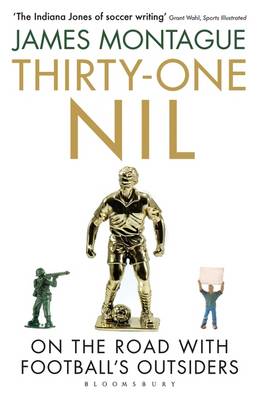
James Montague is a very, very busy man. Earlier this month, Thirty-One Nil, his incredible journey through World Cup 2014 qualification, picked up the British Sports Book Award for Football Book of the Year. When I got in touch for an interview, I stupidly thought he might be taking it easy, basking in the glory of his triumph. How wrong I was. ‘Are you free to Skype now?’ he asked. I wasn’t – ‘How about tomorrow?’ I suggested hopefully. ‘Sorry, I leave early in the morning’, he said. ‘Another trip – cracking story coming up.’

Here today, gone tomorrow – that’s the exciting life of world football’s greatest correspondent. But worry not; I emailed him my burning questions and he answered them brilliantly on the plane to God knows where.
KqEeNOo-

1. Let’s start at the beginning – how did you get into sports journalism and how did that then lead to When Friday Comes?

It was all a bit of an accident. I had no idea what I wanted to do with my life, other than I was interested in the world and loved reading about sport, politics, and current affairs. I did a politics degree and managed to get an (unpaid) internship at the New Statesman. I was lucky. My parents lived in Essex so I could work at the evenings and weekends doing door to door canvassing for a double glazing company and just about earn enough to commute and stay afloat. After that six weeks, though, I was hooked, even though the one article I wrote for them (about an Amsterdam style cannabis cafe that opened in Bournemouth, that got their weed from a few grannies who grew it for them) was awful. It was cut from 2000 words to 500. I was gutted, but it was the best thing to happen to me. It taught me to be scrupulously self critical.

 It was almost impossible to get a job in journalism though. So I had a 9 to 5 job, studied for an NCTJ in the evenings and freelanced where I could. I thought I could finally leave my job after a couple of features I wrote gave me hope. An interview with Jay Bothroyd for GQ, when he was the only English player in Serie A, and a story on the Palestinian national team trying to qualify for the 2006 World Cup for Jack. I couldn’t get a job in journalism, but worked out that ideas had equal currency. If the idea is strong enough, original enough, and you can get the email of the right person, you can honestly get published anywhere.

I thought I cracked it. But no sooner had I got a couple of commissions at Jack, the magazine shut down. Which was demoralising until a few days later. I got an email from an editor at Time Out Dubai. I’d applied for a job months before and forgotten about it. They dug through their slush pile and read a restaurant review, of all things, that they seemed to really like.

Two weeks later I was on a plane to the Middle East. It was quite surreal, arriving at Dubai airport in July, 45 degrees outside. I was wearing a white jumper, white pointy shoes, a dinner jacket and a green felt hat. I must have looked like a bellend. King Rat of the wannabe hipsters.

Still, I didn’t know much about Dubai, or the Middle East, but I worked out pretty quickly that you could understand a lot about the place through football. It was uncanny. One of my first trips was to Yemen. The national team had been banned from a regional tournament as the players had all failed drug tests. Yemen wasn’t far off a narco state back then. About 80 percent of the population was addicted to qat, a leaf drug. Including its national team, it seemed. After that I went to every country in the region and used football as a way of understanding the place, from sectarianism to dictatorship to the economic rise of The Gulf. I was very lucky that this all coincided with Qatar and the emirate of Abu Dhabi buying their way into European football too.

2. In Thirty-One Nil, you speak very eloquently about the romance and randomness of international football. Was this always your first love, rather than club football?

I would say the two were equal in my affections, but international football was the gold standard. I grew up in a family of West Ham fans and don’t remember us winning a single trophy. I was 9 months old when we beat Arsenal in the FA Cup final. Other than that, I think the Intertoto is about the size of it. So maybe that coloured my thinking a bit. But the absolute pinnacle of the game was the World Cup. All roads in the club game led there. To that. There was no greater honour than for your players to represent England and go to the World Cup finals.

There was an excitement and a disappointment that couldn’t be matched anywhere else. Whether it was the semi-final against Germany in 90, that qualifier for 94 against Holland. Argentina in 98, taking the lead against Brazil in 02; these were exhilarating moments. And I could feel the hope and optimism (and misery and disappointment) of a whole country around me.

But after 2006 something changed. There was now a cynicism and disregard for the England team. I guess it was partly anti-climactic. We had been promised this golden generation and even then we couldn’t emulate Italia 90. There’s only so many brave defeats anyone can stomach. But it was also about the changing nature of the game. The money in the game. The supremacy of the clubs. The dominance of the Champions League. The World Cup used to be a showpiece for the very best players (even if they often weren’t in the very best teams), our window on the world and the talent that is out there. The Champions League now serves that purpose.

With Thirty One Nil I wanted to try and show that the international game is worth fighting for. That it captures something and represents something deeper than the club game. The huge sacrifices people make. The romance. The politics, the nationalism, the conflict. And I found all that in the teams who would never likely be at a World Cup finals.
9781408851630

3. Thirty-One Nil is an incredible pilgrimage around the globe several times over. Did you write as you went along or was there a period afterwards where you collapsed from exhaustion and then collected your notes into a narrative?

I recorded everything with a microphone, on an outdated piece of radio equipment. Just as I embarked on the journey I was approached by the producer of the BBC World Service’s World Football show. They asked me to take a microphone to my next trip as I was on my way to Haiti. After that I was hooked and kept sending little mini documentaries of my trips. So I had all the colour and all the interviews recorded. There was no need to write as I went. I started writing it in September 2013. I was living in Hungary at the time with my then girlfriend. The last month was hell. The qualifiers finished in November and my last trip, to San Marino was December. I had about three weeks to finish. I don’t know how I did it. At the end I was exhausted, as the book had provided my metronome for the best part of three years. I was a bit lost. It didn’t help that my relationship didn’t survive the book writing process either.

In terms of structure, the World Cup qualification campaign provides the perfect structure. The natural drama and rhythm of qualification is the perfect literary device. In fact, i’d had the idea for Thirty One Nil, sometime before, during qualification for the 2010 World Cup. I couldn’t get it off the ground before the matches started though. But I was in Cairo for that crazy qualification match against Algeria and I thought: “this would have made an amazing end to a book.”

So I made sure I was there for the first planned qualifiers for 2014. I chose Palestine v Afghanistan. Although CONCACAF moved their qualifiers forward at the last minute, so Montserat v Belize was the first game. I was not best pleased! That wasn’t the only thing that didn’t go to plan with the book but it all worked out. Everything else that went wrong ended up being a better story. Including Palestine v Afghanistan.

4. The book is packed full of incredible characters. Can you pick a favourite, or is that an impossible task?

I spoke to so many people, but a few do stand out. Meeting Bob Bradley, who was in charge of the Egypt national team. A better man in football you will not meet.

I was fascinated by Omar Jarun, the American who played for the Palestine national team. He had never been to the West Bank before, and I accompanied him to his grandfather’s home town of Tulkarem, after spending two weeks on the road in Tajikistan and Jordan. That was quite emotional.

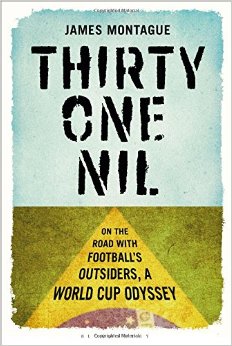
But I will never forget Samoa. The book is named after the world record international defeat, or victory, when Australia beat American Samoa 31-0 in 2001. That was kind of the starting point of the book. How do you pick yourself up after that? Why do you carry on?

But carry on they did. Losing by double figures every game. So I went to Samoa for the pre qualification tournament involving four teams: Samoa, American Samoa, Cook Islands and Tonga. I went expecting to see three massacres. Instead I met American Samoa’s goalkeeper, who had been haunted by the 31-0 defeat, a transgender centre back and Thomas Rongen, a Dutch coach who had been employed to kick their arses into shape. To be there when they won their first ever game, in front of a few dozen people, to see what it meant, is a moment i’ll never forget. There’s a brilliant documentary about it called Next Goal Wins. If you look closely, you can see me in the background, accidenally ruining their best shots…

5. As a whole, I found Thirty-One Nil to be a very optimistic book, full of the hope that football can bring to even the most war-torn of countries. Was that always the intention and if so to what extent was that challenged by what you found?

I’m quite an optimistic person at heart. I tend to write about a lot of misery too — conflict zones tend to be unhappy places — but people are brilliantly resilient. They live, they continue, because it is the only option. There’s a quote by Churchill I think: When in hell, keep walking. And I wanted to capture that; the dignity in the small acts of resistance against fate and circumstance.

But, yes, there were some tough moments. Being in Port Said after two dozen people had been shot dead and the city was placed under curfew. Meeting the Eritrea team who had fled the horrible repression back home when on international duty, knowing they would never see their families again. And knowing that their actions might have brought reprisals against their loved ones. And then there was Lebanon. This was different. I lived in Beirut for a time so I knew about the sectarianism in the country. It was reflected in the league. Teams had Sunni, Shia, Orthodox, Druze identities. It was one of the reasons the national team was terrible: those differences couldn’t be reconciled. Then along came Theo Bucker, a former Dortmund player from the 70s who managed to bang heads and get them playing. It brought the country together when they beat South Korea and made it to the final group stage of qualification. It was a proper rally around the flag moment. And then it turned out that several players had allegedly taken cash to throw crucial games. Bucker was distraught, and a country learned that when it comes to symbols of unity, if it sounds too good to be true, it probably is.
51IC9Q7A9qL._SY344_BO1,204,203,200_

6. In the end, who were you supporting at the World Cup? Or were you too tired by then to even care?!

I took a break for a few months but was ready to go to Brazil. I’d gone to the Confederations Cup in 2013 and covered the protests there. It was a mess. Tear gas, rioting, violence. So I knew I had to go to the finals.

Of course, I supported England, but I also looked out for the underdogs. Iran and Bosnia in particular. But also the US. I spent a bit of time crashing on the sofa of the New York Times guys in Rio. Watching American fans on the streets fall in with football is a wonderful thing. It reminds me of what the English have lost.

7. Indiana Jones swears by his hat, his khaki and his whip. So what three items would the ‘Indiana Jones of soccer writing’ pick for his world football survival kit?

Other than the obvious stuff I need to work with (laptop, camera, microphone and radio recorder) I took a picture of what I packed when I went to Brazil. The one thing I pack now is a gas mask. I’ve been tear gassed so many times I’ve learned the hard way. A mate of mine who deals in military surplus got me a good deal on a Czech one. I also pack a bottle of vinegar (which you dab under your eyes to counter act the gas) and a shit load of wet wipes.

8. And finally, what’s next? Another journey around the football world?

Well, i’m kind of ruined now. I can’t help but get myself to an obscure fixture. I was just at the first round of 2018 qualifiers, Bhutan v Sri Lanka. That was incredible. But last week was the first round of WCQs I’ve missed in almost six years. I miss it. But I’m working on another book now, about the global flow of money in the game. That will take me to a few places I haven’t been. I don’t really know how to sit still.

Buy Thirty-One Nil here
Hudd: A Cautionary Tale

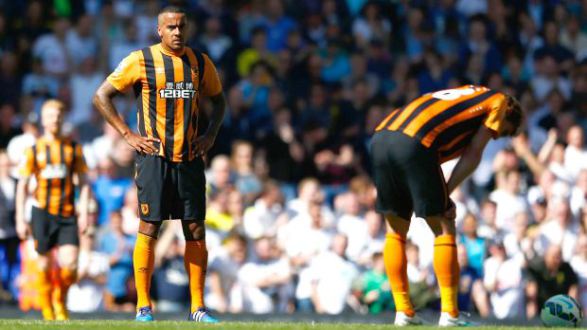
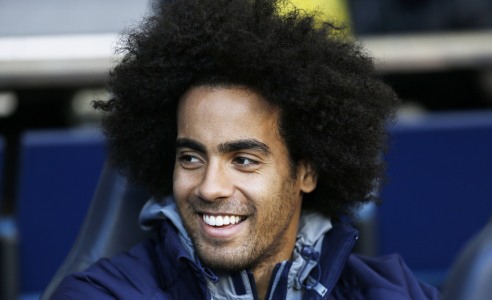
Gentle giants rarely make difficult decisions but Hudd did two summers ago. Perhaps he had no choice but Hudd left the comfort of White Hart Lane after eight years of bit-part prosperity. He had cruised in on a wave of early promise but the water was getting shallow and the shoreline was in sight. A manager once compared him to Beckenbauer but the talk didn’t do much good. There was only so long that Hudd could just take the money and jog. His hair reflected this complacency, growing wilder with each stray shot and each game gone missing. The consensus was that Hudd had everything except desire – two great feet, a languid grace and the vision of Hoddle. Like the hyena, Hudd had the strength of a lion but the heart of a mouse.

huddlestone050113 (1)

To Hull he went to prove them all wrong. At the base of their midfield, Hudd slowly woke from his slumber. His pace rarely quickened but there was a new determination to drag himself around that field. Hudd began to dictate games against the lesser teams, lazily but effectively, as the loyal ones always knew he could. The eternal teenager was showing signs of responsibility and discipline. Hudd rarely crossed the halfway line and developed a keen eye for the good foul. His pass completion rate was better than Garry Barry’s, and some of them even went forward. The England calls came round again like suitcases at baggage reclaim.

Just occasionally, Hudd was spotted around the edge of the opposition box. Excitement would build and the shots would soar. The hair remained, bigger and heavier than ever, like Atlas holding up the world. It was more than two years since Hudd had scored. The charity fund he’d started had raised over £20,000. In his youth, his shot had been a fearsome weapon; in training, he found the net for fun. So why couldn’t he do it when it mattered most? Hudd didn’t know but he’d keep plodding along.

Against Fulham, Hull found themselves 3-0 up with half an hour to go. The fans knew there was only one way to confirm this unexpected demolition. And so the story played out. The ball came to Hudd on the edge of the penalty area. There was a collective groan from the crowd, with eyes tracking the imagined trajectory into the stands. It sat up perfectly for him to blast on the volley but this time Hudd had a smarter plan. He dummied the approaching defender with his right foot, making space for the composed finish. Swinging a sluggish left foot at the ball, it rocketed into the bottom corner.

Hudd had never looked so animated as he charged off to celebrate, a beast unshackled. He couldn’t wait for that haircut. On the touchline, the physio stood waiting with the scissors. They’d been wearing a hole in his pocket for months but Hudd wanted to get the performance just right. He held out a single lock for the cutting. It was just a token snip for the watching world but already Hudd felt lighter.

_71982783_tom_huddlestone_getty

In the aftermath, the media gathered for the big event. Hudd sat on his throne and was shorn like a sheep. Holding court, he described his new style as ‘a tamer Mr T’. The smile never left his face but the critics had their qualms. What if Hudd was a modern day Samson, powerless without that huge head of hair? Had it been the reason for his rejuvenation?

At first, the doubts were largely assuaged. With his new streamlined look, Hudd led his team to Premier League safety and the verge of FA Cup glory. He scored goals against Cardiff City and West Ham, followed by a phenomenal solo strike against Sheffield United in the semi-final. It was the greatest expression of New Huddism; he drove from deep, he exchanged the one-two, he sprinted, he beat the man and he curled calmly past the keeper. Spurs fans watched on and wondered what might have been.

Sadly, it proved to be a false dawn. Second season syndrome hit Hudd like a strong dose of valium. His hair was gone and the goals had finally arrived – what more was there to achieve? He returned to the shade, half-heartedly chasing ghosts around the football pitch like a sad, clumsy drunkard, always one step off the pace. With Carrick back, England would never come a calling. The hair got shorter and shorter, and Hudd became increasingly cantankerous. Joey Barton grabbed his testicles and he traded blows with Mario Balotelli. Hudd scored zero and got sent off twice in 31 games. His midfield partner-in-crime tested positive for cocaine. Hull were relegated.

Hudd looks very presentable but he is now a Championship player.

Hull-City

Football Books 2015

The football season is drawing to a close and the holiday season is just beginning. For those that can’t bear to leave the beautiful game behind, there’s only one solution: beach reading. With the help of the best sports publishers around, we’ve collated the best football books around so you don’t have to…

BackPage Press

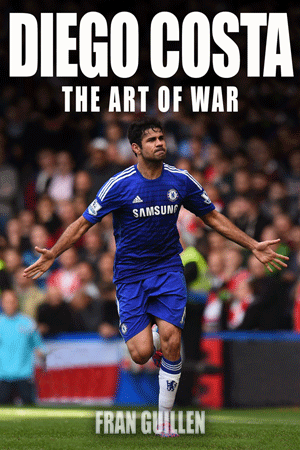
Neil White: We’re working with Arena Sport on ‘DIEGO COSTA: The Art of War’, translated and updated from Fran Guillen’s Spanish edition of last year to include the World Cup, Costa’s transfer to Chelsea and this season’s dramas. Due out 16th July, more info here

Diego-Costa

We’re really excited about ‘The Five-a-Side Bible’ which we’re developing with Freight Books and 5-a-side.com for an October release. That’s going to have lots of funny stories from the world of 3G, as well as tips from the best fives players in Britain, a five-a-side bucket list and much more. If you play short-sided football, this is the book you’ve been waiting for.

Around the same time, we should have ‘PUSKAS: Madrid, Magyars and the Amazing Adventures of Football’s Greatest Goalscorer’ done. We’re working with Freight Books on that, and it’s written by Gyorgy Szlossi, who heads up the Puskas Academy in Budapest, founded the Puskas Award with Fifa and remains a close friend of the Puskas family.

Pitch Publishing

Paul Camillin: The first half of 2015 sees a variety of titles being added to Pitch Publishing’s ever-growing football list​, including biographies, autobiographies and club-specific titles.

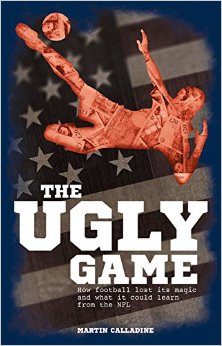
For those who lament the modern game, and feel somewhere along the way football took a wrong turn, losing touch with fans. The Ugly Game by Martin Calladine is a passionate, funny book of essays, and sets out to put football right by comparing it, often unfavourably, with American football, a sport, perhaps surprisingly, that’s showing how money need not destroy fairness and competition.

Ugly Game

Soccer in Stilettos by Liam Newman is a definitive look at the rise of women’s football, telling the inspirational story of how the female sport has slowly but surely stepped out of the shadow of its male counterpart to become the truly beautiful game that it is today. With the future of the sport looking brighter than ever, how did football finally show sexism the red card?

Of the club titles, one is already proving popular with Leeds United fans, and flying off the shelves. Jon Howe’s The Only Place For Us is the A to Z history of Leeds United’s Elland Road home, revealing the stories behind its past uses, famous features and characters – plus fires, gypsy curses and escaped pantomime horses. Using archive research, insiders’ insights and fascinating photos, Jon Howe retraces the intriguing historical journey of one of Britain’s most iconic football grounds.

Then on the autobiography front we have Moody Blue, the self-told-tale of former Rangers legend Marco Negri and Luggy, the story of journeyman manager Paul Sturrock.

Ockley Books

This Yorkshire-based publisher’s small but finely-crafted football list is one of the best around. Current highlights include Adam Digby’s Juventus: A History in Black and White and Roger Domeneghetti’s From the Back Page to the Front Room: Football’s Journey Through the English Media.

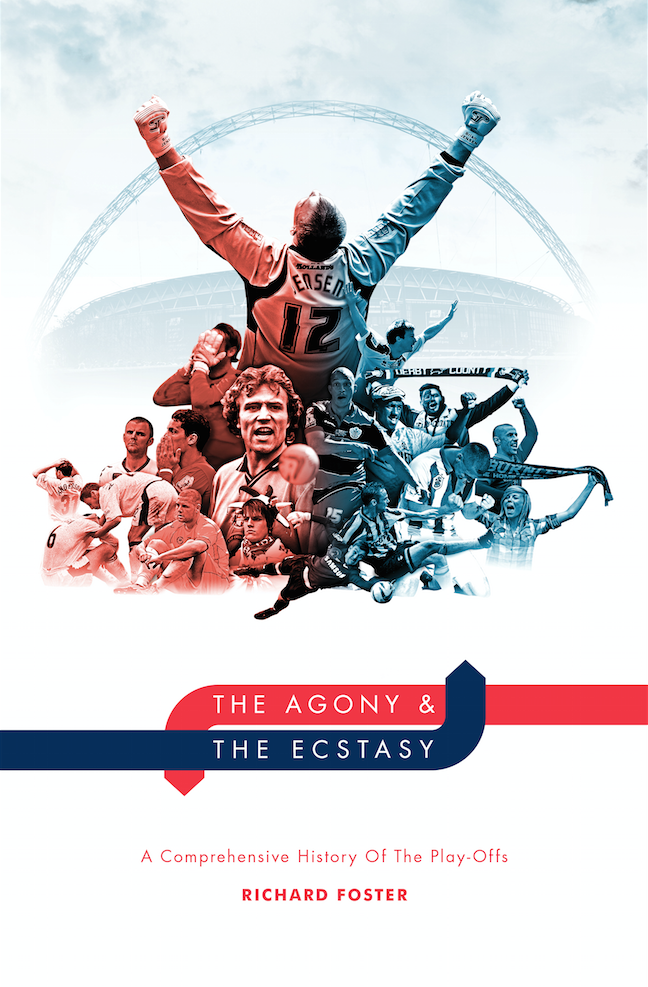
I think the best, however, may be yet to come. It’s pretty rare these days that you hear of a football book and think ‘Wow, why has no-one written about that before?’ The Agony & The Ecstasy: A Comprehensive History of the Play-Offs by Richard Foster is definitely one of the most exciting ideas I’ve heard in a long time. You can read an extract here.

Playoffs

Trinity Mirror Sports Media

Hardback:

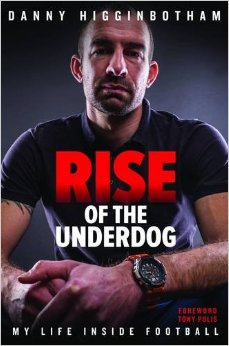
Danny Higginbotham Rise of the Underdog, RRP £16.99

Danny Higginbotham has always been honest. What he lacked in natural ability as a footballer, he made up for in raw passion and commitment.

He started his football education under the greatest – Sir Alex Ferguson – at his beloved Manchester United. After a headline-making loan spell in Belgium, he embarked on an eventful career journey, taking in stops at high-flying Derby County, Southampton, Sunderland and Stoke City.

Sharing Premier League dressing rooms and pitches with some big names, he experienced both sides of the modern game – from the gut-wrenching agony of relegation to the champagne moments of reaching Wembley. Along the way, he worked under charismatic bosses like Jim Smith, Harry Redknapp and Roy Keane – who delivered the most bizarre team talk he’s ever heard. At Stoke, he learned about the team-bonding tricks of Tony Pulis.

As honest and whole-hearted as his career on the pitch ‘Rise of the Underdog’ is the entertaining inside story of how an ordinary lad worked his way up the professional ladder, learning the lessons it takes to survive at the highest level of the English game.

Underdog

Paperback:

Sergio Aguero Born To Rise, RRP £8.99

‘A must-read for any football fan’ Daily Mirror

Sergio Aguero is one of the top strikers in world football, but his rise to superstardom hasn’t always been smooth. Born into poverty, his life story Sergio Kun Agüero: Born to Rise is fascinating and a real story of talent, desire and the guidance of good people helping him to overcome adversity.

The book features a foreword from his best friend, Lionel Messi, and includes colourful dressing room revelations about his fellow countryman and other stars he’s encountered on his journey. This is a book every Manchester City fan will want to read, but also any football fan who is fascinated by that elite group of world greats who were touched by destiny and born to rise.

Leon Osman My Autobiography, RRP £8.99

“Fascinating” Liverpool Echo

LEON OSMAN has been at Everton FC since he was ten years old and in that time has witnessed major changes at the club and within football. A fixture in the Blues’ team for the past decade, Osman’s humour and thoughtful nature shines through in his revealing and entertaining autobiography.

Osman provides a unique insight into Moyes – the man and his methods – as well as many of the big personalities he has played alongside, such as Duncan Ferguson, Wayne Rooney, Tim Cahill, Thomas Gravesen, Mikel Arteta and Phil Neville.

Filled with entertaining tales and anecdotes from his life at Everton, Osman’s story is fascinating and inspiring.

Best of the Rest – top 5 new releases

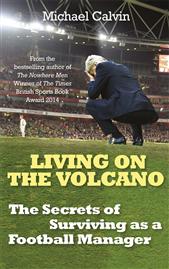
  1. Living on the Volcano: The Secrets of Surviving as a Football Manager by Michael Calvin
  2. Matchdays: The Hidden Story of the Bundesliga by Ronald Reng
  3. Money and Football: A Soccernomics Guide by Stefan Szymanski
  4. Eibar the Brave: The Extraordinary Rise of La Liga’s Smallest Team by Euan McTear
  5. Balotelli: The Remarkable Story Behind the Sensational Headlines by Luca Caioli

Calvin

Best of the Rest – top 5 paperback releases

  1. Thirty-One Nil: On the Road with Football’s Outsiders by James Montague
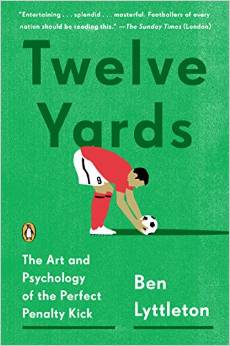
  2. Twelve Yards: The Art and Psychology of the Perfect Penalty Kick by Ben Lyttleton
  3. ¡Golazo! : A History of Latin American Football by Andreas Campomar
  4. Louis van Gaal: The Biography by Maarten Meijer
  5. In Search of Duncan Ferguson: The Life and Crimes of a Footballing Enigma by Alan Pattullo

Twelve Yards

The Game of Our Lives

The Game of our Lives: The Meaning and Making of English Football

By David Goldblatt

Penguin, 2014 

GoldblattDon’t be fooled by the St George’s cross and three lions on the paperback cover; The Game of Our Lives is high-brow, academic stuff. In seven chunky chapters, Goldblatt explores English football from a range of social science approaches – economics, sociology, urban studies, politics, anthropology, race studies, gender studies. With a reference section spanning seventy pages, this truly is an exhaustive look at our nation’s favourite past-time.
‘How has English football changed in the last 25 years?’ Despite dips into deeper history, this is the central question in The Game of Our Lives. Goldblatt is interested in ‘the intersection, where Britain’s deep-rooted cultural relationship with football met the arrival of new media and new money’. His findings, as you’d expect, evoke a unique blend of pride and shame. Cosmopolitanism, collective ownership and crowd safety fight to float above a murky world of greed, mismanagement and sexism.

While the early chapters on the financials of the Premier League era (player/agent power, club ‘growth without profits’) and the fight against racism may feel like fairly well-trodden territory, they’re written with the finesse and detail that you’d expect from the author of The Ball is Round. ‘Keeping it Real? Match Day in the Society of the Spectacle’, meanwhile, makes nice use of the blow-by-blow live football experience to theorise on the ‘longing for the communal and the public in an individualized and privatized world’.

The later chapters offer up more distinctive insights. ‘English Journey: Football and Urban England’ delivers an absorbing lesson in cultural geography. Bristol, Goldblatt argues, ‘perhaps more than any city cleared its inner urban neighbourhood of football’s traditional working-class social base.’ Working from north to south and from east to west, the conclusions are hard to refute. ‘Football at Twilight: Britain’s Endgame’ is a fascinating look at the ‘domestic fragmentation’ through the lens of football. Goldblatt starts with the shifts in Northern Ireland, Wales and Scotland before moving on to discuss ‘the English football nation’ and the fans’ rejection of the Union Jack in the late 1990s.

Perhaps even better is ‘Last Man Standing? English Football and the Politics of Gender’. ‘Is there any other realm of public life where prominent figures proclaim the essential, enduring maleness of their world?’ Goldblatt asks rhetorically. What follows is a study of both the slow, fettered progress made by women in the game but also the rise of the sophisticated foreigner and in particular the metrosexual man, embodied by David Beckham.

As you’d expect from what is essentially a series of intellectual essays, The Game of Our Lives can feel a little dry at times. However, there are certainly moments of crackling wit from Goldblatt, such as the description of TalkSport as ‘the saloon-bar bear pit of sports radio’ and his character assassination of the FA in Chapter Six (‘a hybrid of the punctilious provincial town hall and the clannish rotary club’).

As the sum of its scholarly parts, The Game of Our Lives puts football where it belongs – at the very forefront of our society. ‘The Church, the theatre, festivals and soap operas – football has acquired a place in British culture that exceeds them all, for it alone is the equal of each in their domains of ritual, performance, ecstasy and national narrative.’ At times, Goldblatt may seem a little serious, but his point is that the role and meaning of modern British football is no joke at all.

Buy it here

Up There

Up There: The North-East, Football, Boom and Bust

By Michael Walker

deCoubertin Books, 2014

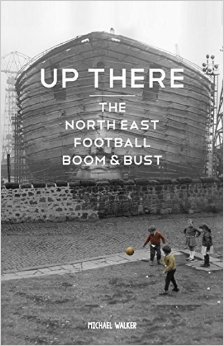
51CE1dvjciL._SY344_BO1,204,203,200_As a very Southern boy, ‘Up There’ is exactly how I’ve always viewed the North-East. During my lifetime, the region’s biggest football clubs have yo-yoed between spectacular near misses and equally spectacular declines, with an ardent fan base the only real constant. This season, Middlesbrough are favourites for Premier League promotion, while Newcastle lost manager Alan Pardew to a team eight places below them in the table, and Sunderland have now sacked Gus Poyet after just one win in twelve games. It seems there’s never a dull day along the Tyne, Wear and Tees.

Michael Walker’s Up There: The North-East, Football, Boom and Bust is the definitive history that the region deserves, a combination of the untold stories and the stories that deserve to be told again and again. As with Promised Land, Anthony Clavane’s classic book on Leeds United, Up There is as much about social history as it is about football history. There is a noticeably separate identity in the North-East of England; ‘Part of that is distance, part of it was industry and part of it is political. Part of it is football.’

Where Clavane wove race, religion and literature into each era in turn, Walker chooses to set the social scene in one go, with first section ‘The Culture’. From the golden years of the early 1900s to the often grim reality of today, the North-Eastern decay is depicted in detail on several, inter-connected levels: money, jobs, community; the decline of coal mining, the decline of shipbuilding, the decline of local football.

With this backdrop established, that latter theme becomes the focus, as Up There takes a footballing journey from Bob Paisley through to Mike Ashley. Childhood neighbours turned arch rivals, Brian Clough and Don Revie; the Charlton brothers, perhaps the most famous Geordies to fly the nest; and, of course, Alan Shearer’s second coming on Tyneside. The thread that links these three narratives, and many more according to Walker, is exodus – talent born in the North-East, but sadly most successful elsewhere.

The later, modern sections are brilliantly and succinctly done. In around 20 pages, Walker tells the exhilarating story of Middlesbrough’s last 20 years, from Juninho all the way to Aitor Karanka. Conversations are used as key structural devices – the words of Newcastle’s Rob Lee and Sunderland’s Niall Quinn work very well as pivots for the highs and lows that surround them. Up There even manages to cover the lower tiers, with chapters on Hartlepool, Gateshead, Darlington and the Northern League.

Carefully researched and thoughtfully structured, Up There is also very well-written. Walker is highly skilled at combining the best aspects of short-form journalism (anecdotal details, insightful interviews, concise scene-setting) with a more literary eloquence. ‘If there is a constant down all the years at Newcastle, it is the milking of devotion’, Walker argues at one point. Later on, he describes Quinn as ‘a worried man. Wearside had a few of them, its talking wounded.’ The style feels perfectly suited to the subject matter, a rather bleak kind of beauty. With writing like this, perhaps the North-East won’t always be quite so ‘overlooked’.

Buy it here