David Winner Interview

WinnerAs the proverb goes, from small beginnings come great things. With wires seemingly crossed, I was ready to give up on my interview with Mr Winner, author of Brilliant Orange, Stillness and Speed by Dennis Bergkamp and now #2Sides by Rio Ferdinand. I’d left the warmth of the Tricycle Theatre café and was about to enter Kilburn station when he called. Full of apologies, he asked if I’d had dinner. Ten minutes later, we were discussing Ronald Koeman’s Southampton team in an Afghan restaurant. Two hours later, I made my way back to the tube after an evening of lively football conversation with one of football’s most innovative writers and nicest men. Sadly, I only recorded about half an hour of our meal – here are the best bits:

Q. First things first, how did the project come about?

There were two other writers who were going to do it but for whatever reason, they couldn’t. Then in March, the publisher came to me and said ‘Can you do this in 3 months?’

Q. Had Rio read Stillness and Speed?

I’m not sure if he had or his people had, but they certainly knew of it. I guess that was the only reason to come to me, because I have no Manchester United connections and I didn’t know Rio. But it was nice that way. We have all of these silly prejudices as football fans, which is part of the fun but it also stops you seeing nice things. Talking with Rio every day and entering his mind was a bit like Stockholm Syndrome; you come to share their viewpoint. I started to feel very warmly towards United, when he spoke about Scholes and ‘Giggsy’. At one point I caught myself saying ‘Scholesy’ and I realised all of my Arsenal friends would actually disown me! When he spoke about Ferguson, I was seeing it through his eyes and I thought, yes, what a fantastic man. Not just a great manager, but a wonderful man. When it counted, he always did the right thing. To hear Rio’s view of Ferguson, you understand why he inspired his players. I rather love Ferguson now.

Q. How did the process work?

We did it mostly on the phone. We met initially, and there was one full day we had in Wilmslow, sat in the upstairs room of a pub, which was uncannily similar to the café in Holland where I used to talk to Dennis [Bergkamp]. But mostly we would speak on the phone while Rio was driving to training. He would drop his kids at school and then there was another half hour to Carrington. I’d know to stop when I could hear kids asking him for autographs.

Q. What was Rio like to work with?

He’s a very warm guy and I think he enjoyed the process. He’s rapidly maturing; you can see him growing before your eyes every time he’s on TV. He’s very outward-looking and he’s very curious about everything, not just football. He’s got his creative side with the magazine, his charity side (which is not just for show – it’s really important to him), and then there’s film, music, fashion. I don’t think he knows exactly what he’s going to do in the end but he’ll do something remarkable. There’s talk about him becoming the British representative for FIFA now, which would be very interesting. He’s very smart and very engaged in a nice way.

Q. The book feels very candid. Was there anything he didn’t want to discuss or asked to be removed?

He’s very open but there were a few things that he spoke about that he later decided he didn’t want to include for various reasons. One was a bit about a family holiday in Portugal with Anton and he wanted his brother to be a big part of the chapter. But when it was all done, Rio decided that with Anton back playing in England, he didn’t need any more shit. So everything Anton had said was either cut or put into Rio’s voice. There was also a bit of David Moyes stuff, a few unflattering observations and incidents that he wanted to cut out. He said he liked the guy and didn’t want to ‘cut his legs off’. Because it’s completely not a ‘settling scores’ book.
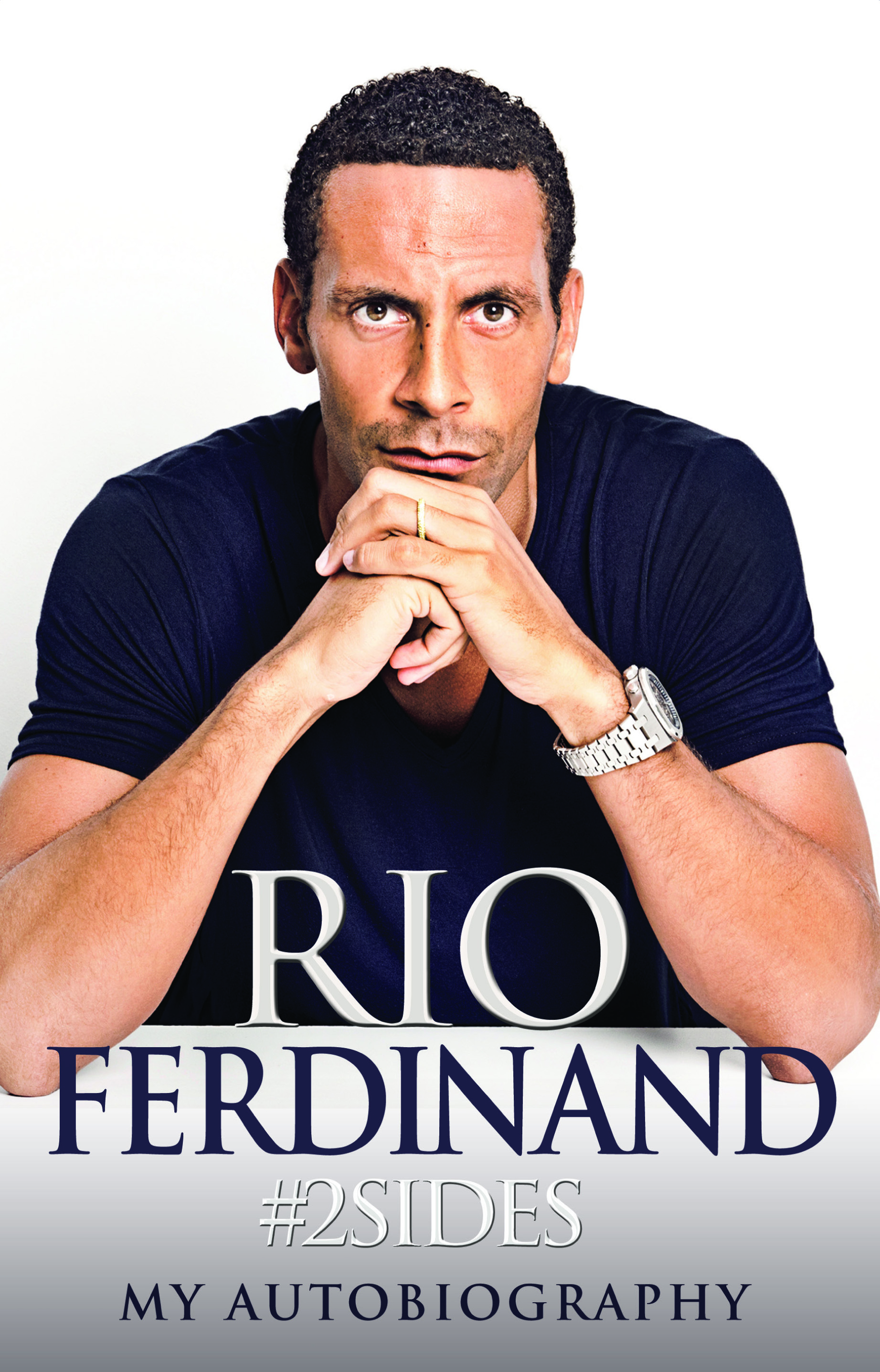
Cover - #2sides Rio Ferdinand high res

Q. Was it a conscious decision to avoid a traditional chronological approach?

There is a sort of rough chronology, in that it starts with childhood and ends with now. But in the middle of that, it can go anywhere. One of the things I hate about a lot of football biographies and autobiographies is that tedious structure where they start with some career highlight and then they just plod through the youth team, getting discovered, getting into the first team…It’s almost season by season and sometimes it’s just match reports. I can’t read them; I have a severe allergic reaction.

Rio had published a book eight years ago with a Sun journalist and it was done in a very skilful, ‘Sun’ way. Perhaps it was more accurate of who he was then, but he’s certainly not remotely like that now. So my pitch to Rio was ‘Look, I think there are all these different aspects of you and you’re not this tabloid character’. I told him to say whatever came into his head and think of it like scenes from a film; we wouldn’t know how it would all fit together until we had it all. He liked that approach. And the very first thing that he talked about was playing in the park with much older African guys, which turned out to be a perfect opening for the book.

I thought there would be more of a masterclass on the art of defending but that didn’t really develop. I had that experience with Dennis where he could break things down micro-second by micro-second and analyse from every angle, but I don’t think anyone else can do that.

Q. How did you find the ghostwriting process, compared to the biographer role for Stillness and Speed?

It’s much less work! With Dennis, it was a much more complicated process because there were lots of people to interview and I was sharing material with Jaap Visser, who was doing the Dutch version. With Rio, the main thing was to find the voice. He tells a lot of stories in reported speech but every time he speaks in the words of someone else, they all sound like Rio! So Fergie sounds like he grew up on an estate in Peckham, and so does Ronaldo. I couldn’t keep all of the distinctive parts of his speech but it was about taking the original style and making it flow better. When I took him a first, experimental chapter, Rio did a really clever thing. He read it aloud, and then said, ‘Yeah, that’s my voice’.

Once we’d agreed on the template, it was actually quite quick. I had about 25 hours of transcript and it was like a jigsaw puzzle, working out what could go with what to form a chapter. Then afterwards we worked out the order. At first, the publisher wanted to have a ‘juicy’ chapter first but Rio didn’t like that idea and neither did I. We wanted a book that reflected him accurately, in the same way that the Bergkamp book reflected Dennis very accurately. There, the idea was that he would play off other people in the same way that he did on the pitch. With Rio, he wanted to change his image and show he wasn’t just that guy who forgot the drugs test.

Buy #2Sides here
The Premier League in Books – Part One

Arsenal

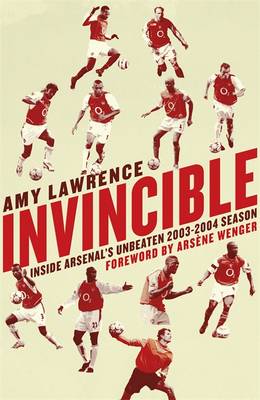
With such rich literary connections, Arsenal is a nice easy place to start. For historical accounts, try Patrick Barclay’s The Life and Times of Herbert Chapman, or Nick Hornby’s 90s classic Fever Pitch. If it’s modern player portraits you’re after, you’ll find few better than Tony Adams’ Addicted (with Ian Ridley), Dennis Bergkamp’s Stillness and Speed (with David Winner), and Lonely at the Top, Philippe Auclair’s biography of Thierry Henry. And if all that’s not enough, Amy Lawrence’s Invincible: Inside Arsenal’s Unbeaten 2003-2004 Season is undoubtedly one of 2014’s best Christmas gifts.

Invincible

Aston Villa

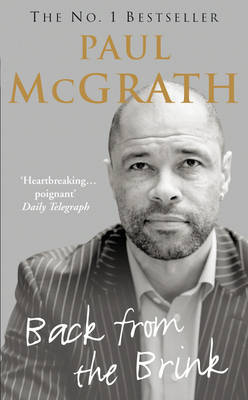
Despite being one of the Premier League’s perennial few, the Villains have made little contribution to the literary canon. In my humble opinion, that’s because the likes of Mark Draper, Julian Joachim and Alan Wright have so far steered clear of the confessional. A few, however, such as Gareth Southgate (Woody and Nord), Stan Collymore (Tackling My Demons) and Dwight Yorke (Born To Score), have been more communicative. Paul McGrath’s candid Back From The Brink is the pick of an average bunch. Perhaps Gabby Agbonlahor will one day right this wrong.

McGrath

Burnley

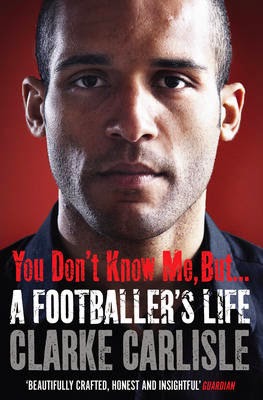
Same colours, same dearth of books. Thank goodness for Clarke Carlisle. His You Don’t Know Me, But… is an excellent, warts-and-all look at the realities of lower league football. Carlisle’s happiest and most successful years were at Turf Moor: ‘Owen [Coyle] came in and completely shifted the dynamic. His focus was on total enjoyment. It was fun at training, something a lot of the squad hadn’t encountered for a few years. This change led to a happy workforce, and a happy workforce is a productive one…We were definitely a classic example of a team whose total was greater than the sum of its parts.’

fc7a9-97814711288442b1

Chelsea

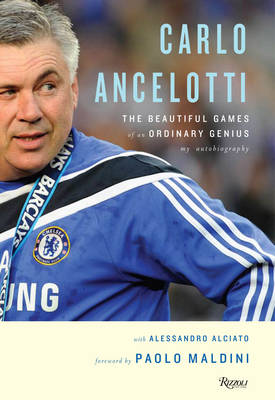
It always surprises me how little of note has been written about the Russian revolution at Stamford Bridge. Until the arrival of beige autobiographies from John Terry and Frank Lampard, we’ll have to make do with the managers. Ruud Gullit: The Chelsea Diary and Mourinho on Football are entertaining reads, but Carlo Ancelotti: The Beautiful Games of an Ordinary Genius is the pick of the bunch. Although largely based around his time in Italy, the book ends with the brilliantly named chapter ‘Summoned by Abramovich’.

Ancelotti

Crystal Palace

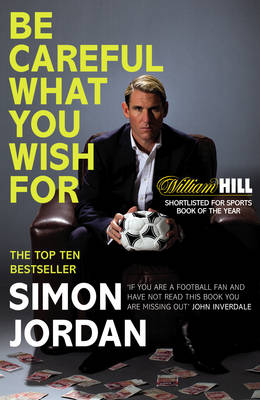
Where the Eagles are concerned, Simon Jordan’s Be Careful What You Wish For soars head and shoulders above the rest. Mobile phone entrepreneur Jordan bought Palace in 2000 at the tender age of 36 and took them back to the Premier League. Ten years later, he was bankrupt and his club was in administration. This explosive and revelatory book will appeal to all football fans with an interest in what goes on behind the scenes, but it will mean the most to the long-suffering Selhurst Park faithful.

Jordan

Everton

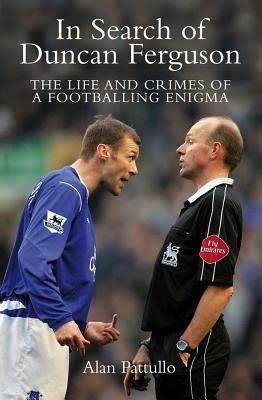
This year has seen the publication of four books about Toffees heroes: Kevin Kilbane’s Killa, How Football Saved My Life by Alan Stubbs, Ossie by Leon Osman and best of all, In Search of Duncan Ferguson by Alan Pattullo. Here’s a juicy sample from the beginning: ‘Everton got under his skin. He would never ever forget how it felt to soar into the air, to head that first goal against Liverpool, before sinking to his knees with joy and relief in front of the Gwladys Street End; the legend before the player, the rise before the fall. On the same date 12 months later, he was languishing in jail.’

a2033-in-search-of-duncan-ferguson-9781845963927

Hull City

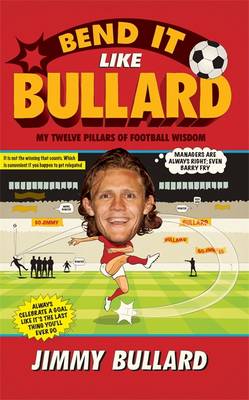
If a book could ever be said to sum up a football club, it would probably be Bend it like Bullard, nearly 300 pages of cult, no-frills entertainment. Here’s Jimmy on his motorway-side scrap with teammate Nicky Barmby: ‘I’d love to be able to say that I sorted him out, but the truth is that it was little more than explosive grappling for a few seconds. As the gaffer said later, it was hardly Ali-Frazier. We both ended up lying on a bush with no real leverage to get out of it.’

Bullard

Leicester City

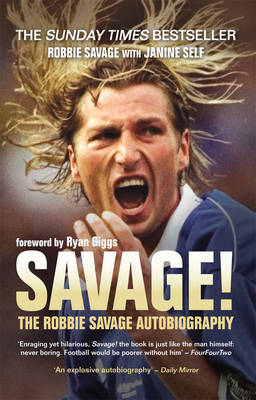
The Foxes are back in the top flight again but it’s their 90s heyday under Martin O’Neill that provides the literary goldmine. Steve Claridge’s Tales From the Boot Camps is an underrated gem, while Savage! is as entertaining as you’d expect. Apparently, everything slotted into place when he joined Neil Lennon and Muzzy Izzet in the centre of the park: ‘With those two at my side, I produced my best forty-five minutes in a Leicester shirt…At the final whistle, everyone came over and hugged me. Martin had his arms around my shoulder. “Thank Robbie for getting us to the final”, he said to the others…That was the day I became Robbie Savage, Leicester City footballer. I was accepted by the lads from that moment on, and I still believe we were the best midfield that Leicester have ever had.’

Savage

Liverpool

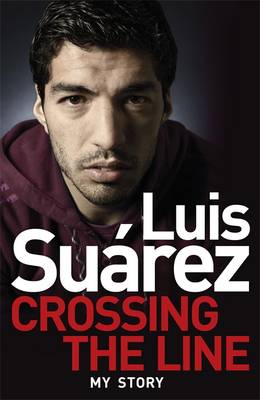
As befits a club with such history, there’s a long list of options here. For the nostalgics, I’d recommend David Peace’s Shankly epic Red or Dead and Tony Evans’ I Don’t Know What It Is But I Love It: Liverpool’s Unforgettable 1983-84. But this Christmas, it’s all about the controversial ex-strikers: Craig Bellamy’s GoodFella (featuring the winning combo of John Arne Riise and a golfclub) and Luis Suarez: Crossing The Line. The Uruguayan’s story promises to be as explosive as his finishing.

Suarez

Manchester City

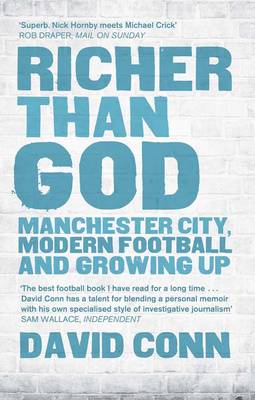
Unlike Chelsea, City have an excellent book on their recent rise: David Conn’s Richer Than God: Manchester City, Modern Football and Growing Up is a brilliant look at how the football times are a changing, for better or for worse. Beyond that, there’s Blue Moon by Mark Hodkinson about the 98-99 promotion season, and Paul Lake’s I’m Not Really Here, a powerful and cautionary tale which you really don’t need to be a Sky Blue to enjoy.

Conn

Promised Land: A Northern Love Story

Promised Land: A Northern Love Story

By Anthony Clavane

Yellow Jersey Press, 2010

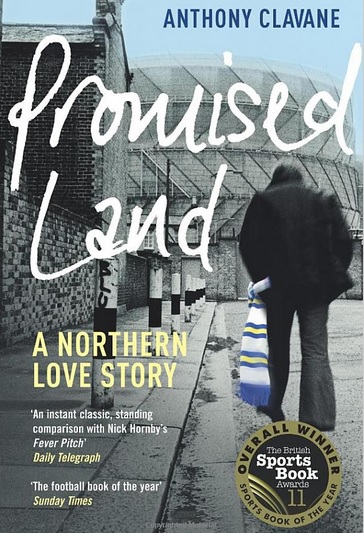
Promised LandFor all the acclaim and attention, there remained a sad and predictable note to the reception for this ‘Northern Love Story’ four years ago. The Daily Telegraph compared it to Fever Pitch, The Sunday Times called it ‘the football book of the year’ and there was even praise from The Damned United author David Peace. Unfortunately, what these excellent associations did was pigeonhole a book that was always about a whole lot more than sport. Promised Land is a set of interlocking, coming of age tales: the story of a city, Leeds, alongside the story of the book’s Jewish author. The story of a football club – Leeds United – forms the third side of the triangle, the binding baseline of the equilateral. Incorporating politics, culture, literature and religion, Promised Land is the best expression of the game’s communal significance that you’re ever likely to read.

While Clavane’s engaging personal narrative is woven throughout, it’s never as self-centred as Hornby’s. A crucial balance is upheld between the subjective and the objective, between the love letter and the social investigation. Rather than the central theme, Clavane’s journey through adolescence is rarely more than a narrative tool to transport the reader from a to b to c to d to e. Because in little more than 250 pages, Promised Land takes in more than 50 years of British social history. In fact, if we include the early section on his ancestors’ arrival in England, that figure becomes 110. Such scope requires the tightest of structures and the most focused of analyses. The governing principle of Promised Land is this; ‘United’s peaks and troughs over the past fifty years have coincided with the peaks and troughs not only of the game itself, but also of the city of Leeds and its Jewish community.’ Simple, shrewd, succinct.

Promised Land is arranged around four key time periods: Don Revie’s side of the 1960s and the meteoric rise of the Northern Man; the decline and degeneration of post-1975 Britain, dominated by ‘the three Rs – the recession, the Ripper and the racism’; the early 90s revival of both club and city; and finally O’Leary and Risdale’s ill-fated attempt at Premier League domination, just as the city too ‘squandered its boom money on insipid, gimmicky projects’. In amongst this chronological progression, Clavane’s study sweeps deftly across the years: ‘Cantona, like Johanneson and Clough…epitomised the flamboyance and sense of adventure Leeds had always failed to accommodate’, ‘It had gone the way of all other Leeds dreams, from Brodrick’s – through Revie’s – to Risdale’s.’

The result is a convincing, overarching argument for Leeds’ ‘nearly-man inheritance’. 1975, 1992, 2001, 2011 – ‘at the most crucial moments in their history, just as they were about to close in on their pinnacle, they have, quite simply, blown it’. Beautifully crafted and meticulously researched, this final reckoning rings loud and true. Clavane is in his element, combining the authority and precision of the historian, with the passion and obsession of the football writer. Promised Land is at its absolute peak when placing the two eras of Revie’s reign (‘Dirty Leeds’, then ‘Super Leeds’) within the context of the post-war regeneration of the north.

The book concludes with a backwards timeline inspired by the ‘seven sabbaths of years’ prophesised in Leviticus. It’s the football writing equivalent of Ulysses and forms a fitting finale to what is a hugely ambitious and innovative study of everything Leeds; football and everything before, during and after.

Buy it here

What Ever Happened To Billy Parks?

What Ever Happened To Billy Parks?

By Gareth R Roberts

The Friday Project, 2014

whatever happened to billy parks[1]In the lofty world of fiction, few subjects are deemed as fatal as football. And I say that in 2014,nearly a decade after the success of David Peace’s The Damned United. The beautiful game, despite its inextricable ties to human nature and contemporary society, remains the source of exasperating literary pillory. But blessed be the few brave souls who fight the tide. This year, most notably Danny Rhodes took on memories of the Hillsborough disaster in Fan, and Gareth R Roberts inserted a fictional hero into the iconic world of 1960s West Ham United in What Ever Happened to Billy Parks? The former has been a much-heralded success; the latter won a prestigious Fiction Uncovered Award.
Billy Parks might be a footballer, but he is first and foremost an archetypal ‘nearly man’, pained by regret and pining for redemption. He was a highly talented winger in a golden generation, who, through a combination of tragedy, womanising and alcoholism, wasted his opportunities for true greatness. Parks spurned offers from Matt Busby’s Manchester United and Brian Clough’s Derby, and sat helpless on the bench as England failed to qualify for the 1970 World Cup. By the novel’s opening, he’s in his sixties and reduced to sharing stories at a Sportsman’s Lunch for £60, some drinks and, most importantly of all, an afternoon of adoration. Alternating between this often tragic present and his more auspicious past, Billy Parksis (to borrow the most tired of football clichés) a tale of two halves: fame and fortune, fading into reflection and remorse. As with Peace’s portrait of Brian Clough, Roberts’ novel is a moving human drama played out on the sporting stage.

For all his failings and misdemeanours, Billy Parks remains an endearing narrative voice. His aim is true, his personal battles are tough and vivid, and he favours self-knowledge over self-pity. He rues ‘the growing carbuncle that was my ego, drunk on alcohol and adulation’, but makes no excuses for himself. Even in the midst of his most depraved spells, there are small expressions of weakness; ‘just occasionally a black sadness before or during a game, as I grappled with the reality that failure would mean an endless abyss of nothing’. Later on, at death’s door, it’s Parks’ genuine desire to make amends with his daughter and grandson that keeps him sober and alive.

But to focus on the sadness in Billy Parks is to ignore the sense of joy and excitement. The novel is a thorough, loving tribute to a bygone era and most importantly, to the delights of youth. Roberts brilliantly captures the pure ecstasy of that first game (‘There were goals and movement and swear words and arguments and kicks and shoves and I loved it all’) and that first goal (‘I felt my body and mind surge with the glorious fresh air of life’). The inclusion of match stats throughout – date, venue, team line-ups, goalscorers, attendance – is the inspired touch of a writer in his element. The macho invincibility of footballing fame is also well-captured; ‘we drank and revelled in being young and carefree and oh-so-very-very male.’ Parks and his teammates are ‘knights of the round table, the untouchable dynamite dealers of Saturday afternoon’.

And then there’s Roberts’ wildcard, which turns out to be a winner, if perhaps not a trump card. Without saying too much, there’s a mysterious ‘Service’, a very eminent ‘Council of Football Immortals’ and the chance to rewrite history. Just when Billy Parks is cruising along towards traditional ‘memoir’ territory, it takes a left turn into Back To The Future. But worry not, sci-fi sceptics; it’s no giant leap and it’s all in the name of feel-good, football fun. Out of its oddly disparate elements – football, family, love, addiction, regret, nostalgia, comedy, tragedy, fantasy – Billy Parks emerges as both a heart-warming human tale and an engaging sporting narrative. Perhaps Roberts should consider adding manager to barrister and novelist.

Buy it here

Gareth R Roberts interview

Football Fiction with Gareth R Roberts, Danny Rhodes + Martin Greig

Waterstones Deansgate, Manchester

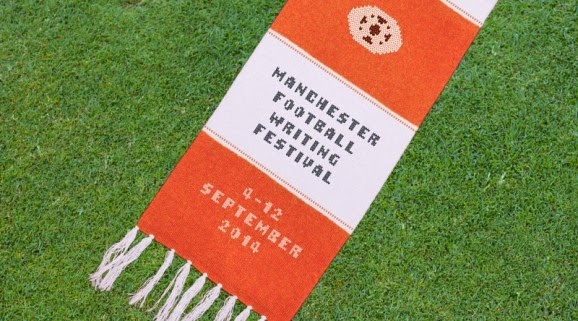
This weekend, I was in Manchester for their inaugural Football Writing Festival, a fantastic labour of love organised by Waterstones Deansgate in association with The National Football Museum. 9 days long (4th-12thSeptember), it comprises 10 amazing events featuring the leading lights and luminaries of football journalism including Jonathan Wilson, Matt Dickinson, Sid Lowe and Graham Hunter. After a fascinating insight into the world of sports biography and newspaper writing with Paddy Barclay, Mike Calvin and Ian Ridley on Friday night, I spent Saturday afternoon absorbed in the less-celebrated world of sports fiction. Gareth R Roberts (author of What Ever Happened To Billy Parks?) Danny Rhodes (author of Fan) and Martin Greig (co-author of The Road To Lisbon) shared the stage to talk football and its literary links to childhood, community and nostalgia.

After the event, I caught up with the charming Gareth R Roberts for the low-down on Billy Parks.

Q. Thanks so much for your time, Gareth. Let’s start with the inspiration for this book.

Without being too pseud-sounding, I wanted to write something that grappled with the notion of decay and the human condition as you get older and start to reflect on life. That was one aspect and another was the desire to bring some of my heroes back to life. Growing up in the 1970s, a lot of the football was in my head – what I imagined the lives were like, the characters were like. I’d see them in the old comics and Shoot magazine and in Panini books and they’d come to life in my own mind. So I suppose a big part of What Ever Happened To Billy Parks? is a loving reconstruction of how I thought things were when I was a kid. Whether I got that right, I don’t know!

Q. In terms of the character Billy Parks, there are certainly parallels with famous footballers like George Best and Gazza. Were they in your head as you wrote?

Yes, I suppose so, but there was never a single inspiration in my head. I haven’t based this story on any of those players, but I did read a lot of their biographies as research. It was more people I know myself, who I played rugby and football with, who now hark back to that time and they’re desperate to relive their glory days and it won’t ever happen.

Q. Placing a fictional character into a real world, did you have a lot of historical research to do?

Not really – it was always a labour of love. I don’t know what it is about football but you go through an age, from about 7 to 14, when you just accumulate facts about football. Bizarrely, I can name all of the footballers who played in all of the FA Cup finals between 1969 and 1981, and yet if you asked me about last year I couldn’t tell you. So the research was dead easy, and of course the internet helps. Mostly it was just recalling what I remembered and making sure I’d got it right.

Q. As a Liverpool fan, why choose to make Billy Parks a West Ham and Tottenham legend?

It was partly because I lived in the East End of London for six or seven years and actually know that area better than Liverpool. And also, it just fitted. In my mind, the voice of Billy Parks was Cockney, I don’t know why but it just was. Then I wanted him to play for a football team that I’m fond of, so it was West Ham. Everyone likes West Ham, especially the team from the 60s and 70s that played great football and spent the rest of the time, apparently, out on the piss!

Q. What are your thoughts on football fiction and do you think attitudes are changing?

The literary world is very strange, very closed, and I think there’s a small cabal of people who are all in each other’s pockets and are influenced by what is fashionable at the time. And football literature has never been particularly fashionable, mainly I think because most of the people in that literary elite are not football fans and they don’t get it. They don’t get that it’s a lot more than a quaint expression of working class values; that it’s a source of great passion for a lot of people.

Q. And finally, who would make your five-person Council of Football Immortals if you had to pick players, rather than managers?

That’s a great question! Bobby Moore, obviously, Stanley Matthews…do they have to be English? No? Ok, I’d have John Charles, the big Welsh centre forward…and then I’d have Garrincha because he’d be interesting, and finally Billy Bremner.

Whatever Happened To Billy Parks? is available here