Books for Brazil

The World Cup Reading list

Now that the domestic season is all but over, it’s time to focus our book attention on a certain international tournament that’s coming up. These 6 books have got all the bases covered.

The Host Nation
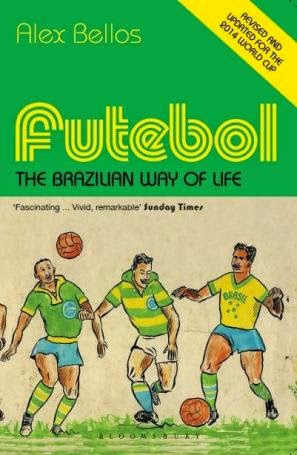
It’s always good to do your homework on the team with the home advantage – the players, the venues, the culture at large. Here it’s a toss-up between the new and the old – David Goldblatt’s Futebol Nation or Alex Bellos’ Futebol(Bloomsbury).  I’d favour the old here, especially as it’s been given a timely update.

The Host Continent
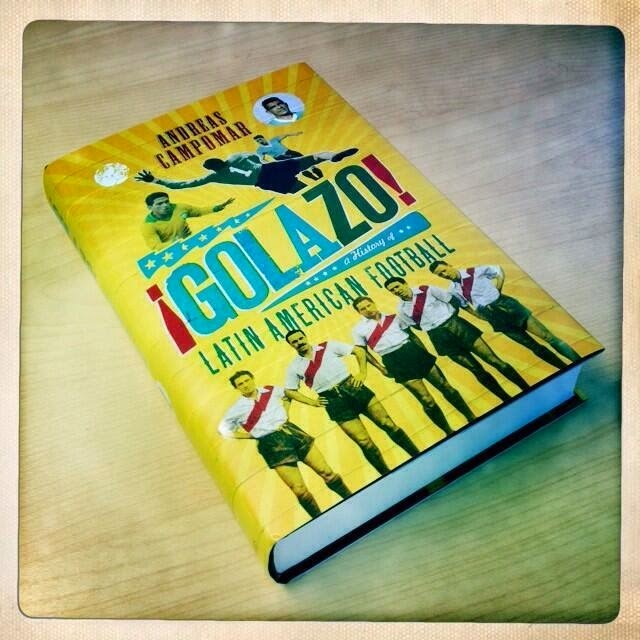
Brazil are far from the only side accustomed to a sub-continental summer. İGolazo! by Andreas Campomar (Quercus) gives you the lowdown on all of Latin America’s finest: the hosts but also Argentina, Uruguay, Chile, Ecuador, Colombia and even Mexico, Costa Rica and Honduras.

The Favourites
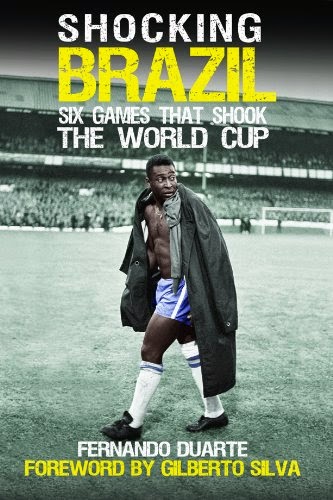
Phil Scolari’s side may be round about 3-1 with most bookies, but this is hardly Brazil’s finest crop. Plus, there’s a history of failure interspersed with all that success. For a reminder, check out Shocking Brazil by Fernando Duarte (Birlinn).

The History
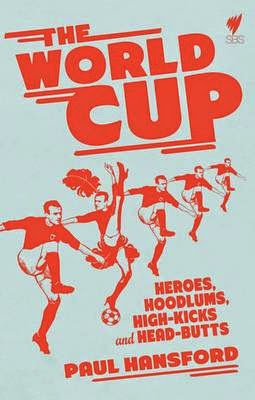
For the full facts, you can’t beat Brian Glanville’s Story of the World Cup but for something a little more fun I’d suggest Paul Hansford’s The World Cup (Hardie Grant). ‘Heroes, Hoodlums, High-kicks and Headbutts’ – the subtitle certainly has a lot to live up to.

The Personal Angle
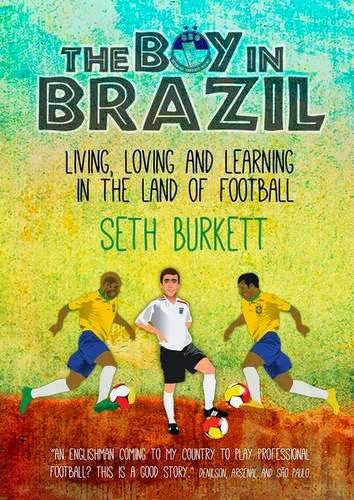
On the subject of previous World Cups, I’d recommend From Bobby Moore to Thierry Henry by Liz Heade as a nice slice of familial nostalgia. But for 2014, it’s got to be The Boy in Brazil by Seth Burkett (Floodlit Dreams). At just 18, Burkett became the only English professional footballer in Brazilian football – this is his fascinating story.

And finally…The Expectation Suppressor
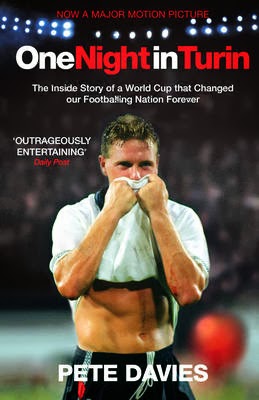
A month ago no-one gave England a chance in hell; but now that the squad has been announced, suddenly there’s a little bit of light at the end of the tunnel. Lest we forget our history of disappointment, read Pete Davies’ classic One Night in Turin. It may be nearly a quarter of a century since Italia 90, but it’s amazing how little has changed for our national team. For more, read my review here.

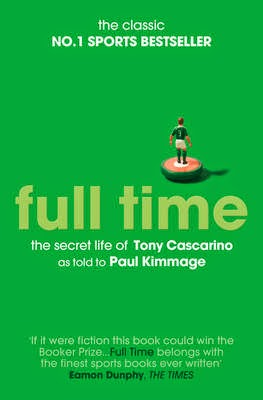
Full Time: The Secret Life of Tony Cascarino

Full Time: The Secret Life of Tony Cascarino

By Tony Cascarino with Paul Kimmage

Simon & Schuster, 2000

No offence to Tony Cascarino but a true superstar could not – and would not – have written Full Time. Honesty and humanity, which are the book’s greatest strengths, are native to the seasoned grafter with a knowledge of both success and failure. Cascarino is an expert on both sides of the coin. He might have been an early million pound man who played in 2 World Cups and the top divisions of England, Scotland and France, but he also started out as a hairdresser, spent nine years in the lower tiers of the football league and then at least three more failing to live up to great expectations. So there are few better placed to offer a candid insight into all aspects of the beautiful – and not so beautiful – game.

‘We drive flash cars and wear flash suits and behave like flash pop stars; and we shape and mould the truth about our lives and present ourselves as shiny, happy people in the pages of Hello.’ As a glimpse behind the glamorous façade of football, Full Timeis equal parts entertaining and sobering. Remote and remorseful in his end-of-career exile, ‘Cass’ is quick to acknowledge he’s a somewhat negative tour-guide. ‘Careers in football are like divorces’, he tells us, ‘there are few happy endings – they always end up bad.’ The striker’s memoir is as much about the mistakes made and the secrets kept as it is about the goals scored. In his own words, ‘In football, it’s not what you are but what you appear to be that counts.’ Nothing’s really changed.

What Full Time conveys brilliantly is the ups and downs of a life in football, from game to game but also from second to second. There are the moments of feeling ‘bulletproof’ as one of the kings of Jack Charlton’s Ireland in the early 1990s, eating and drinking without caution, winning big in card schools and sneaking back into hotel rooms after nights with female fans. But there are also the moments when the aches add up and the doubt creeps in: ‘For as long as I can remember, there has been a little voice in my head that highlights my weaknesses and undermines my confidence.’ Cass knows more than most strikers about loss of form and the tough mental battle to regain it. ‘Becoming a multi-million pound player was the worst thing that ever happened to me’ is a pretty powerful statement to make.

Paul Kimmage does a fantastic job of finding a suitable tone for the book, blending the cruder style of footballing banter with the more elegant prose of reflection and regret. An anecdote about throwing Phil Babb’s skid-marked pants to hysterical groupies is followed by ‘The craving we have to be someone. The magnetic lure of fame.’ The book’s closing line – ‘We win, we lose, the manager bangs the table. But we answer to ourselves’ – is worthy of great literary fiction. In weaving the contemporary French strand through the telling of the past, Kimmage maximises the poignancy of a man looking back at the twilight of his career.

Full Time’s original selling point was the scandal surrounding Cascarino’s false Irish heritage. Nearly fifteen years on, in a world where Adnan Januzaj could have chosen to play for England, it seems one of the book’s least intriguing angles. Instead, it’s the personal indiscretions that engross, and Cascarino’s heart-felt desire to make amends for them. Now living with his second wife and their daughter after a painful and drawn-out separation, Cass is no saint and he knows it. But in the renaissance of his own father and the indifference of his two sons, he has the best inspirations for redemption. Why should you read Full Time? In Cascarino’s own wise words, ‘Because there’s more to football than the ninety minutes of a game and more to the people that play it than a 5 in the ratings.’

Buy it here

Recommended Summer Reading

Top 8 Paperback releases, May-Sept 14

1. Red or Dead by David Peace (Faber & Faber, 1st May)
Peace’s much-anticipated follow-up to The Damned United sees Bill Shankly’s Liverpool reign given the Brian Clough treatment. Expect tension, repetition, interior monologues, and profanities aplenty. At over 700 pages it’s no light read but Frank Cottrell Bryce has called the novel ‘a masterpiece’.

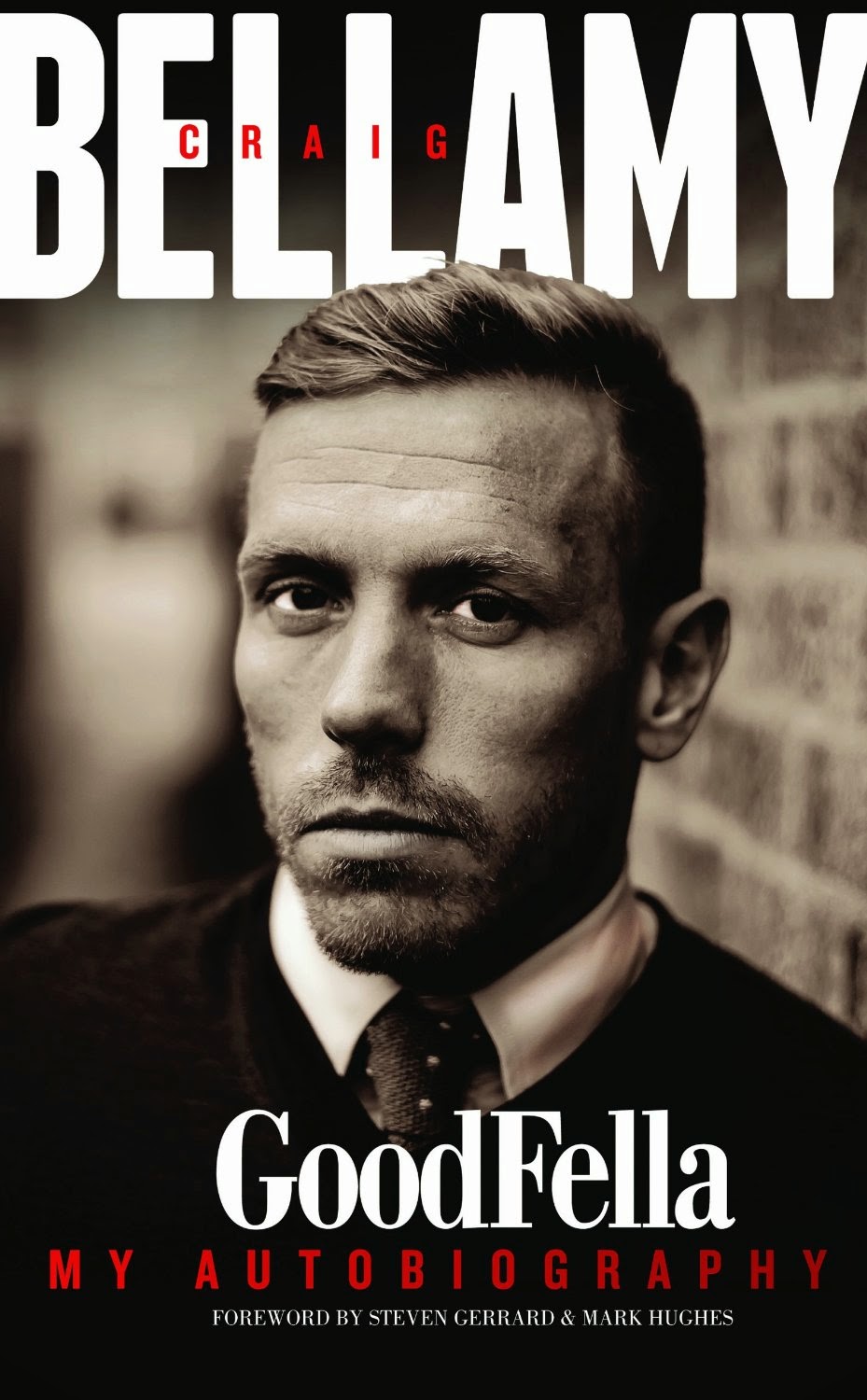
2. GoodFella: My Autobiography by Craig Bellamy with Oliver Holt (Trinity Sports Media, 2nd May)
With beach season approaching, May sees the release of a bumper crop of autobiographies. Keith Gillespie, Alan Stubbs, Kevin Kilbane and Clarke Carlisle all have interesting things to say but Craig Bellamy would be my pick of the bunch. The Welsh forward is a love-hate figure and his colourful career is sure to contain a fair few juicy anecdotes.

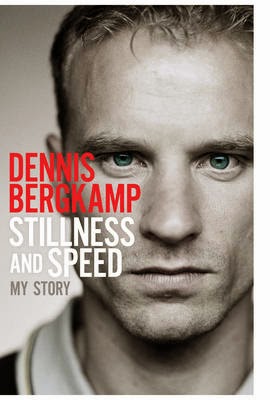
3. Stillness and Speed by Dennis Bergkamp with David Winner (Simon & Schuster, 8th May)
This highly original look at the Non-flying Dutchman’s career has already been longlisted for the Best Autobiography/Biography British Sports Book Award. Click here for my review.

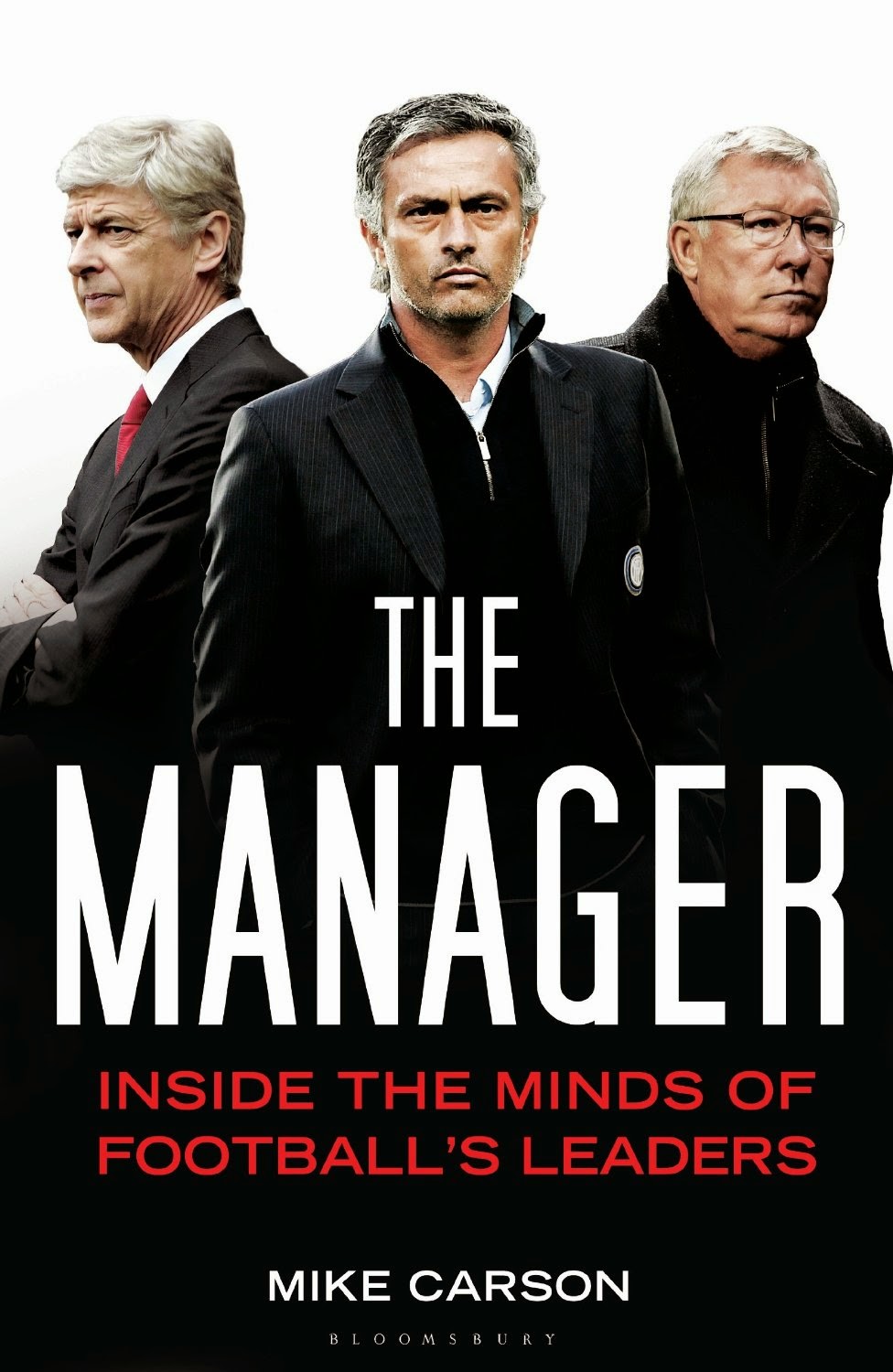
4. The Manager: Inside the Mind of Football’s Leaders by Mike Carson (Bloomsbury, 8th May)
More Premier League bosses have been sacked this season (10) than in any previous campaign. In this thorough and insightful study, Carson speaks to 30 of the biggest names in football management including Jose Mourinho, Sir Alex Ferguson and Arsene Wenger to find out what it takes to succeed.

5. Futebol: The Brazilian Way of Life by Alex Bellos (Bloomsbury, new ed 8th May)
There are plenty of books looking to cash in on World Cup fever this summer (most notably David Goldblatt’s Futebol Nation) but this updated classic is the one-stop shop for all matters Brazilian. The detail is astonishing, yet it’s also as entertaining as the players themselves.

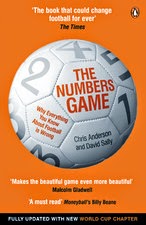
6. The Numbers Game: Why Everything You Know About Football is Wrong by Chris Anderson and David Sally (Penguin, new ed 5th June)
It seems it’s not just books about Brazilian football that are getting a summer makeover. Inverting the Pyramid, Jonathan Wilson’s definitive history of tactics, has been brought up to date and this stats myth-buster has a bright new jacket and a World Cup chapter. Prepare to have your view of the beautiful game changed forever.

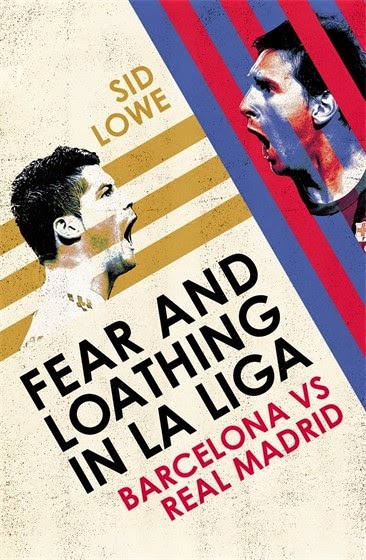
7. Fear and Loathing in La Liga: Barcelona vs Real Madrid by Sid Lowe (Yellow Jersey, 7th Aug)
A great title for a great book about a great rivalry. Spanish football expert Sid Lowe gives us the full and bloody history, both on and off the pitch. Politics, culture, economics, language and of course football – tension and drama as far as the eye can see. Click here to read John Mottram’s review.

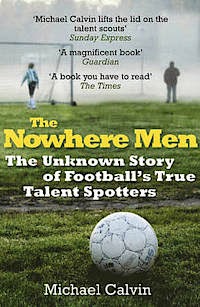
8. The Nowhere Men: The Unknown Story of Football’s True Talent Spotters by Michael Calvin (Arrow, 14th Aug)
Ever wondered how the likes of Jack Wilshere and Raheem Sterling were discovered? This fascinating look at the hidden world of football scouts tell you everything you want to know about the sport’s unsung heroes. One of 2013’s most highly-acclaimed sports books.

Andrea Pirlo: I Think Therefore I Play

I Think Therefore I Play

By Andrea Pirlo with Alessandro Alciato

BackPage Press, 2014
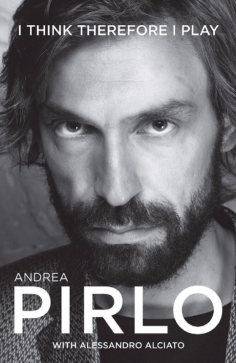
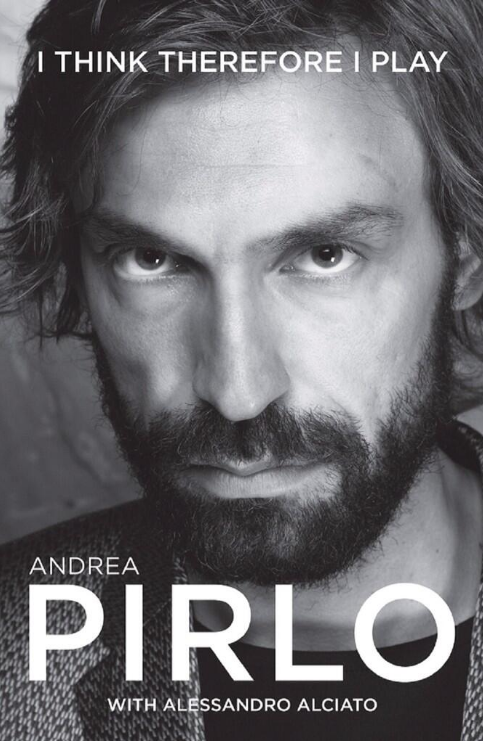
A love of Woody Allen and cinema in general; an appreciation of ‘philosopher’ as ‘a nice compliment’; the secrets of great free-kick taking; ‘I’ll sometimes come home after training, light the fire and pour myself a glass of wine.’ These are the kind of insights you’d expect to glean from the world’s classiest footballer. You won’t be disappointed but Andrea Pirlo is not a man to rush things, or to sell himself short. So instead of the comfort of the lounge, I Think Therefore I Play begins at the negotiation table of a Milan office. It turns out l’architetto is everything you knew and loved, and much more.

Don’t be fooled by his graceful, unruffled appearance on the pitch; Pirlo is made of tougher stuff. A ruthless ambition reveals itself early on in the discussions surrounding failed transfers to Real Madrid, Barcelona and Chelsea respectively. He may have spent a decade at AC Milan, through great times and later more mediocre ones, but Pirlo is no Steven Gerrard. On each occasion these top European clubs came calling, the midfielder had very little hesitation in putting his own success over any sense of loyalty. This is true even in 2006, with Milan facing the threat of relegation during the Calciopoli scandal – ‘one thing I was sure of, though: I would never drop down to Serie B.’ You could almost be forgiven for thinking it was Zlatan talking, the man Pirlo brilliantly describes as ‘a ticking timebomb of a madman’. Andrea’s eventual departure in 2011, to rivals Juventus, seems to have been as seamless off the pitch as on it. I Think shows a fully-fledged convert, a die-hard Juventino, although consecutive Serie A titles certainly helped the transition. Where Rossoneri leaders Silvio Berlusconi and Carlo Ancelotti are shown affection in passing, Antonio Conte and Andrea Agnelli get their own laudatory chapters.

The ‘Olympic torch deep within’ Andrea Pirlo also comes as something of a surprise. An intense patriotism shines throughout I Think, from the Cesare Prandelli introduction right through to thoughts on his imminent retirement. In his own words, he’s ‘an Italy ultra’ with a ‘pathological devotion’ to the Azzurri. Not that at club level he’s any less passionate or determined. Defeats weigh heavily, not least Milan’s disastrous collapse in the 2005 Champions League final versus Liverpool. Pirlo reflects at length on suffering from ‘insomnia, rage, depression, a sense of nothingness’ for weeks. Winning the same fixture two years later isn’t enough; ‘we celebrated but didn’t forget’.

Don’t let the grave face on the book jacket fool you, though, because Andrea knows ‘how to laugh, loud and long’. He’s a self-confessed pirla (dickhead), and his pranks on teammates, especially Rino Gattuso, make for brilliant reading. Humour might not be something you really expected from Pirlo but what a pleasant surprise it is to find it on every page. I Think is as quotable as Anchorman: ‘When you win, burping takes priority’, ‘after the wheel, the Playstation is the best invention of all time’, ‘It’s called an assist and it’s my way of spreading happiness’, ‘much better to be a soldier on the pitch than in the bedroom’…

But then just when you think you’ve got l’architetto nailed as just one of the lads, he reveals ‘an opinion about everything’. I Think contains Pirlo’s concise but considered thoughts on a wide range of footballing issues, including racism, technology, doping and betting. Some remarks suggest genuine oratory skill; on the subject of fan violence, Pirlo argues that Serie A is ‘way behind, and we don’t seem to realise that the further we fall, the deeper and narrower the well has become’. And even Paddy Agnew would be proud of Pirlo’s metaphor for Italy – ‘I saw the inner workings of a motor car that was imperfect, full of defects, badly driven, old and worn, and yet still utterly unique.’

Co-author Alessandro Alciato and translator Mark Palmer deserve great credit for making I Think what it is – a highly entertaining footballing autobiography that foregrounds the character of the player in question. The narrative reflects the engaging, informal style used by David Lagercrantz for I Am Zlatan, but goes one step further in avoiding all attempts at chronology. Instead, with its short, sparky chapters, I Think resembles a series of loosely connected fireside chats, the natural environment for a cultured raconteur like Pirlo. And with at least two more Serie A titles won and one last World Cup this summer, here’s hoping for a second instalment. After all, as Alciato says in his Thanks, ‘when he starts talking, there’s no stopping him’.

Buy it here
The Miracle of Castel di Sangro

The Miracle of Castel di Sangro

By Joe McGinniss

Sphere, 2000

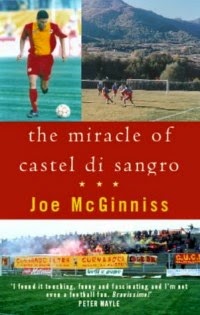
There are many things I’d trust my brother with but a book recommendation wouldn’t usually be one of them. Yet around the turn of the century, in between Dan Brown-type thrillers and Poirot-lite whodunnits, he read an intriguing book about an American who spent a season in a tiny Italian town following the fortunes of a lower league football team. To this day, it remains his favourite book – he even faked Joe McGinniss’ autograph on the title page of his well-thumbed copy. Sadly, in my ignorant snobbery I consigned it to the slush pile alongside the great literary works of Ashley Cole and Wayne Rooney. Oh, the mistakes of youth.

How times have changed. Now I can’t stop reading football books and I celebrate McGinniss, God rest his wonderful soul, as a hero in the Hornby tradition. A brilliant writer delving deep into an obsession – surely that’s the noblest of pursuits. Like all the sporting classics, The Miracle of Castel di Sangro is about a whole lot more than a game. It may start out as a footballing endeavour – from Roberto Baggio at World Cup 1994 to remote Abruzzo and a ‘miracle’ journey all the way from C2 to Serie B – but it soon becomes apparent that ‘the ninety minutes of calcioplayed each Sunday were having less and less to do with my experience of Castel di Sangro’.

Instead, it’s about the many characters he meets along the way: the mysteriously silent owner Pietro Rezza, the sharp-tongued manager Osvaldo Jaconi, the team’s mother and number 1 fan Marcella, and that’s without naming a single player. And they, after all, are the leading actors here, displaying the kind of dignity and spirit that superstars can only dream of. I can’t begin to do them justice here but as promotion hero Pietro Spinosa tells McGinniss, ‘a squad like this – and I speak not of talent but of the cuore e grinta e carratere … this is once in a life, and once only … And for you, Joe, to pass the season among these kinds of men – quello è il vero miracolo.’

Alongside character in spades, there’s Hollywood-style action. Castel di Sangro contains all the elements of a page-turning thriller; it’s a will-they-won’t-they rollercoaster ride with subplots of corruption, sex, drugs and death. But then this is Italy, where football and power are bedfellows, with the Mafia reigning supreme over mere mortals. And where a hotel can completely close for a day and a football team can play half a season without a home stadium. Many of the books most interesting and entertaining sections show McGinniss coming to terms with ‘the richness of the life I led as a stranger in a strange land’.

Or attempting to, anyway. One thing McGinniss is not is a shrinking violet; having left his family behind in America for a year of unadulterated obsession, he expects answers to even the most difficult of questions. This brave, partisan stance makes for brilliant reading, as he harasses his neighbour Jaconi about the negative tactics and stubborn team selection, and confronts club president Gabriele Gravina about the misuse of funds. But despite the frequent farce surrounding him, McGinniss never loses his sense of humour, or ‘la potenza della speranza’. For every day of disillusion, there’s an equal and opposite moment of exultation. This is a book about football, after all.

Castel di Sangro is the kind of story you never want to end, showcasing football at its humane best. To quote defender Luca D’Angelo, ‘Serie B – never a dull moment except during the ninety minutes of the match!’ A film could never do it justice, but McGinniss certainly has. My eternal thanks to him and, of course, to my brother.

Buy it here