Jack Pitt-Brooke, Football journalist for The Independent and i
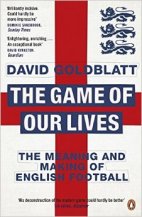 At a time when the game of football itself is subject to endless dissection and analysis, The Game of our Lives by David Goldblatt tells the other story: what does football mean to us in Britain in 2015? Why does it matter? How do we experience it? How has it changed? From half-and-half scarves, to billionaire foreign owners, YouTube fan channels, and the rest, Goldblatt tells us with great narrative skill how we got here. Or, in the subtitle of the book, about ‘The Meaning and Making of English Football’. It is a remarkable piece of scholarship, showing an understanding not just of football, but of history, society and culture. Because the state of modern football, ultimately, is the state of us.
Matt Gardiner, sports bookseller at Waterstones and founder of Manchester Football Writing Festival
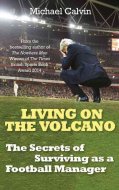 Living on the Volcano is another astonishingly strong book from the author of “Family” and “The Nowhere Men”. Mike Calvin has once again reached heights with his sports writing which seems to be unfair on his peers. His ability to gain access to the people who really count is phenomenal and ensures once again that “Living on the Volcano” is a triumph. The chapters which focus on the lower league managers are for me the strongest as we hear from men who don’t often make the headlines. I for one can’t wait for what Mike does next.
Michael Calvin, Sports journalist for The Independent and author of Living on the Volcano and The Nowhere Men
 Call me Mr Retro if you wish, but my football book of 2015 was first published in 1966. The Soccer Syndrome by the late John Moynihan has just been republished by his son Leo, through Ian Ridley’s Floodlit Dreams imprint, with an evocative new foreword by Patrick Barclay. It is a classic, an overdue reminder of football’s lost innocence which, in an age of corporate artifice, has rarely been more relevant. I worked with John as a young reporter; he was sardonic and perceptive, with a voice as rich as mulled wine. He understood football’s essential humanity – this is your chance to do likewise.
Paul Grech, author of Il Re Calcio: Stories From Italian Football
2015 has seen my shelf being enriched by a number of great new football titles. As an avowed fan of Simon Hughes’ writing, I terribly enjoyed ‘Men In White Suits’, his analysis of Liverpool’s fall from grace in the nineties through the experiences of some of the players that shaped that decade.
From a football coaching perspective, I also enjoyed reading Carol Dweck’s Minset and Ian Leslie’s Curious. Although neither one is a football specific book both have ideas that should inspire anyone who deals with coaching and indeed I wrote extensively about the impact of the latter book.
However, if I were to pick my favourite read for the year I would have to go for Michael Calvin’s Living on the Volcano. This dissection of football manager, thanks to the experiences of famous and less well known managers, puts into focus the reality of football management. Although I was never under the illusion that it is as easy a job as many seem to think that it is, there were passages in this book that still took me by surprise.
Martin Greig, co-founder of BackPage Press
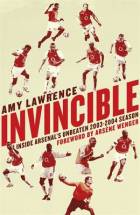 From the moment we founded BackPage – in 2009 – we wanted to publish a book on Arsenal’s Invincibles. Along with Pep’s Barca, they were the team that had most fired our imaginations. We published the definitive book on Barca, but never got round to the Invincibles. Then Amy Lawrence wrote Invincible. At first I was devastated that we had been beaten to the punch, but on reading it I was simply thrilled that the subject had been properly documented. Invincible is excellent. Amy’s passion shines through. It is a sports book with a beating heart, like all the best ones.
Daniel Storey, deputy editor of Football365 and football freelancer
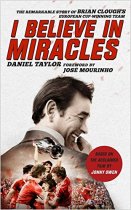 I Believe in Miracles is Daniel Taylor’s account of Nottingham Forest’s European Cup-winning team, told through the eyes of players, supporters, journalists, managers and club officials but knitted together perfectly by one of this country’s finest sportswriters. The book is split into two sections, the first regarding Forest’s rise to the league title, and the second the remarkable run to double European glory. At each stage of the journey the reader is given nuggets of information and anecdotes, all reminiscing about an achievement that will never be repeated.
There have been countless biographies and autobiographies written about each individual in that all-conquering Nottingham Forest era. This should be seen as the definitive book.
Sachin Nakrani, writer and editor for The Guardian and creator and co-editor of We’re Everywhere, Us
 We live in a world filled with season diaries (I should know, I’ve written one myself) and the job, therefore, of anyone who decides to go down that path is to avoid the obvious, well-worn methods of telling the story of nine months on planet football and provide the reader with something different. Alexander Netherton and Andi Thomas achieve that with Are you an Ostrich? their take on the 2014/15 Premier League season with a book that is as sharp with its humour as it is with its considered, serious insight on the wider issues/topics-of-debate in the domestic game. So one one hand it creates a superbly surreal world in which Arsene Wenger cannot eat his breakfast without literally everything going wrong, while on the other offering the most powerful and intelligent take on why Ched Evans should not be allowed anywhere near a football pitch that I’ve ever read. Are You an Ostrich, which references the former Leicester manager Nigel Pearson’s infamous remark to a journalist near the end of the 2014/15 campaign, is a delight to read by two writers who have become experienced football diarists but continue to offer a fresh and must-read contribution to the genre.
Harry Pearson, football writer and author of The Far Corner
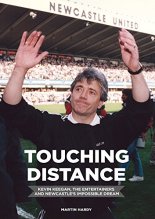 Martin Hardy’s Touching Distance tells the story of Newcastle’s 1995-96 season, the year they could and – maybe – should have won the title for the first time since the 1920s. It’s built around a series of insightful and often funny interviews with key players including Peter Beardsley who relates how he informed his telephone-less parents that he had signed for his hometown club from Vancouver by sending them a postcard. Inevitably he got to Newcastle from Canada before it did. Ultimately Touching Distance is a bit like The Day of the Jackal – you know what the outcome will be but the author cranks the tension up so nicely that by the final chapter you start to suspect there might be an unexpected twist at the end.
Alex Stewart, freelance football writer
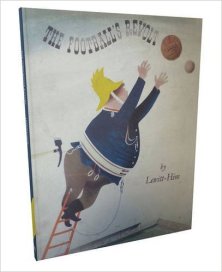 My favourite football book of 2015 is only partly from 2015. To be precise, The Football’s Revolt, by Jan Le Witt and George Him, was originally written and illustrated in 1939 and reissued this year by the V&A. Witt and Him were two Polish artists who moved to London to work for the museum’s in-house design team, and also produced posters for the war effort, as well as their sumptuous children’s books. The Football’s Revolt tells the story of a match between Goalbridge and Kickford, a fierce local derby that gets out of hand when the football takes umbrage at being kicked so hard and takes to the clouds. The book at once manages to capture the intensity of football and its fans, while also undercutting that with sometimes very subtle humour. It is surreal and sly and celebratory, with a resolution that extols the simple pleasures of the game. The illustrations are lush and funny, perfectly complementing the style of writing. The Football’s Revolt is a great book for children, but will cause a wry smile to any football-loving adult who picks it up, and it is my football book of 2015.
Dermot Corrigan, football writer for ESPN, Irish Examiner, WSC and Unibet
 David Winner’s Brilliant Orange is not a traditional football book, but it’s still the best explanation of how and why the sport has evolved over recent decades. Johan Cruyff dominates, of course, but artists Johannes Vermeer and Jan Van Eyck are also brought into show how the Dutch are “a nation of spatial neurotics” for whom use of space is “a matter of national survival”.
Put more simply, with the ball you expand the pitch as much as possible, without it you restrict the space available for opponents to play in. Winner finds early evidence of this sophisticated tactical approach in the 16th century, when a visiting Spanish side [well, army] was squeezed of space in defence and thereby defeated – “anticipating by nearly 400 years the Total Football concept”. Spanish football caught up around 2008, and Cruyff’s influence at Barcelona is still strong. This book was published back in 2000, but is just as important today.
Ian Ridley, football writer and publisher of Floodlit Dreams
One of my favourite football books, and one that influenced me as a young football writer, was The Soccer Syndrome, by John Moynihan. It combines wit with perception, elegant writing with sharp opinion, and informs equally about the game at the highest level as well as on public park.
When his son Leo Moynihan approached me about re-issuing the book 50 years on to mark both its original publication and a half-century since England won the World Cup, I was delighted to work with him on it.
The result is a new edition, with foreword by Patrick Barclay and afterword by Leo, that we hope keeps alive the memory and spirit of John, who died a few years ago, and offers a chance to a new generation of readers to enjoy what remains a charming and relevant insight into English football.
George Rinaldi, English and Italian football writer and author of the upcoming Calcio’s Greatest Forwards
 It comes as no surprise to say the most enjoyable football book I’ve read in 2015 was Living on the Volcano by Michael Calvin. It has become rather expected of Calvin to deliver such brilliance packed in to a small space, but he has done so once again with this superb reading of football managers. He isn’t afraid to scrutinise when he sees best, and also gives a number of different interviews with the Premier League’s top coaches. These managers do, however unfortunate, keep to a very stylised and cliché based response which might hamper the true feel of the book, but the writing is what I came for and it didn’t disappoint.
Adam Hurrey,
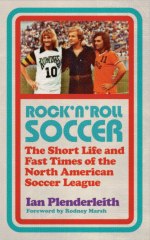 The best football book I read this year was Rock ‘n’ Roll Soccer: The Short Life and Fast Times of the North American Soccer League by Ian Plenderleith. The North American Soccer League is a fascinating chapter of football’s not-too-distant past. On one hand, it was a hugely ambitious, forward-thinking enterprise; on the other, an unsustainable financial mess. Whichever cap fits, the NASL burned half as long it perhaps ought to have done, but surely twice as bright.
Ian Plenderleith’s deals dutifully with the well-worn NASL stories – Pelé, Cruyff, Beckenbauer et al – but it is the peripheral nuggets that really keep the pages turning. The decision to move franchises to Las Vegas and Hawaii, in particular, provides the author with some entertaining tales of ageing journeymen struggling with both the unbearable heat and the obligatory four-day benders.
If you’re into your footballing curiosities – and if not, why not? – Plenderleith’s meticulous (but never pedestrian) retrospective is as compelling as it gets.
Iain Macintosh, ESPN football writer, author and editor of The Set Pieces
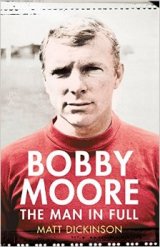
I would say Matt Dickinson’s Bobby Moore: The Man in Full. That was very special.


 Of Pitch & Page