Ben Thatcher in the Rye

<I>

I guess the first thing you’ll want to know is where I was born. I’m not really up for all that autobiography crap – my childhood, the time I put that bastard Pedro Mendes in hospital. That stuff goddam bores me, but I’ll answer that first question. Swindon – home of XTC, WHSmith and that kid from The Curious Incident of the Dog in the Night-Time. It was pretty depressing, but no-one gets to choose where they start out.

No, I wasn’t born in Wales but Mark Hughes knew that when he called me up to the squad. My grandma was Welsh. Hughesy knew that, and I guess he knew that after playing for the Under-21s, England just didn’t want to know about me. We didn’t talk about that, though. They had Psycho, then Graeme Le Saux, then Wayne Bridge and Ashley Cole, hell even inbetween they preferred Pip Neville’s right foot at left back. I knew when I wasn’t wanted.

It was Vinnie Jones who first suggested it, back when I was at Wimbledon. I’d just arrived from Millwall and Euro 96 was making everyone a little football crazy. To tell you the truth, I was pretty sore to have missed out. I should have been out to impress at my new club but pre-season was boring as hell. Sure I was young, not yet 21, but I was highly thought of in FA circles. I was the classic old school British defender, all take the man and find row Z. The smug old blazers left me cold but everyone said I was taking the right route, shaking the right hands – Lilleshall like Sol Campbell and Nicky Barmby, then the Under-21s with Richard Rufus and Kevin Gallen. Very big deal. It seemed like it was only a matter of time before I joined the seniors.

‘What happens if Psycho gets injured? Are you telling me Steve Howey is going to do the business on the left?’

We were doing a passing drill and I was shooting the bull, acting the cock of the walk. Vinnie liked it that way, so that he could take you down a peg or two. The guy was intent on keeping that damn Crazy Gang spirit alive, even if Fash was long gone.

‘You think you’re next in line to the throne, boy? Forget it, you ain’t all that. You’ve got no chance in hell playing here and that England team’s cursed anyway. If I was you, I’d start looking into your family history. You think I give a fuck about Wales? I was born in bloody Watford!’

JFK kicked a ball in my face. He was hot as a firecracker, always yelling. The gaffer was in cahoots with Vinnie, but I was fair game. ‘Oi Thatcher, wakey wakey! You think you’re still on fucking holiday? Kimble is 30 going on 80 and his right foot has seen even less action than your dick, but I’ll still pick him over you!’

I wasn’t too crazy about Old Kinnear, to tell you the truth, but that wasn’t unusual with me and my managers. I’ve hated pretty much every one of them – they never act like people. Sometimes I worked really hard on my game but they never notice anything.
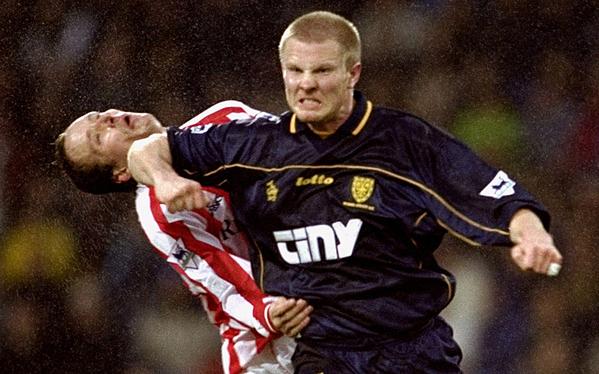
Thatcher 1

<II>

So Vinnie got me thinking back then but it wasn’t until seven years later that I did anything about it. Inbetween, things hadn’t exactly gone to plan. There were no big trophies, and most importantly no England caps. I had a reputation as a hardman, a ‘dirty’ player with a habit of swinging elbows. I can’t say I was misunderstood exactly but that wasn’t all I was about. Then in 2000, Wimbledon got relegated. It was sad to see but things really soured once JFK left. The old brute had health issues, and they replaced him with this weird Norwegian with tiny little eyes. He tried to introduce football science to the Crazy Gang and boy did he learn his lesson. It was like trying to teach a fish to walk.

I went to Tottenham for £5million and at first everything was pretty great. There were some big players around the place and I got a bang out of that. Tim Sherwood had a Premier League winner’s medal and he would play all manner of pranks. One day he called Stephen Carr’s wife, pretending to be her husband’s rent boy. That killed me. George Graham was a nice guy but he wasn’t the cleanest and he ended up paying the price for that.

Hoddle arrived and boy did he think the sun shone out of his arse. He was a real phony and one of the biggest bores I ever met. He made his mind up early on and he chose Taricco and Ziege over me. I got the axe and I was really hot about that. I was playing well when I got the chance but it made no difference. I had plenty of dough but it didn’t feel right taking it for just sitting my ass on a bench each week. Goddam money; it ends up making you blue.

I kept thinking about my days at Lilleshall when it felt like I was going places. What a deal that was. I started getting sorry for not working a little harder, for not keeping my cool a little more. One thing I have, it’s a terrific temper. I was damn near ready to just quit and become a physiotherapist or something.

‘That Hoddle’s a real bastard. Some day somebody’s gonna bash his-’

Stephen Clemence didn’t even bother to listen; he wasn’t on the gaffer’s naughty list yet. We were in the club car park and he just shut the damn door and drove off.

I needed to get out of White Hart Lane. I thought of giving JFK a buzz but I wasn’t sure he even had a phone. Maybe the poor old guy was dead; I never read the news. Instead I walked the streets of London, just for the hell of it. It was a cold February evening and I wished I’d brought my gloves with me. I looked for an HMV to buy the latest Ja Rule record but everything was shut. Covent Garden was mobbed and messy, revellers everywhere. I was damn lonesome. I thought about going to the movies but there was nothing good on.

In the end, Leicester came in for me. Micky Adams was a class act and he made me feel welcome. I knew damn well that I could still make a name for myself – I just needed first-team football again. I got that but I’d joined another team on the slide. The Leicester squad was like a who’s who of footballing mediocrity, the Eastbourne of the Premier League, where old prospects go to die. Les Ferdinand scored 12 goals but we were relegated for the second time in my career. I felt sorry as hell for Micky – he wasn’t to blame for it all. To most, I looked like a curse but it wasn’t my fault either and I told Andy Impey that.

‘Thatcher, when are you going to grow up and take some responsibility? You’re not a prospect any more. You’re 29 and you’re an average player like the rest of us.’

That was crap but he got me thinking. It was time for me to up my game.

I got a move to Manchester City and I was first choice. It was before the big ‘Sheikh up’ as I like to call it but we had David James, Shaun Wright-Phillips, Steve McManaman, Nicolas Anelka, Robbie Fowler, Trevor Sinclair – loads of big names in one place, even if some of them were getting on a bit. And Joey Barton; he was a fun guy to be around. Joey could be a pain in the ass, but he certainly had a good vocabulary.

Keegan was in charge and that was exciting. But then that jerk Stephen Jordan came along and stole my spot. He wasn’t a bad guy but where is he now? Fleetwood Town, that’s where. I didn’t deserve to make way for him. Luckily, I had bigger concerns by then; you see, I was an international footballer.
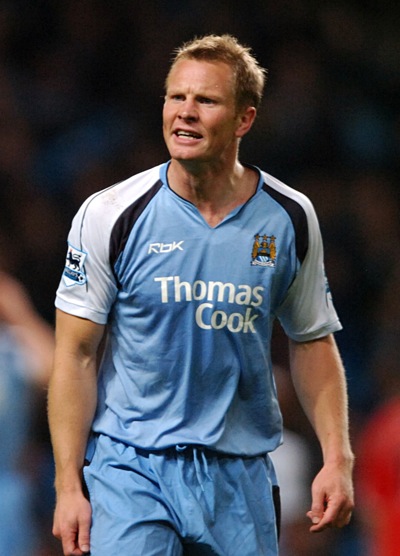
Ben Thatcher, Manchester City

Ben Thatcher, Manchester City

<III>

I’m the most terrific liar you ever saw. It’s awful. When I want to, I can charm the birds out of the trees. When I threw an elbow at Wimbledon, I denied it wholeheartedly and JFK just nodded and told me to get the hell out of his office. I caught the guy right in the face; he’d been riling me all game and I didn’t even look behind me as I did it. It was a good shot but I felt sorry as hell about it later. That temper of mine, it can really get me into trouble.

When Hughesy asked me if I wanted to play for Wales, I thought back to Vinnie and I told him it would be a dream come true. I told him that I’d been really close to my grandma and this would mean the world to her, God rest her soul. I told him I’d spent some lovely summers there as a kid, some of the best of my life. In fact, I’d only met her once and knew nothing about her. But the chance to play international football, and with Giggsy and Gary Speed no less, was too much. Hughesy nodded and told me he’d be in touch.

I made my debut against Hungary and we won 2-1. It was a fiery match in Budapest and I got a real bang out of that. The tackles were flying and I picked up a yellow on the half-hour mark. Robbie Savage looked over admiringly – that’s what I was there for, no doubt. ‘Ben Thatcher, international footballer’ – that had a nice ring to it.

It was all going swimmingly until Toshack took over. There was something about him that didn’t sit well with me. I think he resented me for not being Welsh – fair enough, I suppose, but I was a damn fine asset. Injuries and suspensions kept me away from the team, and I could tell that he was really questioning my commitment.

When Tosh called me up for the games against England and Poland, I was just coming back to fitness. I wanted to say yes, of course I did, but we had the Manchester derby three days later. Psycho made it clear that he needed me to start that game and it was hard to say no to him. So I had a hell of a decision to make.

‘Boss, I’m not recovering as quickly as I’d hoped. The injury is still playing up, so I’m not gonna be able to play. I’m bummed out about that.’

I felt damn sorry to have to lie to him. Old Tosh nodded and told me to rest up. I did but a few days later, he watched me play the full 90 minutes against United. We drew 1-1 at Old Trafford and I played pretty well but that wasn’t the point. After that, Tosh kicked me out for good.
Thatcher 3

<IV>

That’s all I’m going to tell about. I could probably tell you what I did after that – the last years at City, the year at Charlton and then the way I ended things at Ipswich with Keano. But I don’t feel like it. It doesn’t interest me too much anymore.

I work for a sports management company now. It’s nice, easy work and I have a lot of time to spare. Chris Perry keeps asking me if I’m going to apply myself, go back into football as a coach or something, but it’s such a stupid question. I mean how do you know what you’re going to do till you do it? There’s a reason they always called him ‘The Rash’.

‘You know what I’d like to be?’ I told him the last time just to shut him up. ‘I keep picturing this football field but instead of grass, it’s a big field of rye. Rye up to your knees, the kind of stuff that’s really hard to run through, and improves stamina no end. Hundreds of kids are running around, playing a massive game, and I’m on the edge of the pitch. What I have to do is shout encouragement, give them water, and stop the ball if it goes over the touchline. If two kids get a little hot and start to fight I have to come out and stop them. That’s all I’d do all day. I’d just be Ben Thatcher in the rye and all. I know it sounds crazy, but that’s the only thing I’d really like to be.’

Chris was quiet for a moment. ‘Thatcher, you’re a strange, strange boy. That just sounds like youth coaching on a large and pretty intense scale.’

I knew he wouldn’t understand. If you want to know the truth, I sort of miss the game, the fame, and the people. I think I even miss goddam Toshack and Hoddle. It’s funny.

Don’t ever tell your story. If you do, you start missing everything.
Hudd: A Cautionary Tale

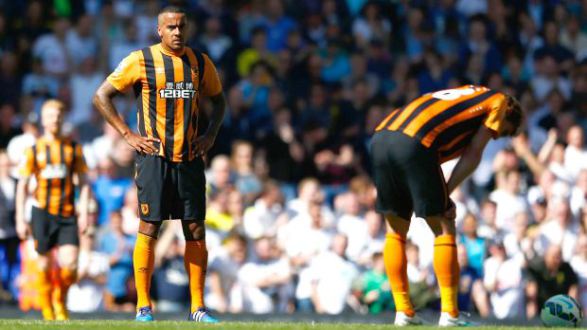
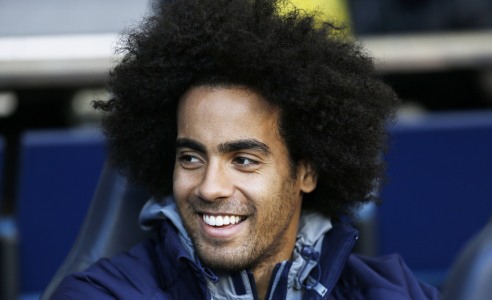
Gentle giants rarely make difficult decisions but Hudd did two summers ago. Perhaps he had no choice but Hudd left the comfort of White Hart Lane after eight years of bit-part prosperity. He had cruised in on a wave of early promise but the water was getting shallow and the shoreline was in sight. A manager once compared him to Beckenbauer but the talk didn’t do much good. There was only so long that Hudd could just take the money and jog. His hair reflected this complacency, growing wilder with each stray shot and each game gone missing. The consensus was that Hudd had everything except desire – two great feet, a languid grace and the vision of Hoddle. Like the hyena, Hudd had the strength of a lion but the heart of a mouse.

huddlestone050113 (1)

To Hull he went to prove them all wrong. At the base of their midfield, Hudd slowly woke from his slumber. His pace rarely quickened but there was a new determination to drag himself around that field. Hudd began to dictate games against the lesser teams, lazily but effectively, as the loyal ones always knew he could. The eternal teenager was showing signs of responsibility and discipline. Hudd rarely crossed the halfway line and developed a keen eye for the good foul. His pass completion rate was better than Garry Barry’s, and some of them even went forward. The England calls came round again like suitcases at baggage reclaim.

Just occasionally, Hudd was spotted around the edge of the opposition box. Excitement would build and the shots would soar. The hair remained, bigger and heavier than ever, like Atlas holding up the world. It was more than two years since Hudd had scored. The charity fund he’d started had raised over £20,000. In his youth, his shot had been a fearsome weapon; in training, he found the net for fun. So why couldn’t he do it when it mattered most? Hudd didn’t know but he’d keep plodding along.

Against Fulham, Hull found themselves 3-0 up with half an hour to go. The fans knew there was only one way to confirm this unexpected demolition. And so the story played out. The ball came to Hudd on the edge of the penalty area. There was a collective groan from the crowd, with eyes tracking the imagined trajectory into the stands. It sat up perfectly for him to blast on the volley but this time Hudd had a smarter plan. He dummied the approaching defender with his right foot, making space for the composed finish. Swinging a sluggish left foot at the ball, it rocketed into the bottom corner.

Hudd had never looked so animated as he charged off to celebrate, a beast unshackled. He couldn’t wait for that haircut. On the touchline, the physio stood waiting with the scissors. They’d been wearing a hole in his pocket for months but Hudd wanted to get the performance just right. He held out a single lock for the cutting. It was just a token snip for the watching world but already Hudd felt lighter.

_71982783_tom_huddlestone_getty

In the aftermath, the media gathered for the big event. Hudd sat on his throne and was shorn like a sheep. Holding court, he described his new style as ‘a tamer Mr T’. The smile never left his face but the critics had their qualms. What if Hudd was a modern day Samson, powerless without that huge head of hair? Had it been the reason for his rejuvenation?

At first, the doubts were largely assuaged. With his new streamlined look, Hudd led his team to Premier League safety and the verge of FA Cup glory. He scored goals against Cardiff City and West Ham, followed by a phenomenal solo strike against Sheffield United in the semi-final. It was the greatest expression of New Huddism; he drove from deep, he exchanged the one-two, he sprinted, he beat the man and he curled calmly past the keeper. Spurs fans watched on and wondered what might have been.

Sadly, it proved to be a false dawn. Second season syndrome hit Hudd like a strong dose of valium. His hair was gone and the goals had finally arrived – what more was there to achieve? He returned to the shade, half-heartedly chasing ghosts around the football pitch like a sad, clumsy drunkard, always one step off the pace. With Carrick back, England would never come a calling. The hair got shorter and shorter, and Hudd became increasingly cantankerous. Joey Barton grabbed his testicles and he traded blows with Mario Balotelli. Hudd scored zero and got sent off twice in 31 games. His midfield partner-in-crime tested positive for cocaine. Hull were relegated.

Hudd looks very presentable but he is now a Championship player.

Hull-City

Baresi’s Story

The 1994 World Cup final was a grand, tense affair but most of it passed me by. Only the penalty shoot-out woke me from my trance. I’d fallen in love, but not with the mischievous guile of Bebeto or Romario. It was an Italian defender who had caught my eye, and not young, wild-eyed Maldini. No, it was Franco Baresi, the captain, making possibly his final appearance for his beloved nation in the biggest game of all. And what a game he played.

Even now when I watch the footage, Baresi has the look of a man approaching fifty so you can only imagine how old he looked to a six year-old me. The wispy head of hair atop the deeply furrowed, prominent brow, the grimacing, the hobbling, the hand on the lower back. This aching man the bastion to fend off a Brazilian siege? It seemed impossible. What pace he’d ever had was all but gone but it didn’t matter when you could read the game as he could. Like fine wine, the football brain matures with age; by thirty four, Baresi’s was a rare vintage.

Not a single stride was wasted; he knew exactly where the ball would go and thus where he needed to be. He charged forward to intercept, he beat men to the ball. On the back foot, he blocked once and then twice, and then a third time if needed, the ball magnetically drawn to his outstretched feet. Where possible, he moved the ball with composure and grace, but then never has a man made the Row Z hoof look like such a cultured decision. His socks slumped to his ankles but Baresi fought on. Surely he had the gods on his side.

But in the end, they abandoned him. At the final whistle, he sank to the ground in agony. His teammates surrounded him, doing their best to revive their fallen leader. When an ambulance cart carried him off the field, it seemed his greatest day was done. But the best stories never end there; heroicism is relentless in its pursuit of glory.

Somehow, Baresi returned to take the first Italian penalty. On the edge of the area, he stood trying to shake the tiredness from his legs, a tragic figure in waiting. With the last of his energy he ran towards the ball and kicked it with all his might. It sailed over the crossbar and into the sea of fans behind the goal. The captain fell to his knees, his hands thrown over his face to hide his pain. The Divine Ponytail of Baggio would go on to miss the decisive penalty, but this will always be Baresi’s story.

article-2273991-175E75F2000005DC-671_634x521

Seven Features of a Truly Memorable Match

Considering this is a blog about football books, I feel I’ve been remarkably restrained about discussing Fever Pitch. Until now that is. In his landmark work, Nick Hornby picks out what he sees as the ‘Seven Features of a Truly Memorable Match’. They are:

  1. Goals
  2. Outrageously bad refereeing decisions
  3. A noisy crowd
  4. Rain, a greasy surface, etc.
  5. Opposition misses a penalty
  6. Member of opposition team receives a red card
  7. Some kind of ‘disgraceful incident’

22 years on, I’ve enlisted the very generous help of my favourite sports writers and novelists to put together an alternative list.

1. The diva tantrum
By Nick Quantrill, author of the Joe Geraghty crime novels, “Broken Dreams”, “The Late Greats” and “The Crooked Beat”

Hull City 0-0 QPR, 29th January 2011

Laughs at Hull City matches during 2010/2011 were in short supply. Freshly relegated from the Premier League and facing financial meltdown, the club was undergoing rapid change with faded showman, Phil Brown, replaced by the Nigel Pearson’s dour pragmatism.

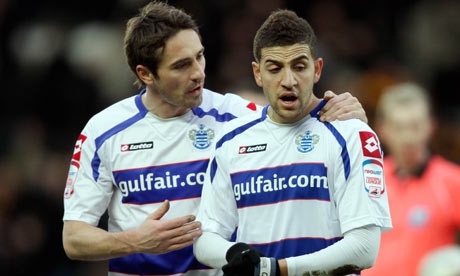
QPR arrived at the KC Stadium as champions-elect, and with star man, Adel Taarabt, in fine form. The game itself followed the established pattern of a lot of huff with little skill, but all eyes remained firmly on Taarabt. Starting out wide, he struggled to make an impact on the game as two well-organised banks of four hurried and hassled him with vigour and energy.

Waving his arms theatrically in the air when a pass wasn’t delivered on a plate into his feet, and seemingly taking offence at every possible opportunity, Taarabt’s every reaction provoked cheers from a home support sensing some sport to be had from enquiring as to where his dummy had gone. Electing to turn his back on the game and simply walk up and down the touchline, taking no further part in proceedings, Taarabt upped the ante, slowly heading across the pitch in the direction of the bench, signalling that he’d simply had enough for the day and wanted to be substituted.

Throwing his gloves to the floor only served to bring more howls of laughter from the home support, but any suggestion he was carrying an injury was banished when he showed a sudden interest in taking a free kick on the edge of the area. After jostling with his own teammates and receiving a warning for his actions from the referee, he hilariously slammed the ball into Row Z before the half-time whistle finally put him out of his misery.

Post-match, a preening Neil Warnock, pumped full of self-interest and misplaced fury, bizarrely placed the blame squarely at the feet of the home support for antagonising his star man. Nice try, Mr Warnock, but for all the laughs it provided, a quite unique and incredible tantrum from a player whose career is unlikely to match the heights he imagines for himself in his own head.

Watch footage here

Hull-v-QPR-004

2. The mild pitch invasion
By Anthony Clavane, sportswriter for the Sunday Mirror and author of Promised Land: A Northern Love Story and Does Your Rabbi Know You’re Here?

Leeds 1-2 West Brom, 17 April 1971

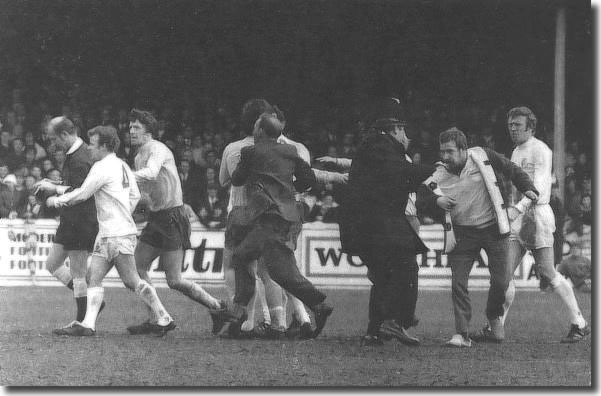
Leeds United lost the title to Arsenal by a single point in the 1970-71 season. This was blamed on a referee called Ray Tinkler, who failed to spot Colin Suggett being about 15 yards offside before Jeff Astle tapped in the West Brom winner in a 2-1 win for the Baggies at Elland Road.

I’ll never forget the Leeds manager Don Revie shaking his head in disbelief and looking up to the sky, before imploring the linesman to put right the wrong and get Tinkler to change his mind. A few fans, several of whom were middle aged, invaded the pitch, which led to Leeds having to play their first four matches of the following campaign away from their fortress. In the post-match interview the Don refused to condemn the invasion. He said a whole season’s graft had been undermined by one terrible decision. His interviewer, the brilliant Barry Davies, appeared to sympathise. That night, on Match of the Day, Davies screamed: ‘Leeds will go mad, and they have every justification for going mad! Don Revie, a sickened man. Just look at him, looking at the heavens in disgust!

7104wba

3. The unlikely goal from a club stalwart
By Gareth R. Roberts, author of That Immortal Jukebox Sensation and What Ever Happened to Billy Parks?

Liverpool 2-1 Borussia Monchengladbach, May 25 1977

This was the greatest season in Liverpool’s history. This was the year when every obsessive minute, lovingly employed by first Bill Shankly, and then Bob Paisley, came to fruition; this was the season when Liverpool threatened to sweep all before them. By the first week of May, incredibly, they were still in the race for a unique and amazing treble: the League, the FA Cup and the European Cup.

The League was won after a goalless draw with West Ham at Upton Park, leaving Liverpool facing two finals in a week: first up, Man United at Wembley – the old Lancastrian enemy, an epic final in brilliant sunshine on a pitch burned yellow by a spring heatwave. Sadly for Liverpool fans, it was United who lifted the Cup after the flukiest of winners off Jimmy Greenhoff’s, not insubstantial, backside.

The challenge for Bob Paisley’s men was to physically and emotionally lift themselves to face Monchengladbach in Rome three days later. The Germans were a force in European football with the likes of Vogts, Heynkes, Stielike, Bonhof and the wonderful Dane Allan Simonsen.

Liverpool, though, had a couple of cards up their sleeves – one, was the incredible support of thousands of Scousers. The stories of Liverpudlians using every ruse going and every mode of transport possible to get to Rome are legendary.  The other card they had was an indomitable spirit, and no-one personified this spirit more than Tommy Smith.

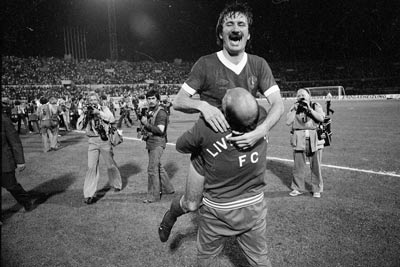
Smith, a Liverpool man born and bred, had been at the club as a schoolboy when Bill Shankly arrived and started to create the legend. Smith had played in every position, and fulfilled every role at Anfield. He was so hard that they said that he wasn’t born, he was quarried. He had a fearsome reputation during a time when an absence of cameras and more lax refereeing meant that footballers could sort things out in a more cynical way. That night, May 27th 1977, was to have been Tommy’s 600th and last game, the Anfield Iron was hanging up his boots to slide into the oblivion of retirement. Of course, no one who had ever watched him play expected him to go gently into that good night, not that night, no, the sentiment of the occasion would have no effect on him, he would be as committed as he was in his previous 599 appearances; but no one expected him to score a goal either, because, with the exception of a handful of penalties, one thing Tommy Smith wasn’t renowned for, was his goalscoring. In his 599 appearances he had scored less than twenty goals.

The match kicked off, Liverpool were nervous; Simonsen looked dangerous, quick and elusive. Clemence had to dive to his right to save from Heynkes then Bonhof hit the post, before the wonderful McDermott put the reds ahead with a crisp shot after a perfect run into the area. The lead looked tenuous and sure enough Simonsen sneaked between a couple of defenders to level in the second half.  Now Monchengladbach were in the ascendency, Bonhof and Stielike were starting to exert their silken influence in the midfield – Heynkes was looking increasingly dangerous. This was the period when games are won and lost, this was the time when the pendulum of pressure can swing either way. Only one team can win a cup, and the Germans were looking the more likely.

Then Liverpool won a corner on the left, Steve Heighway lined the ball up and raised his arm. Smith and Hughes made their way into the penalty area. The ball sailed towards the six yard box. The ball travelled through the air. The ball. Heading on its way to assist in a moment of immortality. Smith rose. He leapt like he’d never leapt before. He timed his jump perfectly, he met the ball like the greatest centre forward that ever lived, like Lofthouse or Mortensen or Law and put the ball into the net. What a moment. What a career. An unexpected goal from a true hero.

shakeshaft_tommy_smith

4. The goal celebration
By Matt Oldfield, editor of OfPitchandPage

Chelsea 1-0 Middlesbrough, 21st August 1996

With Hoddle taking over from Venables as England boss, The Blues decided to promote Ruud Gullit to player-manager. What the dreadlocked Dutch legend lacked in managerial experience, he made up for in continental connections. Frank Leboeuf, Gianluca Vialli and Roberto Di Matteo were the first to arrive; what these medal-winning internationals thought of their new teammates (Frank Sinclair, Andy Myers, Eddie Newton) one can only imagine. It was a unique blend, and expectations were high. A dull 0-0 away at Southampton was hardly the dream start we were looking for, and things weren’t looking much better back at The Bridge. Chelsea were heading towards another goalless draw, struggling to break down a Middlesbrough side sporting a few new stars of their own in Brazilian midfielder Emerson and Vialli’s former Juve strike partner Fabrizio Ravanelli.

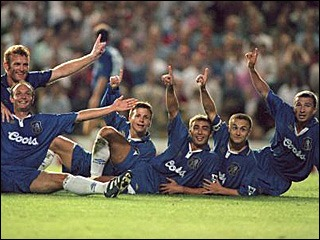
With 85 minutes gone, Di Matteo, making his home debut, receives the ball about thirty yards from goal, dead centre, one defender in front, one fast approaching behind. With calm assurance, the Italian works an inch of space and rockets a drive into the bottom left corner. An excellent, pinpoint finish, but that’s only half the story. In the resulting frenzy, Di Matteo lies nonchalantly on the grass with his left arm pointing up at the sky. Captain Dennis Wise follows his example, as do Jody Morris and Dan Petrescu. Leboeuf throws himself down next to them, limbs spread like a starfish, and defensive partner Erland Johnsen crouches behind him, again with that left hand pointing. It was a team celebration like no other; the revolution had begun. Two months later, Gullit signed Gianfranco Zola. The rest is history.

Chelsea celebration

5. The non-celebration
By Martin Greig, one half of BackPage Press and author of Road to Lisbon and The Zen of Naka: The Journey of a Japanese Genius

Celtic 1-1 Spartak Moscow (Celtic win 4-3 on penalties), 29th August 2007

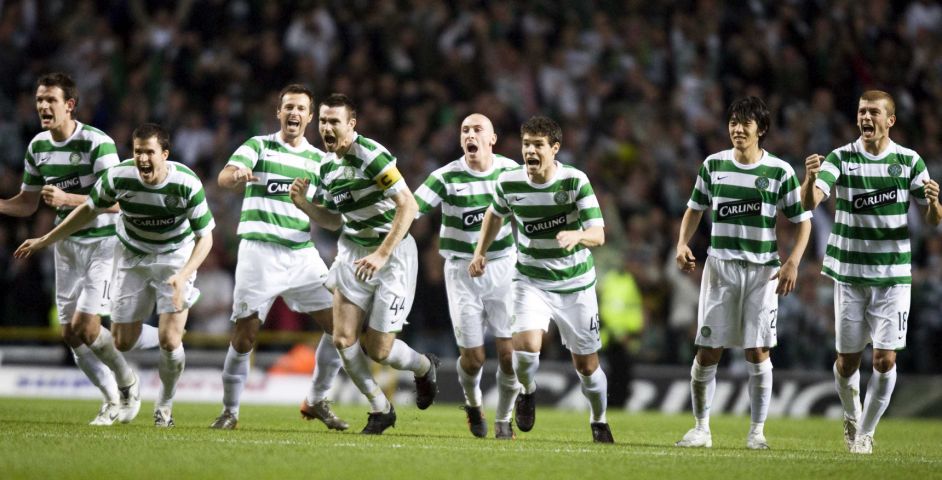
There is a photograph of the Celtic players seconds after they have secured qualification for the group stages of the Champions League against Spartak Moscow at Celtic Park. Artur Boruc has just saved Maksym Kalynychenko’s penalty in the shoot-out, having earlier kept out Egor Titov’s. Lined up in a row across the halfway line, they have all started to run towards the Polish goalkeeper to celebrate. When his Celtic team-mates reach Boruc, there is a mass pile-on involving all the players and coaching staff. Well, not quite all of them. Shunsuke Nakamura – who had missed a penalty in the shootout and three chances during extra-time – smiles briefly then walks straight off the park with his head bowed.

Afterwards, Nakamura said: “I did not celebrate with the other players at full-time. I was really disappointed with myself because I missed so many chances during the game. I missed three in as many minutes. I sat and thought about what happened and what I had done.”

The concept of group responsibility is huge in Japan. From a young age, Japanese are indoctrinated with the idea that their group, whether it be a corporate organisation or football team, even a political party, is of paramount importance. Group responsibility dictates that an individual feels worse about damaging their group and colleagues than they do about the personal impact it will have on them.

In British football, a player who refuses to celebrate after scoring against a former club achieves respect. That night, Nakamura took the ‘non-celebration’ to new levels.

Naka

6. The inexplicable defeat
By David Winner, author of Brilliant Orange: The Neurotic Genius of Dutch Football, Those Feet: A Sensual History of English Football, Stillness and Speed: Dennis Bergkamp and #2Sides: Rio Ferdinand

Holland 1-2 West Germany, 7th July 1974

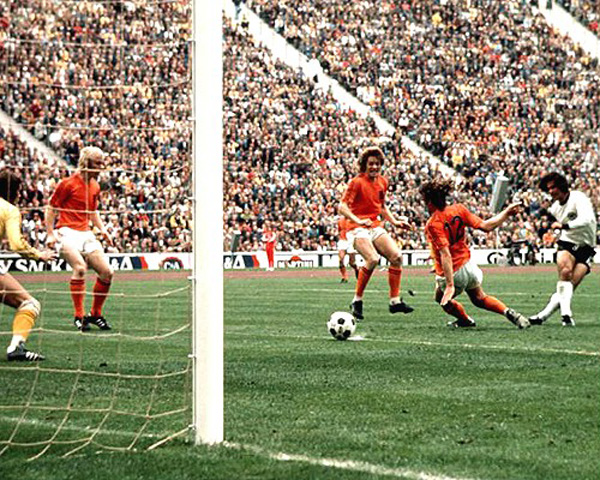
The 1974 World Cup Final, where Holland lost after taking the lead in the first bloody minute! It was two minutes before a German even touched the ball and the Dutch still lost! 40 years on and I’m not over it at all. I still replay scenes from that match. Cruyff and co. never won a World Cup and it gnaws away. If they had, they’d probably have won two or three because they’d have had that habit of winning. The ‘beautiful losing’ started that afternoon. Previously, they were unstoppable like their direct successors, the recent Spain and Barcelona sides. But that Dutch team never recovered. Years later when I met the players, they’d speak very calmly about everything else in their careers but when they got to that game, it was like hitting a wall. It was a tragedy and you didn’t need to be Dutch to feel it; even some Germans weren’t that thrilled.

I’m also old enough to remember the shock and grief surrounding the assassination of President Kennedy. I made the comparison in a speech I gave in Holland at the Johan Cruyff University 10 years ago and I joked about my ‘quite frankly unforgivable bad taste in mixing up a moment of genuine trauma and national tragedy with the mere shooting of a politician’. I felt very bad for saying it but I can honestly say that the Dutch defeat has had more of an impact on me over the years. I still feel it even now.

gerd-muller-germany-1974-world-cup

7. The “couldn’t have scripted it better” ending
By Tom Oldfield, author of Cristiano Ronaldo: The £80 Million Man, Nadal: The Biography and Arsene Wenger: The Unauthorised Biography of Le Professeur

Southampton 3-2 Arsenal, 19th May 2001

It was with mixed feelings that Southampton were bringing down the curtain on 103 memorable years at The Dell. Moving to a sparkly new 32,000-seater stadium represented an important step forward for the club but The Dell had become a huge part of Southampton’s identity over the years (and, at times, a trump card in avoiding relegation). It just added to the occasion that the visitors were a star-studded Arsenal side featuring Thierry Henry, Dennis Bergkamp and Patrick Vieira.

It was already an emotionally-charged afternoon – and then, with 17 minutes to go, Southampton manager Stuart Gray cranked the atmosphere up another notch by bringing on substitute Matt Le Tissier, the man nicknamed “Le God”, who had saved so many seasons for Saints over the years with moments of genius, scoring 208 goals along the way. Bringing him off the bench seemed like a nice chance for the fans to show their appreciation.

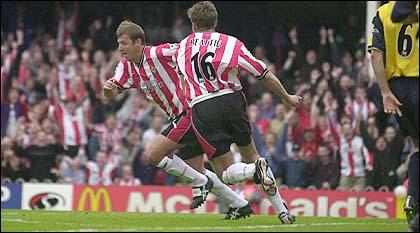
But, with the game heading for a 2-2 draw, Le Tissier had one more trick up his sleeve. In the 89th minute, a long ball bounced enticingly just inside the penalty area and the Southampton number 7 swivelled to smash a left-footed half-volley into the top corner. Cue pandemonium at The Dell. When the final whistle sounded minutes later, Southampton fans completed an unforgettable day with a joyous pitch invasion. They could not have scripted it better. The Dell would soon be gone, but the memories would live on.

LeTissArsenal

Battlefields by Richard Scott

Battlefields

By Richard Scott

A wise man once said, ‘There’s love and then there’s football. To bridge these worlds is to unite the cruellest mistresses.’ I’ll claim that adage if no-one else wants it. After all, it has more than a ring of truth; it’s as reckless as hiding all your valuables in one place.For anonymity’s sake, let’s say I support Sunderland and she supports Everton. Same league, slightly different prospects and expectations; no direct animosity, more a friendly sense of competition. And both our local teams before you ask – there’s no greater sin than the fickle pursuit of glory. Ours was a very polite, British arrangement: we did not set foot in each other’s stadiums, and we never boasted about our own successes or mocked the other’s defeats. My football knowledge is extensive and hers is competent, a fact acknowledged but never expressed. These are the oh-so important rules of harmonious engagement. So far, so good, I think you’ll agree.

Our relationship did not end because of football; in fact, it was completely unaffected by it. I am fully aware of that. What got us was a central tenet of physics – time=distance/speed. A fundamental law with a fundamental impact, the full scope of which I don’t yet have the heart to fathom. No, football is not to blame and nor, in all honesty, are we. By night-time this is clear in my mind; the next morning, I have to start all over again. What football offers is a different battle, one that’s quantifiable and distracting, and one that goes on irrespective of me.

Anyway, back to the matter at hand. In football terms, perhaps I should have seen it coming. Over the summer, her team stole one, then two, then three of our star players. Having lost their talisman, they swung their weight and wallet like a wrecking ball, crushing all that we had worked so hard to build. We squeezed them for every last penny and then ushered the rest of our flock back into Plato’s Cave. With her, I tried hard to smile and endure, but the first signs of strain were already showing.

In theatrical terms, then all went black and the curtain fell. When it rose again, the season was starting and, you guessed it, my team was kicking off against hers. Where before I’d have asked for handshakes and a fair old fight, a part of me now prayed for a never-before-seen massacre. As if to taunt me, ‘Everton’ didn’t even field the players they had stolen from us. Instead, they sat them on the bench next to ours, the spoils of war smugly displayed. They scored, then we scored, then they scored again. Without her team playing well, she emerged victorious once again. My team had toiled and toiled, but ultimately all in vain. I deserved a win but ‘I want’ so rarely gets.

In the next match, I watched her team crumble to defeat and took some strange, bitter joy in each goal that hit their net. But that feeling couldn’t last, especially when my team ground out a 0-0 draw against relegation riff-raff. Since then, her team has spent more money and is back to their glorious, winning ways. And in the other corner, we fight on, the lovable underdog, winning some and losing some. There’s a long, hard season ahead.

So my advice to you? If that bridge must be built, use the strongest stones and the toughest cement. Or, better still, make sure you support the better team.