Tales from the Vicarage: Volume Four

Watford

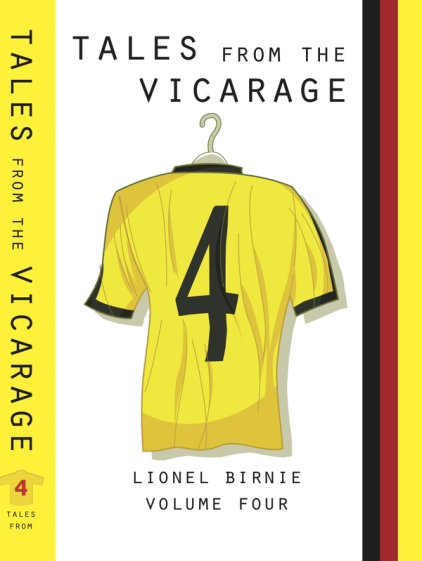
Tales from the Vicarage: Volume Four

By Lionel Birnie

Tales From, 2015

Review by Jonathan Brick (@jonnybrick)

Lionel Birnie is the author of Enjoy the Game, the history of Watford’s ‘glory years’, or should they be ‘The Elton John Years’. Here, in ten great essays, Lionel reminds old fans of, and introduces new ones to, the glorious yesterdays. Watford Football Club, the case study in my own forthcoming book Saturday, 3pm about modern football, is more visible than ever before. Thanks to Sky Sports, the money of the Premier League and the winning mentality of its cosmopolitan squad, put together by Gino Pozzo’s money and Luke Dowling’s Football Direction, Watford FC is no longer a small-to-middling football league club, but months away from a massive payday should they/we stay in the top division.

It’s easy to love Barcelona, with the slick passing and world’s best attacker, but it’s harder to love a club like Watford, who have few truly great days and even fewer truly great players. Four interviews with Hornets of yore throw up some good quotes. John McClelland turned down Alex Ferguson at Aberdeen and gave his word to Graham Taylor; he played for Watford for six glorious seasons in the 1980s, and stayed with the club after relegation in 1988. His interview is worth reading for his tips on defending.

Allan Smart and Tommy Mooney, stalwarts of the second great Graham Taylor team who helped get Watford promoted in 1999, recall the club where fans still cherish their great goals. Mooney is a mentor to Troy Deeney, as well as being ‘Elton John’s mum’s favourite player!’ Smart signed for Watford on his wedding day, and scored the second goal at Wembley, yet feels as if that was ‘another life’. Smart is a regular at the Vic on matchdays, smiling alongside Luther Blissett, still Watford’s greatest-ever player.

Gifton Noel-Williams was the brightest prospect since John Barnes (the second greatest) and now, retired, coaches up the road from the ground. A father of seven, Gifton has also just pulled his son out of Watford’s academy, aware that his famous surname may hold him back. He speaks wisely about growing up with lots of mates at Watford FC, in Sunday football and at school, and points out that kids are mini-professionals in today’s academy-only development system.

Gifton’s story is inspirational: his resolve after being told he would be a cripple if he carried on playing, after a bad injury at 19, came from losing his father aged 13. Elton John paid for his treatment, and Graham Taylor had given him £1000 towards the cost of new fatherhood, and he speaks warmly of the two men who give their name to Vicarage Road’s biggest stands. Gifton played for Stoke and Burnley and knows Willy Caballero of Man City from his time in Spain, but he wants to become ‘part of the furniture’ at his first club, where he wants to be a manager.

Birnie has followed Watford for three decades, and with Watford’s squad at its best ever, he would love to go on a European tour. He was too young to see Watford’s UEFA Cup run of 1983/4, which ended in the last-16, but has seen scuzzy footage of the matches. He dedicates a chapter to Watford’s pre-season friendlies, and another to the host of foreign players to put on a yellow shirt. Did you know a Dutchman named Lohman actually captained the club in their first top-flight game before being afflicted by injury? Did you know Watford won the FA Youth Cup in both 1982 and 1989? I didn’t, and I call myself a Watford fan!

I was a loyal follower of Watford in 2012/3, which culminated in a loss at Wembley to Crystal Palace, but it’s so great to read an official account of Deeney’s Goal of the Century in that game against Leicester City. Jonny Hogg, the midfielder who got the assist ‘worth ten goals’ according to gaffer Gianfranco Zola, moved on from Watford after the Palace game. His contribution to the Watford story is recounted in his own words, alongside those of Deeney, Ikechi Anya and Marco Cassetti, that season’s right-wing-back, who reckoned the goal to be even more thrilling than scoring for Roma in the Champions League.

I was in a pub in North London watching Spurs on one screen and Watford on the other, two games Live on Sky Sports. The pre-Generation LoSS days were different, with only the FA Cup final showed live on TV and, writes Birnie, Watford games sold on VHS for £10 a pop (four times the ticket price to stand on the terraces!).

Today you can see goals seconds after they happen all the way around the world, and then grumble about them on social media while at the game itself! It’s almost too instant, prompting knees to jerk and fingers to pull triggers.

Reading this volume, and if you’re a Watford fan there is no reason not to read the previous three, I rejoiced above all in one man’s love of his club.

Buy it here

The Football Crónicas & Outcasts United

The Football Crónicas

Edited by Jethro Soutar and Tim Girven (Ragpicker Press, 2014)

Outcasts United: A Refugee Team, an American Town

By Warren St John (HarperCollins, 2014)

Another year, another set of ‘best books’ lists that ignores the sporting world entirely. ‘Snub’ is the correct verb, I feel. Fiction I’ve long since accepted but non-fiction too? Can it be true that not a single book on cycling, football, cricket et al met the ‘literary’ criteria that every nature book seems to meet with a quick glance at the cover? Could the critics not find one book relating to sport, our society’s number one pastime, that was worthy of acclaim? Over this festive period alone, I’ve read two excellent football titles that in different ways push the boundaries of what has come to be expected from a ‘sports book’.

 9780992916107  GetPageImage

The Football Crónicas is a wonderfully varied collection of Latin American ‘creative non-fiction’ edited by Jethro Soutar and Tim Girven. The most famous example of the genre remains Eduardo Galeano’s Soccer in Sun and Shadow but there are several pieces here to rival that linguistic flair and exuberance. Mario Murillo’s ‘The Goal in the Back of Beyond’ offers a successful argument for football as ‘an elevated form of artistic expression’, Leonardo Haberkorn’s ‘Run, Ghiggia, Run’ explores fame and its afterlife, and Juan Pablo Meneses’ ‘A Grenade for River Plate’ narrates a tense Chilebus journey with a gang of colourful ultras. Best of all, however, is ‘The Goal-Begetting Women of the Andes’ by Marco Avilés. What begins as an exotic travel piece about a remote Peruvian village of skirt- and sandal-wearing female footballers transforms itself into something much more thought-provoking as the team comes face-to-face with the modernity of the town below. The crónica makes the perfect partner for football writing – a hybrid of fiction and journalism, ‘fact told as a story’.

There is nothing creative about the non-fiction of Outcasts United and yet the story is even more magical. In the 1990s, the American town of Clarkston in Georgia became a resettlement centre for refugees from war-torn nations including Kosovo, Bosnia, Sierra Leone, Liberia and Congo. As the town itself came to terms with its new multicultural makeup, football-mad Luma Mufleh founded a soccer club called ‘The Fugees’. Outcasts United follows every step of the amazing journey, reporting on the trials and tribulations of Luma, her players and their families. For large parts of this uplifting story, football is no more than a means to an end. Author Warren St John’s focus instead is sociological; how do refugees come to terms with America and vice versa?

Football is the powerful weapon of choice for teaching valuable life skills and uniting different cultures. As clichéd as it sounds, sport really is the universal language. This bonding experience is also reflected in The Football Crónicas. In Alberto Salcedo Ramos’ ‘Queen’s Football’, a team of Colombian transvestites seek solace and solidarity in the face of abuse, poverty and drug addiction. And in Hernán Iglesias Illa’s ‘San Martín de Brooklyn Eye The Playoffs’, we find another example of soccer’s central role in the lives of US immigrants.

On the back-cover of Outcasts United, there’s an endorsement from cricketer-turned-journalist Michael Atherton. ‘Like all good books about sport,’ he says, ‘this is about much more than sport.’ These well-written books have as much to do with society as they do with sport, and they are far from unique in this regard.

Buy The Football Crónicas here

Buy Outcasts United here

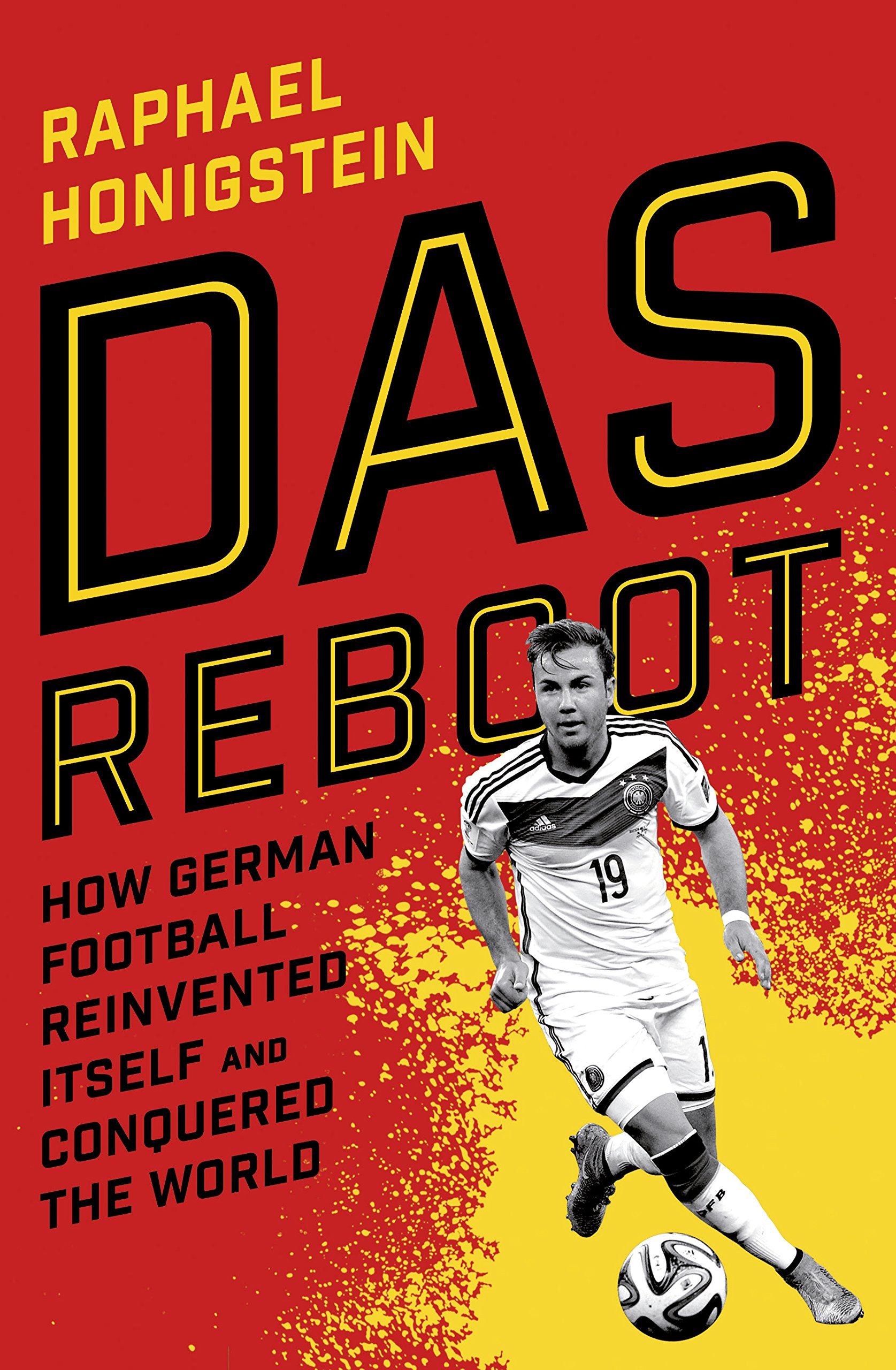
Das Reboot

Das Reboot: How German Football Reinvented Itself and Conquered the World

By Raphael Honigstein

Yellow Jersey Press, 2015

Das RebootEngland qualified for Euro 2016 at a canter, the only team with a 100% winning record. And yet Roy Hodgson’s side has never looked convincing or, perhaps more importantly, exciting. In nine months we’ll build our hopes up just to see them dashed once again. Few fans would disagree that a long-term strategy is needed, a major overhaul of the current creaking system. The blueprints are clear for all to see – France 1998, Spain 2010 (Graham Hunter’s Spain is the book to read) and Germany 2014. So I couldn’t help reading Raphael Honigstein’s Das Reboot with the Three Lions in mind.

Before I compare and contrast, let me first say that Das Reboot is a brilliant book; insightful, well-written and well-structured. Guardian journalist Honigstein is clearly a man in the know but there’s never any danger of the guest stars stealing the show. Klinsmann and Bierhoff represent the management, while Lahm, Müller and Mertesacker are the most vocal of the World Cup-winning squad. There are even chapters written by ex-players on the 2006 and 2010 tournaments; Thomas Hitzlsperger and Arne Friedrich respectively. Honigstein plays the Matthäus-esque libero role throughout, orchestrating but also bringing plenty of skill of his own. His writings on Müller, Khedira and Kroos, and the Bayern-Dortmund rivalry, are particular highlights.

As the subtitle suggests, Das Reboot is a book about the German journey – ‘how German football reinvented itself and conquered the world’. Honigstein uses the 2014 World Cup success as the central narrative thread but then weaves the history around it. The millennium is the starting point, the wake-up call, as Die Mannschaft lose to England and finish bottom of their Euro 2000 group. In true Hollywood style, footballing visionaries and a band of talented brothers come together to overcome complacency and tradition, and win the sport’s greatest prize.

Fitting tributes are paid to the trailblazers; Dietrich Wiese, the man behind ‘a revolution in youth development’ which saw the creation of certified academies at a cost of £1billion to Bundesliga teams; the revolutionaries Rangnick and Klopp who overthrew the sweeper system with their philosophy of gegenpressing (high pressing); and Klinsmann and Bierhoff, the men credited with starting the project in the face of widespread scepticism. The basics of the project were simple – ‘the law of larger numbers…more coaching for more talents equalled more skilled football players’. The execution, however, was an intricate endeavour.

There is a lot for England to learn in Das Reboot – the accessibility of academies, strong links with schools, a certification regime, the importance of large numbers of qualified youth coaches. To a certain extent, it is about ‘attention to the little, easily fixable things that cumulatively made all the difference.’ However, what is most striking in Das Reboot is the intelligence of the players, and this is not necessarily replicable. Müller jokingly describes himself as an ‘Interpreter of Space’ – it’s hard to imagine Raheem Sterling or Ross Barkley saying something similar.

For the coaching system to work, the German players must think for themselves and take responsibility. There is a ‘culture of accountability’ that in theory could certainly benefit English players but do they have the cognitive powers to make that work? In Das Reboot, there is a great story about stats technology being introduced to Die Mannschaft. What starts as a tool for the coaches to give players things to work on becomes a social point for the players, as they discuss tactics amongst themselves. Education and communication lead to a more democratic, winning environment.

‘Football has become a mind game’ is one of Honigstein’s take-home messages in Das Reboot. ‘To get better in the modern game translates into taking in things more quickly, analysing them more quickly, deciding more quickly, acting more quickly.’ Rangnick’s vision of football doesn’t take shape overnight. To create a generation of Müllers, Lahms and Schweinsteigers you need the best youth coaches working with talented and engaged young players from the earliest age possible. In England’s case, you need to break everything down and start again. As Weise says, perhaps with our fuddy-duddy FA in mind, ‘there will always be smart people with good ideas. But the key is for them to be in a position to actually implement their ideas.’

Buy it here

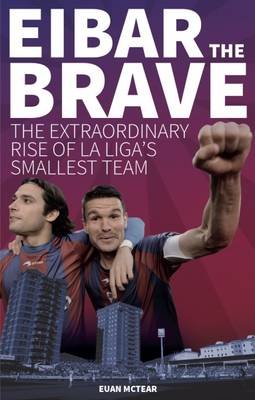
Eibar The Brave

Eibar The Brave: The Extraordinary Rise of La Liga’ s Smallest Team

Euan McTear

Pitch Publishing, 2015

9781785310362I blame Castel di Sangro. Joe McGinniss’ 1999 classic set the bar too high for tales of sporting underdogs. Those expectations just aren’t realistic and the clue is in the title; ‘The Miracle of Castel di Sangro’ refers not just to the on-field triumphs but also to the once in a lifetime off-field access. Will we ever see the like again? Judging by Euan McTear’s Eibar The Brave, the answer is probably not. What is sadly missing from this excellent book about Spanish football’s greatest overachievers is the voice of the actors themselves. What was it like to go from playing in Segunda B to Primera division in just two seasons? I don’t really know. We hear from La Liga experts Sid Lowe, Guillem Balague and Jason Pettigrove but with the exception of Derby County’s Raúl Albentosa, the players are largely silent. Eibar is described as ‘the most relaxed football club in Spanish football’s top flight’; the Ipurua Municipal Stadium is never locked, and yet the closest we really get to the action is the crazy fans.

Rant over because despite this, against the odds, Eibar The Brave succeeds in bringing this incredible story to life. Like Eibar manager Gaizka Garitano, McTear does a fantastic job with somewhat limited resources. His match reports/diary entries are full of character, humour and affection, even when the scoreline doesn’t deserve it. The will-they-won’t-they story of their 2014-15 La Liga debut is neatly woven throughout, with space in between to delve back into the history books. Eibar The Brave is brilliantly researched, taking in the post-civil war founding of the Basque club, its promotions and relegations, its heroes (Xabi Alonso and David Silva amongst them), its stadium, its enterprising president and, most importantly, its fans. The Eskozia La Brava group in particular gets the airtime it deserves for providing such amazing ánimo in a stadium of 6,000 people, in a city of just 27,000.

In less than 200 pages, McTear even finds time to explore the wider issues at play in Spanish football, touching on financial regulations (with Eibar and Elche at opposite ends of the debt scale), TV rights, cup competitions, fan violence, regional politics and la cláusula del miedo. As such, Eibar The Brave is an informative guide to a league that you may watch but not necessarily always understand. The ins and outs of relegation head-to-heads, for example, take a bit of explaining to those schooled in goal difference.

This overall picture that McTear paints so engagingly serves to reiterate the special, if not unique, nature of Sociedad Deportiva Eibar. A debt-free, ‘family’ club that acknowledges its ‘natural home’ is in the third division, and yet finds itself playing against goliaths like Ronaldo and Messi on a weekly basis; a team that respects and involves its fanbase and gets undying love in return from all over the world. The unbelievable tale of Eibar certainly isn’t over, and hopefully McTear will be on hand to narrate the next instalment, perhaps with some new friends to keep him company.

Buy it here

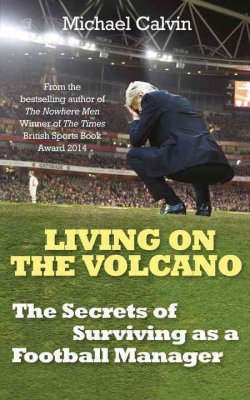
Living on the Volcano

Living on the Volcano: The Secrets of Surviving as a Football Manager

By Michael Calvin

Century, 2015

Arguably the greatest asset of Michael Calvin’s previous, award-winning book The Nowhere Men was its human insight into a shadowy, under-appreciated world. The trials and tribulations of scouting were vividly portrayed through interviews with figures unaccustomed to the limelight. This was always going to be the biggest challenge for his latest book, Living on the Volcano: The Secrets of Surviving as a Football Manager. As Calvin admits in the acknowledgements, ‘football managers are categorised by the profundity of their pronouncements.’

Living on the Volcano takes the same structural approach as The Nowhere Men: a broad range of case studies (26 at the author’s count), where a quiet, objective narrative style prioritises the words of the subjects themselves. These range from ‘veterans’ Ian Holloway and Aidy Boothroyd to bright young things Garry Monk and Eddie Howe; from League Two survivors to Premier League personalities. Even cutting through the bluster of the likes of Alan Pardew and Brendan Rodgers, there is honest insight to be found throughout.

9781780893273

‘When we piece together the jigsaw of what makes a successful manager, it contains shards of bone, scraps of sinew and slithers of grey matter.’ As Calvin’s words neatly summarise, no two managers’ stories, situations or approaches are exactly alike; some have expensive technology at their fingertips and swear by it, some pride themselves on a persona of self-belief, and others have little more to work with than old-fashioned man-management.

However, what Living on the Volcano does so brilliantly, is pick up the recurring threads. The ‘band of brothers’ mentality that emerges is built on a mutual world of uncertainty, frustration, and ‘recurrent rejection and renewal’. Each chapter is cleverly connected to the next to reflect the fluid nature of the managerial merry-go-round. The importance of father figures is clear, whether that be mentors within the game or personal heroes outside of it. In such a pressurised profession, the support network is key, as is maintaining perspective. ‘All right, we all want to win, and we might lose our job, but there are a lot of worse things in the world,’ Wolves manager Kenny Jackett stresses.

And whether they’re discussing neuro-linguistics or ‘developing the person and the player’, all managers are trying to create the best environment to nurture talent. Rodgers sees himself as ‘a welfare officer’, former Brentford boss Mark Warburton talks of ‘handling the hunger and the anger’ and Walsall manager Dean Smith describes ‘the natural sensitivities of human beings’. Within each squad, there are a range of character types to understand and get through to. It is this emotional angle that emerges as every manager’s number one challenge, whether they’re fighting for a Champions League spot or fending off relegation.

As a series of individual portraits, Living on the Volcano may seem like a book to dip in and out of. However, in doing so, there’s a danger of missing the power of the overall narrative. Bookended by former Torquay manager Martin Ling’s emotional story, this is a book about people and what it takes to do their intoxicating and exhausting job. Just as with The Nowhere Men, Calvin gets to the personal core of an impersonal industry, arguing for empathy with these ‘Poundland prophets’ and their ‘desperate ambition, absurd pretension and ritual sacrifice’. Living on the Volcano might not make the job any easier, but it should make you give your manager a little more time.

Buy it here