Dougie Brimson Interview

Photo Alexey Shlyk

Photo Alexey Shlyk

In 1996, Dougie and Eddy Brimson wrote a groundbreaking, insider’s account of British football violence. 20 years on, Everywhere We Go remains an era-defining, bestselling book. Dougie has since written another 14 titles, both fiction and non-fiction, as well as 4 films including the huge hit Green Street, starring Elijah Wood. With another hectic year ahead of him, Dougie was kind enough to pause and answer our questions on his amazing career so far.

1. How did your first book Everywhere We Go come about? Did a publisher approach you to write it or did you write it and then look for a publisher?

The short version is that during the build up to Euro 96, my brother and I realised that there was a gap in the market for a book which countered some of the rubbish that was being spouted in the media about the culture of hooliganism. But we also realised that if we were going to be the ones to fill that gap, we would have to write something which would capture the interest of both sides of the debate.

So we began to jot down some thoughts and when we had about 10,000 words we simply picked a publisher at random and sent them a sample to see what they thought of the idea. That publisher was Headline, they loved it and Everywhere We Go was published in early ’96. It really was that simple.
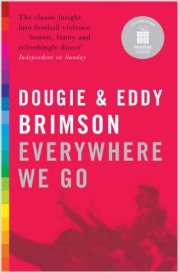
Everywhere We Go

2. Your first books were landmark, non-fiction accounts of British football violence. What was the hardest part about writing about the world you knew? And how much danger did these books put you in?

Well that’s very nice of you to say! The truth is that we actually found them quite easy to put together because they are, in essence, our opinions on various issues surrounding the culture of fandom peppered with anecdotes obtained from people we knew or who contacted us. The reason they worked so well is that not only were our opinions pretty much on the same wavelength as many of the people involved in the so-called Saturday scene, but because they were written in a style that was very easy to read.

However, we always knew that we were going to upset people along the way and that proved to be the case. There was certainly a price on our heads at one point but if you’re going to put anything in print, you have to be prepared to back it up and we were.

3. In 2001 you published The Crew, your first of many novels. Football violence was still at the heart but how did you find the switch from non-fiction to fiction?

Well it helped that I had the incentive of developing a basic plot outline for the writer Lynda La Plante who wanted to use football hooligans in one of her TV series. However, once I was up and running, I actually found it extremely easy.

Of course by this time, I had a good handle on my readership and so had a fairly reasonable idea of what they wanted to read and just as importantly, how they wanted to read it. After all, unless they’re on holiday the average bloke generally reads in bed, on trains or in the loo. So I always write in 15 minute chunks which ironically, made things easier with fiction than non-fiction. The hard bit was persuading my publisher to take it on although they were pretty good in the end.

Top Dog

4. Wings of a Sparrow was more football fiction but this time you replaced grit and violence with comedy and dreams. Was it fun writing something a little lighter?

Oh absolutely. One of the main reasons we go to football is because essentially, it’s a lot of fun and after years of writing about the darker side of it, I wanted to write something which made not only me, but the readers laugh about the daftness of local rivalries.

I’d actually written some comedy stuff before, first with The Geezers Guide to Football and then Billy’s Log but Wings is targeted much more directly at the sport and the reasons why we love it. After all, it’s essentially based on one of those questions which fans around the world have bandied about since the birth of the game. Wings really was a joy to write and I hope that comes across on the page.

Wings of a Sparrow

5. Football fiction isn’t a genre with a particularly strong literary reputation. Why do you think that is and do you think it’s unjustified? How would you describe your audience?

That’s a great question and in all honesty, it’s a genuine mystery to me. Maybe you should ask some publishers!

Personally, I think that there is no single answer, just a lot of different factors. It’s certainly true that mainstream publishers are afraid to take any risks these days and it’s also safe to say that football as a subject matter is a huge turn off for those commissioning editors who handle fiction and there seems to be two reasons for that. First, despite its success in non-fiction, the game is still regarded very much as ‘down market’ by the fictional side of the publishing fence and secondly, football books are generally targeted at a male readership and since ‘Lad-Lit’ as a genre doesn’t really exist, even if a writer came up with a marketable storyline, where would it sit?

Ironically, the market is certainly there and it’s gagging for stuff. Fever Pitch still sells strongly decades after its initial publication whilst my first novel, The Crew, has sat at number one on the Amazon football download chart for over four years! Even the sequel Top Dog still sells well and I’m always being asked for more.

That said, I think I’m fairly odd in that I write very much for my market as opposed to the market if that makes sense. I always keep in mind that the most important person in the publishing game is the reader and so have always tried to give my lot what they want as opposed to what I think they might like. Thus far, thank goodness, it seems to be working!

6. You’re perhaps best known for writing Green Street, the big football hooliganism film starring Elijah Wood. How was that to work on? What differences did you find between screenwriting and book writing?

Screenwriting is a very different writing discipline and it’s one which has its good and bad points. For a start, it’s very much a collaboration which is great if you’re working with good people, not so great if you’re working with idiots. Equally, with books a writer is in control of pretty much everything whereas in film, it’s out of your hands pretty much from the moment you hand over the first draft of a script.
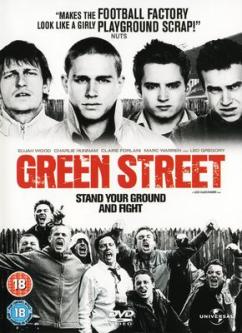
Green Street

7. What’s your favourite football book (fiction or non-fiction) and why?

I’m a big fan of Left Foot Forward by Garry Nelson because I think it captures the life of an average footballer pretty much perfectly and it’s also brilliantly written. The Tales from the Vicarage series by Lionel Bernie are also pretty awesome reads but that’s because I’m a Watford fan!

8. And finally, what does 2016 have in store for your busy self?

I’m currently writing In The Know which is the third novel in the The Crew, Top Dog trilogy and I’m also working on two films. One about the war in Afghanistan and the other, a screen adaptation of Wings of a Sparrow which is proving to be great fun. Aside from that, Watford are keeping me pretty occupied at the moment. Long may that continue!

For more info on past and present projects, visit http://www.dougiebrimson.com/
Football writers on the Best Books of 2015

Jack Pitt-Brooke, Football journalist for The Independent and i

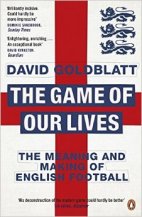
GoldblattAt a time when the game of football itself is subject to endless dissection and analysis, The Game of our Lives by David Goldblatt tells the other story: what does football mean to us in Britain in 2015? Why does it matter? How do we experience it? How has it changed? From half-and-half scarves, to billionaire foreign owners, YouTube fan channels, and the rest, Goldblatt tells us with great narrative skill how we got here. Or, in the subtitle of the book, about ‘The Meaning and Making of English Football’. It is a remarkable piece of scholarship, showing an understanding not just of football, but of history, society and culture. Because the state of modern football, ultimately, is the state of us.
Matt Gardiner, sports bookseller at Waterstones and founder of Manchester Football Writing Festival

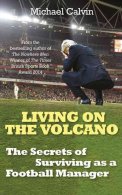
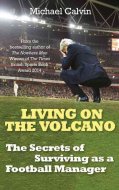
9781780893273(1)Living on the Volcano is another astonishingly strong book from the author of “Family” and “The Nowhere Men”. Mike Calvin has once again reached heights with his sports writing which seems to be unfair on his peers.  His ability to gain access to the people who really count is phenomenal and ensures once again that “Living on the Volcano” is a triumph.  The chapters which focus on the lower league managers are for me the strongest as we hear from men who don’t often make the headlines.  I for one can’t wait for what Mike does next.

Michael Calvin, Sports journalist for The Independent and author of Living on the Volcano and The Nowhere Men

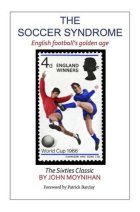
The Soccer SyndromeCall me Mr Retro if you wish, but my football book of 2015 was first published in 1966. The Soccer Syndrome by the late John Moynihan has just been republished by his son Leo, through Ian Ridley’s Floodlit Dreams imprint, with an evocative new foreword by Patrick Barclay. It is a classic, an overdue reminder of football’s lost innocence which, in an age of corporate artifice, has rarely been more relevant. I worked with John as a young reporter; he was sardonic and perceptive, with a voice as rich as mulled wine. He understood football’s essential humanity – this is your chance to do likewise.
Paul Grech, author of Il Re Calcio: Stories From Italian Football

2015 has seen my shelf being enriched by a number of great new football titles.  As an avowed fan of Simon Hughes’ writing, I terribly enjoyed ‘Men In White Suits’, his analysis of Liverpool’s fall from grace in the nineties through the experiences of some of the players that shaped that decade.

From a football coaching perspective, I also enjoyed reading Carol Dweck’s Minset and Ian Leslie’s Curious.  Although neither one is a football specific book both have ideas that should inspire anyone who deals with coaching and indeed I wrote extensively about the impact of the latter book.

However, if I were to pick my favourite read for the year I would have to go for Michael Calvin’s Living on the Volcano.  This dissection of football manager, thanks to the experiences of famous and less well known managers, puts into focus the reality of football management.  Although I was never under the illusion that it is as easy a job as many seem to think that it is, there were passages in this book that still took me by surprise.

Martin Greig, co-founder of BackPage Press

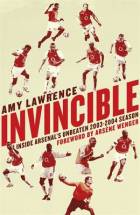
InvincibleFrom the moment we founded BackPage – in 2009 – we wanted to publish a book on Arsenal’s Invincibles. Along with Pep’s Barca, they were the team that had most fired our imaginations.  We published the definitive book on Barca, but never got round to the Invincibles. Then Amy Lawrence wrote Invincible. At first I was devastated that we had been beaten to the punch, but on reading it I was simply thrilled that the subject had been properly documented. Invincible is excellent. Amy’s passion shines through. It is a sports book with a beating heart, like all the best ones.
Daniel Storey, deputy editor of Football365 and football freelancer

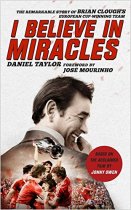
I believe in miraclesI Believe in Miracles is Daniel Taylor’s account of Nottingham Forest’s European Cup-winning team, told through the eyes of players, supporters, journalists, managers and club officials but knitted together perfectly by one of this country’s finest sportswriters. The book is split into two sections, the first regarding Forest’s rise to the league title, and the second the remarkable run to double European glory. At each stage of the journey the reader is given nuggets of information and anecdotes, all reminiscing about an achievement that will never be repeated.

There have been countless biographies and autobiographies written about each individual in that all-conquering Nottingham Forest era. This should be seen as the definitive book.

Sachin Nakrani, writer and editor for The Guardian and creator and co-editor of We’re Everywhere, Us

OstrichWe live in a world filled with season diaries (I should know, I’ve written one myself) and the job, therefore, of anyone who decides to go down that path is to avoid the obvious, well-worn methods of telling the story of nine months on planet football​ and provide the reader with something different​. Alexander Netherton and Andi Thomas achieve that with Are you an Ostrich? their take on the 2014/15 Premier League season with a book that is as sharp with its humour as it is with its considered, serious insight on the wider issues/topics-of-debate in the domestic game. So one one hand it creates a superbly surreal world in which Arsene Wenger cannot eat his breakfast without literally everything going wrong, while on the other offering the most powerful and intelligent take on why Ched Evans should not be allowed anywhere near a football pitch that I’ve ever read. Are You an Ostrich, which references the former Leicester manager Nigel Pearson’s infamous remark to a journalist near the end of the 2014/15 campaign, is a delight to read by two writers who have become experienced football diarists but continue to offer a fresh and must-read contribution to the genre.
Harry Pearson, football writer and author of The Far Corner

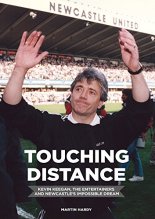
Touching DistanceMartin Hardy’s Touching Distance tells the story of Newcastle’s 1995-96 season, the year they could and – maybe – should have won the title for the first time since the 1920s. It’s built around a series of insightful and often funny interviews with key players including Peter Beardsley who relates how he informed his telephone-less parents that he had signed for his hometown club from Vancouver by sending them a postcard. Inevitably he got to Newcastle from Canada before it did. Ultimately Touching Distance is a bit like The Day of the Jackal – you know what the outcome will be but the author cranks the tension up so nicely that by the final chapter you start to suspect there might be an unexpected twist at the end.

Alex Stewart, freelance football writer

The Football's RevoltMy favourite football book of 2015 is only partly from 2015. To be precise, The Football’s Revolt, by Jan Le Witt and George Him, was originally written and illustrated in 1939 and reissued this year by the V&A. Witt and Him were two Polish artists who moved to London to work for the museum’s in-house design team, and also produced posters for the war effort, as well as their sumptuous children’s books. The Football’s Revolt tells the story of a match between Goalbridge and Kickford, a fierce local derby that gets out of hand when the football takes umbrage at being kicked so hard and takes to the clouds. The book at once manages to capture the intensity of football and its fans, while also undercutting that with sometimes very subtle humour. It is surreal and sly and celebratory, with a resolution that extols the simple pleasures of the game. The illustrations are lush and funny, perfectly complementing the style of writing. The Football’s Revolt is a great book for children, but will cause a wry smile to any football-loving adult who picks it up, and it is my football book of 2015.
Dermot Corrigan, football writer for ESPN, Irish Examiner, WSC and Unibet

Brilliant OrangeDavid Winner’s Brilliant Orange is not a traditional football book, but it’s still the best explanation of how and why the sport has evolved over recent decades. Johan Cruyff dominates, of course, but artists Johannes Vermeer and Jan Van Eyck are also brought into show how the Dutch are “a nation of spatial neurotics” for whom use of space is “a matter of national survival”.

Put more simply, with the ball you expand the pitch as much as possible, without it you restrict the space available for opponents to play in. Winner finds early evidence of this sophisticated tactical approach in the 16th century, when a visiting Spanish side [well, army] was squeezed of space in defence and thereby defeated – “anticipating by nearly 400 years the Total Football concept”. Spanish football caught up around 2008, and Cruyff’s influence at Barcelona is still strong. This book was published back in 2000, but is just as important today.

Ian Ridley, football writer and publisher of Floodlit Dreams

One of my favourite football books, and one that influenced me as a young football writer, was The Soccer Syndrome, by John Moynihan. It combines wit with perception, elegant writing with sharp opinion, and informs equally about the game at the highest level as well as on public park.

When his son Leo Moynihan approached me about re-issuing the book 50 years on to mark both its original publication and a half-century since England won the World Cup, I was delighted to work with him on it.

The result is a new edition, with foreword by Patrick Barclay and afterword by Leo, that we hope keeps alive the memory and spirit of John, who died a few years ago, and offers a chance to a new generation of readers to enjoy what remains a charming and relevant insight into English football.

George Rinaldi, English and Italian football writer and author of the upcoming Calcio’s Greatest Forwards

9781780893273(1)It comes as no surprise to say the most enjoyable football book I’ve read in 2015 was Living on the Volcano by Michael Calvin. It has become rather expected of Calvin to deliver such brilliance packed in to a small space, but he has done so once again with this superb reading of football managers. He isn’t afraid to scrutinise when he sees best, and also gives a number of different interviews with the Premier League’s top coaches. These managers do, however unfortunate, keep to a very stylised and cliché based response which might hamper the true feel of the book, but the writing is what I came for and it didn’t disappoint.
Adam Hurrey,

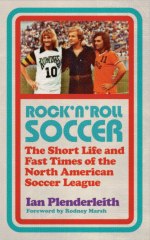
9781906850722The best football book I read this year was Rock ‘n’ Roll Soccer: The Short Life and Fast Times of the North American Soccer League by Ian Plenderleith. The North American Soccer League is a fascinating chapter of football’s not-too-distant past. On one hand, it was a hugely ambitious, forward-thinking enterprise; on the other, an unsustainable financial mess. Whichever cap fits, the NASL burned half as long it perhaps ought to have done, but surely twice as bright.
Ian Plenderleith’s deals dutifully with the well-worn NASL stories – Pelé, Cruyff, Beckenbauer et al – but it is the peripheral nuggets that really keep the pages turning. The decision to move franchises to Las Vegas and Hawaii, in particular, provides the author with some entertaining tales of ageing journeymen struggling with both the unbearable heat and the obligatory four-day benders.

If you’re into your footballing curiosities – and if not, why not? – Plenderleith’s meticulous (but never pedestrian) retrospective is as compelling as it gets.

Iain Macintosh, ESPN football writer, author and editor of The Set Pieces

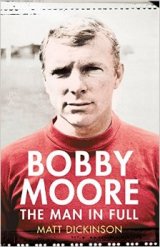
I would say Matt Dickinson’s Bobby Moore: The Man in Full. That was very special.

Bobby Moore

The Game of Our Lives

The Game of our Lives: The Meaning and Making of English Football

By David Goldblatt

Penguin, 2014 

GoldblattDon’t be fooled by the St George’s cross and three lions on the paperback cover; The Game of Our Lives is high-brow, academic stuff. In seven chunky chapters, Goldblatt explores English football from a range of social science approaches – economics, sociology, urban studies, politics, anthropology, race studies, gender studies. With a reference section spanning seventy pages, this truly is an exhaustive look at our nation’s favourite past-time.

‘How has English football changed in the last 25 years?’ Despite dips into deeper history, this is the central question in The Game of Our Lives. Goldblatt is interested in ‘the intersection, where Britain’s deep-rooted cultural relationship with football met the arrival of new media and new money’. His findings, as you’d expect, evoke a unique blend of pride and shame. Cosmopolitanism, collective ownership and crowd safety fight to float above a murky world of greed, mismanagement and sexism.

While the early chapters on the financials of the Premier League era (player/agent power, club ‘growth without profits’) and the fight against racism may feel like fairly well-trodden territory, they’re written with the finesse and detail that you’d expect from the author of The Ball is Round. ‘Keeping it Real? Match Day in the Society of the Spectacle’, meanwhile, makes nice use of the blow-by-blow live football experience to theorise on the ‘longing for the communal and the public in an individualized and privatized world’.

The later chapters offer up more distinctive insights. ‘English Journey: Football and Urban England’ delivers an absorbing lesson in cultural geography. Bristol, Goldblatt argues, ‘perhaps more than any city cleared its inner urban neighbourhood of football’s traditional working-class social base.’ Working from north to south and from east to west, the conclusions are hard to refute. ‘Football at Twilight: Britain’s Endgame’ is a fascinating look at the ‘domestic fragmentation’ through the lens of football. Goldblatt starts with the shifts in Northern Ireland, Wales and Scotland before moving on to discuss ‘the English football nation’ and the fans’ rejection of the Union Jack in the late 1990s.

Perhaps even better is ‘Last Man Standing? English Football and the Politics of Gender’. ‘Is there any other realm of public life where prominent figures proclaim the essential, enduring maleness of their world?’ Goldblatt asks rhetorically. What follows is a study of both the slow, fettered progress made by women in the game but also the rise of the sophisticated foreigner and in particular the metrosexual man, embodied by David Beckham.

As you’d expect from what is essentially a series of intellectual essays, The Game of Our Lives can feel a little dry at times. However, there are certainly moments of crackling wit from Goldblatt, such as the description of TalkSport as ‘the saloon-bar bear pit of sports radio’ and his character assassination of the FA in Chapter Six (‘a hybrid of the punctilious provincial town hall and the clannish rotary club’).

As the sum of its scholarly parts, The Game of Our Lives puts football where it belongs – at the very forefront of our society. ‘The Church, the theatre, festivals and soap operas – football has acquired a place in British culture that exceeds them all, for it alone is the equal of each in their domains of ritual, performance, ecstasy and national narrative.’ At times, Goldblatt may seem a little serious, but his point is that the role and meaning of modern British football is no joke at all.

Buy it here

What Ever Happened To Billy Parks?

What Ever Happened To Billy Parks?

By Gareth R Roberts

The Friday Project, 2014

whatever happened to billy parks[1]In the lofty world of fiction, few subjects are deemed as fatal as football. And I say that in 2014,nearly a decade after the success of David Peace’s The Damned United. The beautiful game, despite its inextricable ties to human nature and contemporary society, remains the source of exasperating literary pillory. But blessed be the few brave souls who fight the tide. This year, most notably Danny Rhodes took on memories of the Hillsborough disaster in Fan, and Gareth R Roberts inserted a fictional hero into the iconic world of 1960s West Ham United in What Ever Happened to Billy Parks? The former has been a much-heralded success; the latter won a prestigious Fiction Uncovered Award.
Billy Parks might be a footballer, but he is first and foremost an archetypal ‘nearly man’, pained by regret and pining for redemption. He was a highly talented winger in a golden generation, who, through a combination of tragedy, womanising and alcoholism, wasted his opportunities for true greatness. Parks spurned offers from Matt Busby’s Manchester United and Brian Clough’s Derby, and sat helpless on the bench as England failed to qualify for the 1970 World Cup. By the novel’s opening, he’s in his sixties and reduced to sharing stories at a Sportsman’s Lunch for £60, some drinks and, most importantly of all, an afternoon of adoration. Alternating between this often tragic present and his more auspicious past, Billy Parksis (to borrow the most tired of football clichés) a tale of two halves: fame and fortune, fading into reflection and remorse. As with Peace’s portrait of Brian Clough, Roberts’ novel is a moving human drama played out on the sporting stage.

For all his failings and misdemeanours, Billy Parks remains an endearing narrative voice. His aim is true, his personal battles are tough and vivid, and he favours self-knowledge over self-pity. He rues ‘the growing carbuncle that was my ego, drunk on alcohol and adulation’, but makes no excuses for himself. Even in the midst of his most depraved spells, there are small expressions of weakness; ‘just occasionally a black sadness before or during a game, as I grappled with the reality that failure would mean an endless abyss of nothing’. Later on, at death’s door, it’s Parks’ genuine desire to make amends with his daughter and grandson that keeps him sober and alive.

But to focus on the sadness in Billy Parks is to ignore the sense of joy and excitement. The novel is a thorough, loving tribute to a bygone era and most importantly, to the delights of youth. Roberts brilliantly captures the pure ecstasy of that first game (‘There were goals and movement and swear words and arguments and kicks and shoves and I loved it all’) and that first goal (‘I felt my body and mind surge with the glorious fresh air of life’). The inclusion of match stats throughout – date, venue, team line-ups, goalscorers, attendance – is the inspired touch of a writer in his element. The macho invincibility of footballing fame is also well-captured; ‘we drank and revelled in being young and carefree and oh-so-very-very male.’ Parks and his teammates are ‘knights of the round table, the untouchable dynamite dealers of Saturday afternoon’.

And then there’s Roberts’ wildcard, which turns out to be a winner, if perhaps not a trump card. Without saying too much, there’s a mysterious ‘Service’, a very eminent ‘Council of Football Immortals’ and the chance to rewrite history. Just when Billy Parks is cruising along towards traditional ‘memoir’ territory, it takes a left turn into Back To The Future. But worry not, sci-fi sceptics; it’s no giant leap and it’s all in the name of feel-good, football fun. Out of its oddly disparate elements – football, family, love, addiction, regret, nostalgia, comedy, tragedy, fantasy – Billy Parks emerges as both a heart-warming human tale and an engaging sporting narrative. Perhaps Roberts should consider adding manager to barrister and novelist.

Buy it here

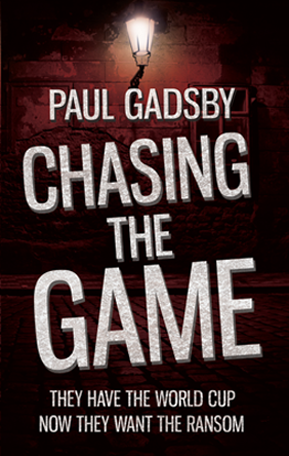
Chasing The Game

Chasing the Game

By Paul Gadsby

Matador, 2014

Towards the end of Paul Gadsby’s Chasing the Game, one character remarks to another, ‘My old man always said never trust a bloke who doesn’t like football.’ Strangely, a similar level of scepticism is reserved for novels that do like football. Sport has rarely travelled well into the realm of fiction, David Peace’s The Damned United and Chad Harbach’s The Art of Fielding being the notable exceptions. But at its core, the former is a Shakespearean tragedy, while the latter is a coming of age tale. In each case, the game itself plays out as little more than a plot device.

In this his debut novel, Gadsby isn’t looking to buck that trend. It may end with Bobby Moore and co. celebrating their 1966 World Cup victory, but Chasing the Game centres on the dealings of London’s criminal underworld. Full of period detail and moody violence, it’s much more Peaky Blinders than Roy of the Rovers. With his mentor dead and his father in prison, Dale Blake finds himself the new leader of one of London’s toughest firms. Under pressure to grow the business and show who’s boss, Dale agrees to an audacious plan – stealing the Jules Rimet trophy from Westminster’s Central Hall.

As he explains in the acknowledgements, Gadsby takes the undisputed facts about the infamous robbery and has some good old-fashioned fun. With the exception of Pickles the dog, all names are changed (FA Chairman Joe Mears becomes Clement Spears), and many characters are constructed from scratch, namely the gang members and their families. Multiple narrative perspectives are handled well, the pacing and plotting are strong, and the dialogue rings true. The prose won’t worry McEwan and Barnes too much, but that’s not the point. The pages turn, and the reader is drawn into the murk.

The occasional over-description aside, Chasing the Game is a well-crafted and entertaining novel. Despite its timely release for the buzz around Brazil, its readership should extend beyond the World Cup dreamers. Because if you’re in the market for historical crime fiction with a lot of heart, Gadsby’s your man, whether you like football or not.

Buy it here