Books for Brazil

The World Cup Reading list

Now that the domestic season is all but over, it’s time to focus our book attention on a certain international tournament that’s coming up. These 6 books have got all the bases covered.

The Host Nation
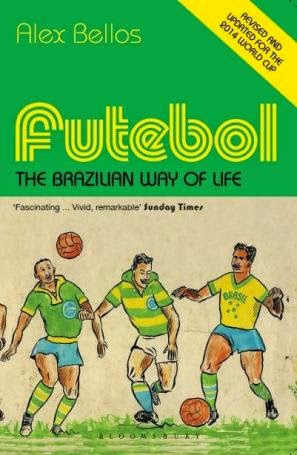
It’s always good to do your homework on the team with the home advantage – the players, the venues, the culture at large. Here it’s a toss-up between the new and the old – David Goldblatt’s Futebol Nation or Alex Bellos’ Futebol(Bloomsbury).  I’d favour the old here, especially as it’s been given a timely update.

The Host Continent
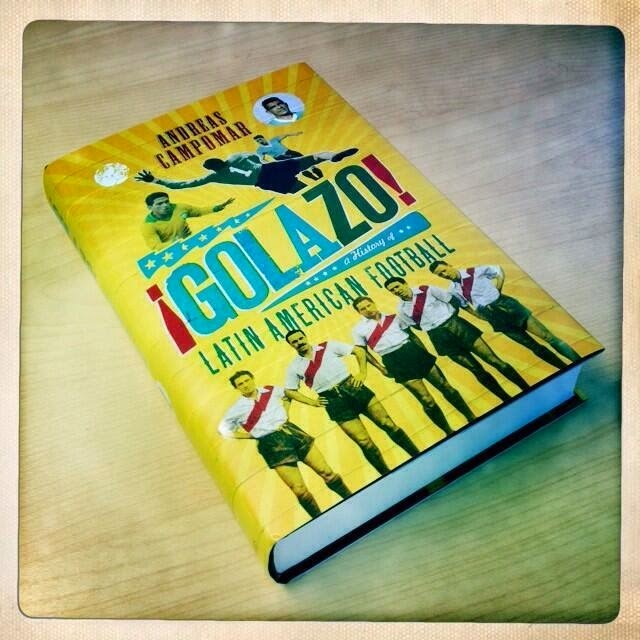
Brazil are far from the only side accustomed to a sub-continental summer. İGolazo! by Andreas Campomar (Quercus) gives you the lowdown on all of Latin America’s finest: the hosts but also Argentina, Uruguay, Chile, Ecuador, Colombia and even Mexico, Costa Rica and Honduras.

The Favourites
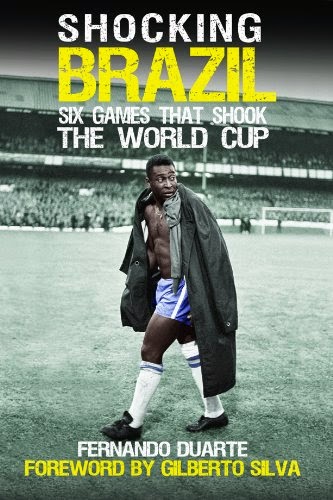
Phil Scolari’s side may be round about 3-1 with most bookies, but this is hardly Brazil’s finest crop. Plus, there’s a history of failure interspersed with all that success. For a reminder, check out Shocking Brazil by Fernando Duarte (Birlinn).

The History
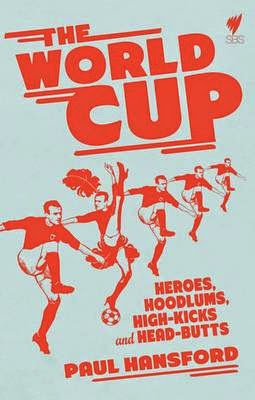
For the full facts, you can’t beat Brian Glanville’s Story of the World Cup but for something a little more fun I’d suggest Paul Hansford’s The World Cup (Hardie Grant). ‘Heroes, Hoodlums, High-kicks and Headbutts’ – the subtitle certainly has a lot to live up to.

The Personal Angle
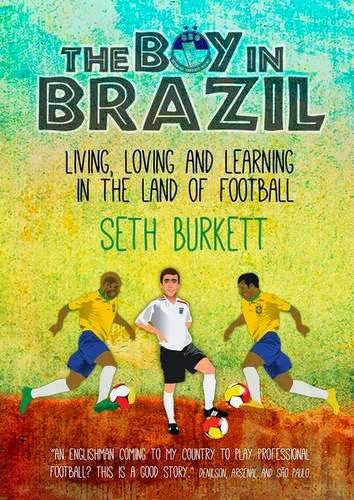
On the subject of previous World Cups, I’d recommend From Bobby Moore to Thierry Henry by Liz Heade as a nice slice of familial nostalgia. But for 2014, it’s got to be The Boy in Brazil by Seth Burkett (Floodlit Dreams). At just 18, Burkett became the only English professional footballer in Brazilian football – this is his fascinating story.

And finally…The Expectation Suppressor
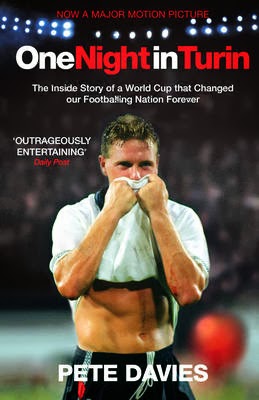
A month ago no-one gave England a chance in hell; but now that the squad has been announced, suddenly there’s a little bit of light at the end of the tunnel. Lest we forget our history of disappointment, read Pete Davies’ classic One Night in Turin. It may be nearly a quarter of a century since Italia 90, but it’s amazing how little has changed for our national team. For more, read my review here.

Sol Campbell: The Authorised Biography

Sol Campbell: The Authorised Biography

By Simon Astaire

Spellbinding Media, 2014

‘Sulzeer Jeremiah ‘Sol’ Campbell. Is there a finer English footballer over the last fifty years who has been eyed so suspiciously?’ Simon Astaire’s astute biography of Sol Campbell ends with this most pertinent of semi-rhetorical questions. The former Tottenham and Arsenal centre back is hardly the first footballer to shy away from the limelight; in fact, another famous example was born in that same year of 1974. But whereas Paul Scholes is readily accepted as a quiet, unassuming family man, Sol has always been seen – by friends, teammates and managers – as a man of depth. He is also, through largely no fault of his own, a man of controversy. A claim of assault, a North London betrayal, an episode of depression and an ill-fated stint in League Two all made the headlines, alongside recurring slurs against his race and sexuality. For a private man, Sol Campbell has had a very public career.

Like subject, like book, Sol Campbell: The Authorised Biographyhas had an eventful life so far. Press attention has sadly centred on one sensationalist claim; that racism within the FA prevented Sol from being ‘England captain for more than 10 years’. Appearing to undermine the strong leadership qualities of teammates such as Tony Adams, David Beckham and John Terry, the remark suggested a bitter ex-player voicing long-held grievances now that retirement hadn’t resulted in the kind of opportunities he felt his accolades merited. But thankfully, as Matt Dickinson wrote in his excellent review in The Times, ‘The book deserves far better than to be known for one reckless outburst.’

That ‘outburst’ aside, Sol Campbell offers a considered look at a highly distinguished career. Very few direct criticisms are levelled and even these are mild and reasoned. Wayne Rooney, for example, is condemned for diving but praised for having ‘the imagination to change things’. When it comes to discussing the worst of the Tottenham years, Sol takes no prisoners but names no names: ‘I had muppets as team-mates who were on treble the money.’ Respect is given to both performers and professionals, from half-time smoker David Ginola through to veteran captain Gary Mabbutt. England managers, Arsenal and Portsmouth teammates – all are acknowledged with polite appreciation, if not always overt affection. Present tense narration lends a nice sense of drama to scenes like the historic unveiling at Arsenal but the many high-profile decisions of Campbell’s career are also explained openly and judiciously, from Tottenham’s insufficient ambition (‘I wanted Spurs to show me that they were going to challenge’) to the allure of the Notts County project (‘I liked the idea of being part of the renaissance’).

Penetrating Campbell’s tough football shell, however, is no easy task; he’s not a man who naturally confides his feelings to others, least of all teammates. Lee Dixon sums it up well – ‘I didn’t get to know him and I don’t think anyone really did.’ Life-changing decisions are shared – if at all – with his mother Wilhelmina and his agent and friend Sky Andrew. Until now, that is. ‘Sometimes he would stare at me with a seriously blank expression when I asked something difficult’, biographer Astaire admits in the prologue, ‘but he would eventually open up’. Sol Campbell reveals a man with a deep-rooted emotional fragility. Pressure and hurt build and build inside him until they eventually overflow, as on the night he famously disappeared during half-time of a nightmare performance against West Ham in 2006. ‘The accumulation of storms in his life had finally combined and on that evening hit him so hard and unexpectedly that he had only one choice left. Escape.’

What Astaire does brilliantly is to trace this sensitivity all the way from its roots. Five years younger than the next of his eleven siblings, Campbell was largely left to his own devices as a child, ‘adrift’ as he puts it. Two significant and competing elements of Sol’s character emerge from this upbringing: a fierce independence and a recurring need for appreciation. Whether kicking a tennis ball against the wall in his street or sitting quietly in his front room, Sol’s childhood is dominated by solitude; ‘The calm made me happy. Since then, I’ve always been in search of it’, he confesses. The impact of his father’s very distant parenting style is also felt throughout the story. The care and attention he failed to find at home from Sewell, he held out hope for at Tottenham but while George Graham ‘knew I was a top-notch player…I never felt he rooted for me’. Expressed a different way, ‘The fans may have believed in me but I felt the club didn’t, otherwise they would have done more.’ At Arsenal, Campbell joined a winning mentality but also a family environment with protection and praise from David Dein and Arsene Wenger. Later on, Portsmouth proved another good fit, in part because Harry Redknapp is ‘someone who he felt would manage him in a fatherly way’.

Confidence, determination and focus – in the 21stcentury, the myth of the steadfast sporting mindset is finally being questioned. With this book, Campbell deservedly joins the likes of Robert Enke, Andre Agassi and Marcus Trescothick in a very significant subgenre of sports writing. Yes, key matches are analysed and records are set straight, but the real triumph of Sol Campbell is that ‘The Rock’ is revealed as human after all.

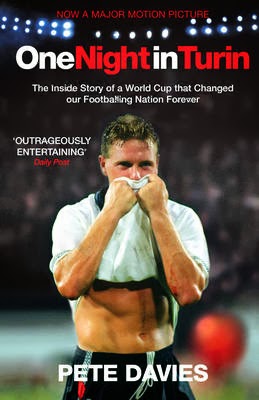
One Night in Turin

One Night in Turin: The Inside Story of a World Cup that Changed our Footballing Nation Forever

By Pete Davies

Yellow Jersey Press, 1990
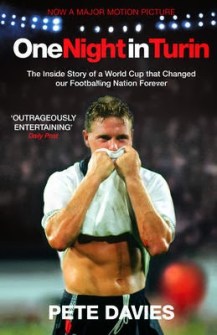
Ahead of this summer’s World Cup in Brazil, every England fan should be prescribed a copy of One Night in Turin. It may be nearly a quarter of a century since Italia 90, but ‘Ghastly press, oafish fans, and 4-4-2’ is a summary that still rings true enough. This year, a Gazza-esque hero will rise and a Psycho-esque villain will fall. The FA is still run by octogenarians ‘bereft of common sense or ideas’, our newspapers still prefer to vilify than to praise, our national side is still dominated by brave but unspectacular grafters, and disappointment, penalties and heartbreak are all still guaranteed.

But A Night in Turin itself is an absolute one-off – no football writer will ever again get the kind of total access that Pete Davies had to Bobby Robson and his England team. Because in 1990, at the dawn of the agent-led, commercial era (or ‘Logoland’ as Davies calls it), it’s clear that the tension between press and players is already at breaking point. For Gascoigne, the epitome of the modern footballer, no money equals no comment. His reason? Simple: ‘I hate the press’. Luckily, Davies isn’t the press, as he has to remind his wary (and weary) subjects frequently. He may not be the most skilled of interviewers – ‘What would you be if you weren’t a footballer?’ and ‘What’s it like to score a goal?’ are his go-to questions – but Davies is in a position to offer a tantalising taste of the boredom and claustrophobia but also the ‘shared, sealed, exclusive group cohesion’ of the England camp.

Often you read ‘behind the scenes’ and are disappointed by the supposed ‘insight’. Not here – ‘off the record’ chats with the likes of Butcher, Lineker, Barnes and Waddle are peppered throughout the superb tournament analysis. These players might have nothing to say to the papers but they’re surprisingly forthright with Davies. The frustration of Barnes and Waddle with the negative, skill-stifling tactics is particularly telling; ‘They don’t say to Baggio or Hagi or Gullit, we want you back defending’, moans the latter. But perhaps best of all is the portrait of their much maligned manager. Much has been written on Bobby Robson but little can be as succinct as ‘he loved to win, he was desperate to win – but he was at least as much terrified of losing’.

In terms of style and tone, Davies hits the nail right on the head, bridging the gap between the tabloid journalism he rails against and today’s rising intellectualism. Like Nick Hornby, Davies is a football fan first and a writer second. One Night in Turinis an informal, bawdy, yet eloquent version of events, as entertaining as the ‘Planet Football’ it so lovingly describes. Humour is key to the approach – FA Chairman Graham Kelly is ‘a complete charisma bypass’, ‘you only had to show Caniggia (striker for Argentina, the team Davies saves his best vitriol for) the laces on your boot, and he was into a triple somersault’ and Bologna has ‘all the festivity…of a bad day in a bread queue’. Along the way we’re shown the funny side of tacky merchandise, bad sandwiches, Italian bureaucracy and sleepless nights in airports and train stations.

Serious comment, though, is never far from view – positioned between the team, the fans and the journalists, Davies is commendably objective, particularly on the central issue of English fans abroad. His balanced conclusion – that a thuggish minority, egged on by the trigger-happy media, scared the Italian police into an over-reaction, which in turn endangered the (largely) innocent majority – really stands the test of time.

As a title, One Night in Turin does the book a real disservice. Only the final 20 pages are dedicated to the semi-final against Germany, the last of the 21 chapters. Neither is this simply a book on England’s Italia 90 campaign; over 200 pages have passed before their first game against Ireland begins. Instead, as the original title alludes to, the perspective is much broader; football, travel, culture, and most significantly a snapshot of a nation. Davies’ argument is that hooliganism is not simply a football problem, but rather a reflection of our society at large – ‘the picture develops of a predominantly young, white, urban, male section of England’s following whose home environment…is, culturally, economically, politically, morally, all played out’.

Buy it here