Gareth R Roberts interview

Football Fiction with Gareth R Roberts, Danny Rhodes + Martin Greig

Waterstones Deansgate, Manchester

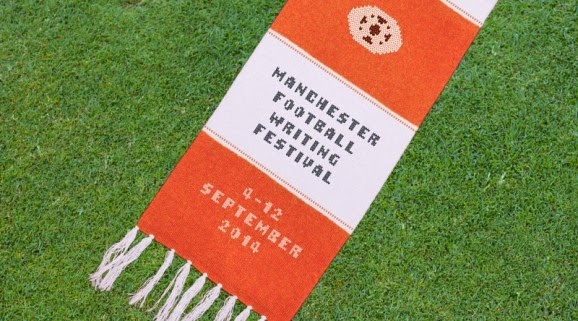
This weekend, I was in Manchester for their inaugural Football Writing Festival, a fantastic labour of love organised by Waterstones Deansgate in association with The National Football Museum. 9 days long (4th-12thSeptember), it comprises 10 amazing events featuring the leading lights and luminaries of football journalism including Jonathan Wilson, Matt Dickinson, Sid Lowe and Graham Hunter. After a fascinating insight into the world of sports biography and newspaper writing with Paddy Barclay, Mike Calvin and Ian Ridley on Friday night, I spent Saturday afternoon absorbed in the less-celebrated world of sports fiction. Gareth R Roberts (author of What Ever Happened To Billy Parks?) Danny Rhodes (author of Fan) and Martin Greig (co-author of The Road To Lisbon) shared the stage to talk football and its literary links to childhood, community and nostalgia.
After the event, I caught up with the charming Gareth R Roberts for the low-down on Billy Parks.

Q. Thanks so much for your time, Gareth. Let’s start with the inspiration for this book.

Without being too pseud-sounding, I wanted to write something that grappled with the notion of decay and the human condition as you get older and start to reflect on life. That was one aspect and another was the desire to bring some of my heroes back to life. Growing up in the 1970s, a lot of the football was in my head – what I imagined the lives were like, the characters were like. I’d see them in the old comics and Shoot magazine and in Panini books and they’d come to life in my own mind. So I suppose a big part of What Ever Happened To Billy Parks? is a loving reconstruction of how I thought things were when I was a kid. Whether I got that right, I don’t know!

Q. In terms of the character Billy Parks, there are certainly parallels with famous footballers like George Best and Gazza. Were they in your head as you wrote?

Yes, I suppose so, but there was never a single inspiration in my head. I haven’t based this story on any of those players, but I did read a lot of their biographies as research. It was more people I know myself, who I played rugby and football with, who now hark back to that time and they’re desperate to relive their glory days and it won’t ever happen.

Q. Placing a fictional character into a real world, did you have a lot of historical research to do?

Not really – it was always a labour of love. I don’t know what it is about football but you go through an age, from about 7 to 14, when you just accumulate facts about football. Bizarrely, I can name all of the footballers who played in all of the FA Cup finals between 1969 and 1981, and yet if you asked me about last year I couldn’t tell you. So the research was dead easy, and of course the internet helps. Mostly it was just recalling what I remembered and making sure I’d got it right.

Q. As a Liverpool fan, why choose to make Billy Parks a West Ham and Tottenham legend?

It was partly because I lived in the East End of London for six or seven years and actually know that area better than Liverpool. And also, it just fitted. In my mind, the voice of Billy Parks was Cockney, I don’t know why but it just was. Then I wanted him to play for a football team that I’m fond of, so it was West Ham. Everyone likes West Ham, especially the team from the 60s and 70s that played great football and spent the rest of the time, apparently, out on the piss!

Q. What are your thoughts on football fiction and do you think attitudes are changing?

The literary world is very strange, very closed, and I think there’s a small cabal of people who are all in each other’s pockets and are influenced by what is fashionable at the time. And football literature has never been particularly fashionable, mainly I think because most of the people in that literary elite are not football fans and they don’t get it. They don’t get that it’s a lot more than a quaint expression of working class values; that it’s a source of great passion for a lot of people.

Q. And finally, who would make your five-person Council of Football Immortals if you had to pick players, rather than managers?

That’s a great question! Bobby Moore, obviously, Stanley Matthews…do they have to be English? No? Ok, I’d have John Charles, the big Welsh centre forward…and then I’d have Garrincha because he’d be interesting, and finally Billy Bremner.

Whatever Happened To Billy Parks? is available here
Battlefields by Richard Scott

Battlefields

By Richard Scott

A wise man once said, ‘There’s love and then there’s football. To bridge these worlds is to unite the cruellest mistresses.’ I’ll claim that adage if no-one else wants it. After all, it has more than a ring of truth; it’s as reckless as hiding all your valuables in one place.For anonymity’s sake, let’s say I support Sunderland and she supports Everton. Same league, slightly different prospects and expectations; no direct animosity, more a friendly sense of competition. And both our local teams before you ask – there’s no greater sin than the fickle pursuit of glory. Ours was a very polite, British arrangement: we did not set foot in each other’s stadiums, and we never boasted about our own successes or mocked the other’s defeats. My football knowledge is extensive and hers is competent, a fact acknowledged but never expressed. These are the oh-so important rules of harmonious engagement. So far, so good, I think you’ll agree.

Our relationship did not end because of football; in fact, it was completely unaffected by it. I am fully aware of that. What got us was a central tenet of physics – time=distance/speed. A fundamental law with a fundamental impact, the full scope of which I don’t yet have the heart to fathom. No, football is not to blame and nor, in all honesty, are we. By night-time this is clear in my mind; the next morning, I have to start all over again. What football offers is a different battle, one that’s quantifiable and distracting, and one that goes on irrespective of me.

Anyway, back to the matter at hand. In football terms, perhaps I should have seen it coming. Over the summer, her team stole one, then two, then three of our star players. Having lost their talisman, they swung their weight and wallet like a wrecking ball, crushing all that we had worked so hard to build. We squeezed them for every last penny and then ushered the rest of our flock back into Plato’s Cave. With her, I tried hard to smile and endure, but the first signs of strain were already showing.

In theatrical terms, then all went black and the curtain fell. When it rose again, the season was starting and, you guessed it, my team was kicking off against hers. Where before I’d have asked for handshakes and a fair old fight, a part of me now prayed for a never-before-seen massacre. As if to taunt me, ‘Everton’ didn’t even field the players they had stolen from us. Instead, they sat them on the bench next to ours, the spoils of war smugly displayed. They scored, then we scored, then they scored again. Without her team playing well, she emerged victorious once again. My team had toiled and toiled, but ultimately all in vain. I deserved a win but ‘I want’ so rarely gets.

In the next match, I watched her team crumble to defeat and took some strange, bitter joy in each goal that hit their net. But that feeling couldn’t last, especially when my team ground out a 0-0 draw against relegation riff-raff. Since then, her team has spent more money and is back to their glorious, winning ways. And in the other corner, we fight on, the lovable underdog, winning some and losing some. There’s a long, hard season ahead.

So my advice to you? If that bridge must be built, use the strongest stones and the toughest cement. Or, better still, make sure you support the better team.


Chasing The Game

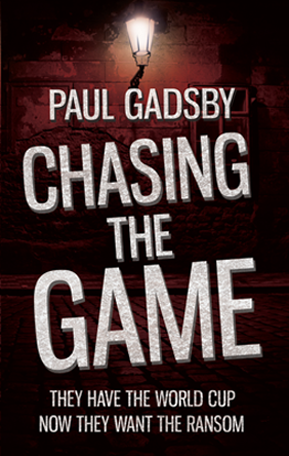
Chasing the Game

By Paul Gadsby

Matador, 2014

Towards the end of Paul Gadsby’s Chasing the Game, one character remarks to another, ‘My old man always said never trust a bloke who doesn’t like football.’ Strangely, a similar level of scepticism is reserved for novels that do like football. Sport has rarely travelled well into the realm of fiction, David Peace’s The Damned United and Chad Harbach’s The Art of Fielding being the notable exceptions. But at its core, the former is a Shakespearean tragedy, while the latter is a coming of age tale. In each case, the game itself plays out as little more than a plot device.

In this his debut novel, Gadsby isn’t looking to buck that trend. It may end with Bobby Moore and co. celebrating their 1966 World Cup victory, but Chasing the Game centres on the dealings of London’s criminal underworld. Full of period detail and moody violence, it’s much more Peaky Blinders than Roy of the Rovers. With his mentor dead and his father in prison, Dale Blake finds himself the new leader of one of London’s toughest firms. Under pressure to grow the business and show who’s boss, Dale agrees to an audacious plan – stealing the Jules Rimet trophy from Westminster’s Central Hall.

As he explains in the acknowledgements, Gadsby takes the undisputed facts about the infamous robbery and has some good old-fashioned fun. With the exception of Pickles the dog, all names are changed (FA Chairman Joe Mears becomes Clement Spears), and many characters are constructed from scratch, namely the gang members and their families. Multiple narrative perspectives are handled well, the pacing and plotting are strong, and the dialogue rings true. The prose won’t worry McEwan and Barnes too much, but that’s not the point. The pages turn, and the reader is drawn into the murk.

The occasional over-description aside, Chasing the Game is a well-crafted and entertaining novel. Despite its timely release for the buzz around Brazil, its readership should extend beyond the World Cup dreamers. Because if you’re in the market for historical crime fiction with a lot of heart, Gadsby’s your man, whether you like football or not.

Buy it here