The Premier League in Books – Part One

Arsenal

With such rich literary connections, Arsenal is a nice easy place to start. For historical accounts, try Patrick Barclay’s The Life and Times of Herbert Chapman, or Nick Hornby’s 90s classic Fever Pitch. If it’s modern player portraits you’re after, you’ll find few better than Tony Adams’ Addicted (with Ian Ridley), Dennis Bergkamp’s Stillness and Speed (with David Winner), and Lonely at the Top, Philippe Auclair’s biography of Thierry Henry. And if all that’s not enough, Amy Lawrence’s Invincible: Inside Arsenal’s Unbeaten 2003-2004 Season is undoubtedly one of 2014’s best Christmas gifts.
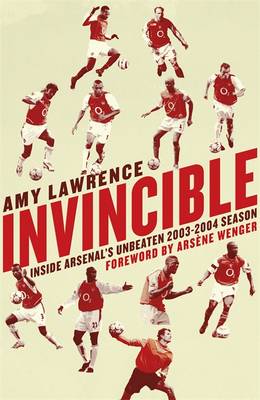
Invincible

Aston Villa

Despite being one of the Premier League’s perennial few, the Villains have made little contribution to the literary canon. In my humble opinion, that’s because the likes of Mark Draper, Julian Joachim and Alan Wright have so far steered clear of the confessional. A few, however, such as Gareth Southgate (Woody and Nord), Stan Collymore (Tackling My Demons) and Dwight Yorke (Born To Score), have been more communicative. Paul McGrath’s candid Back From The Brink is the pick of an average bunch. Perhaps Gabby Agbonlahor will one day right this wrong.
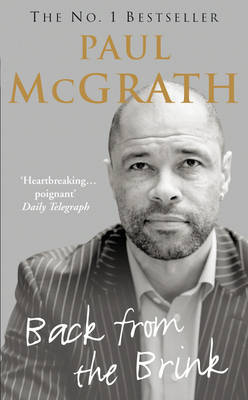
McGrath

Burnley

Same colours, same dearth of books. Thank goodness for Clarke Carlisle. His You Don’t Know Me, But… is an excellent, warts-and-all look at the realities of lower league football. Carlisle’s happiest and most successful years were at Turf Moor: ‘Owen [Coyle] came in and completely shifted the dynamic. His focus was on total enjoyment. It was fun at training, something a lot of the squad hadn’t encountered for a few years. This change led to a happy workforce, and a happy workforce is a productive one…We were definitely a classic example of a team whose total was greater than the sum of its parts.’
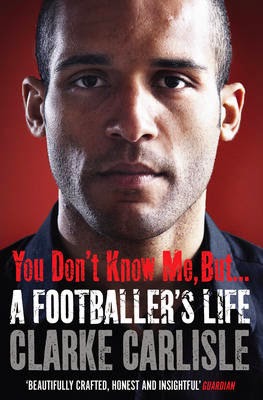
fc7a9-97814711288442b1

Chelsea

It always surprises me how little of note has been written about the Russian revolution at Stamford Bridge. Until the arrival of beige autobiographies from John Terry and Frank Lampard, we’ll have to make do with the managers. Ruud Gullit: The Chelsea Diary and Mourinho on Football are entertaining reads, but Carlo Ancelotti: The Beautiful Games of an Ordinary Genius is the pick of the bunch. Although largely based around his time in Italy, the book ends with the brilliantly named chapter ‘Summoned by Abramovich’.
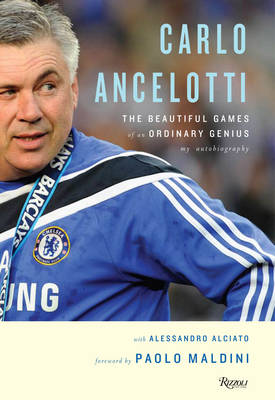
Ancelotti

Crystal Palace

Where the Eagles are concerned, Simon Jordan’s Be Careful What You Wish For soars head and shoulders above the rest. Mobile phone entrepreneur Jordan bought Palace in 2000 at the tender age of 36 and took them back to the Premier League. Ten years later, he was bankrupt and his club was in administration. This explosive and revelatory book will appeal to all football fans with an interest in what goes on behind the scenes, but it will mean the most to the long-suffering Selhurst Park faithful.
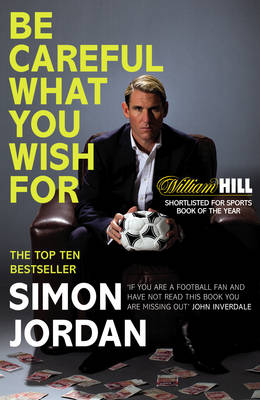
Jordan

Everton

This year has seen the publication of four books about Toffees heroes: Kevin Kilbane’s Killa, How Football Saved My Life by Alan Stubbs, Ossie by Leon Osman and best of all, In Search of Duncan Ferguson by Alan Pattullo. Here’s a juicy sample from the beginning: ‘Everton got under his skin. He would never ever forget how it felt to soar into the air, to head that first goal against Liverpool, before sinking to his knees with joy and relief in front of the Gwladys Street End; the legend before the player, the rise before the fall. On the same date 12 months later, he was languishing in jail.’
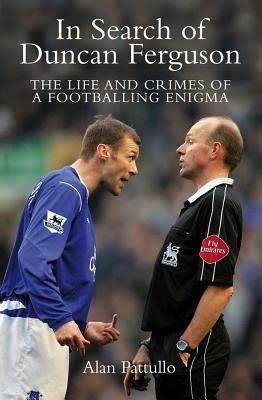
a2033-in-search-of-duncan-ferguson-9781845963927

Hull City

If a book could ever be said to sum up a football club, it would probably be Bend it like Bullard, nearly 300 pages of cult, no-frills entertainment. Here’s Jimmy on his motorway-side scrap with teammate Nicky Barmby: ‘I’d love to be able to say that I sorted him out, but the truth is that it was little more than explosive grappling for a few seconds. As the gaffer said later, it was hardly Ali-Frazier. We both ended up lying on a bush with no real leverage to get out of it.’
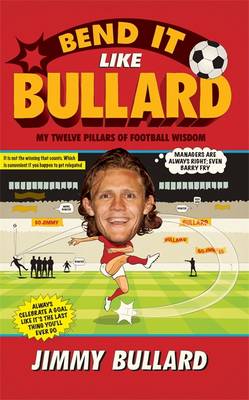
Bullard

Leicester City

The Foxes are back in the top flight again but it’s their 90s heyday under Martin O’Neill that provides the literary goldmine. Steve Claridge’s Tales From the Boot Camps is an underrated gem, while Savage! is as entertaining as you’d expect. Apparently, everything slotted into place when he joined Neil Lennon and Muzzy Izzet in the centre of the park: ‘With those two at my side, I produced my best forty-five minutes in a Leicester shirt…At the final whistle, everyone came over and hugged me. Martin had his arms around my shoulder. “Thank Robbie for getting us to the final”, he said to the others…That was the day I became Robbie Savage, Leicester City footballer. I was accepted by the lads from that moment on, and I still believe we were the best midfield that Leicester have ever had.’
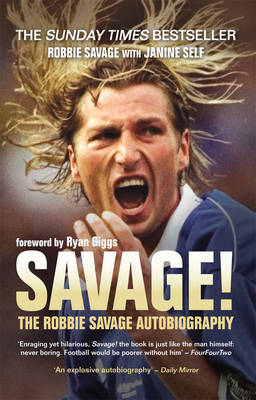
Savage

Liverpool

As befits a club with such history, there’s a long list of options here. For the nostalgics, I’d recommend David Peace’s Shankly epic Red or Dead and Tony Evans’ I Don’t Know What It Is But I Love It: Liverpool’s Unforgettable 1983-84. But this Christmas, it’s all about the controversial ex-strikers: Craig Bellamy’s GoodFella (featuring the winning combo of John Arne Riise and a golfclub) and Luis Suarez: Crossing The Line. The Uruguayan’s story promises to be as explosive as his finishing.
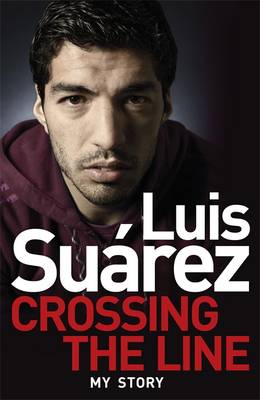
Suarez

Manchester City

Unlike Chelsea, City have an excellent book on their recent rise: David Conn’s Richer Than God: Manchester City, Modern Football and Growing Up is a brilliant look at how the football times are a changing, for better or for worse. Beyond that, there’s Blue Moon by Mark Hodkinson about the 98-99 promotion season, and Paul Lake’s I’m Not Really Here, a powerful and cautionary tale which you really don’t need to be a Sky Blue to enjoy.
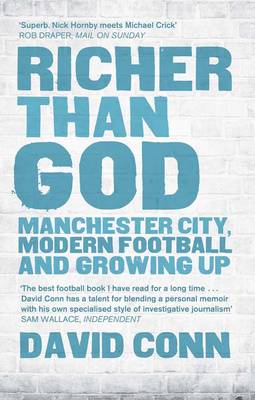

Conn

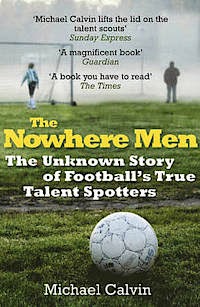
Q&A: Michael Calvin, author of The Nowhere Men

It’s been an amazing few months for sportswriter Michael Calvin. In May, his latest book The Nowhere Men beat the offerings of Messrs Balague and Lowe to win Best Football Book at the British Sports Book Awards. A month later, he completed the double, scooping the Times Sports Book of the Year award. Having reviewed his excellent look at the unknown world of football scouting for the Football Blogging Awards blog, I had a few questions for Mr Calvin, which he was all too happy to answer.

Q. Was the subject of scouting a difficult sell for your publisher? Especially when sports publishing is so focused on media-friendly ‘brands’: a player, a manager, a team or country.

I was very fortunate: everyone involved ‘got it’ from the moment the idea took shape during a chance conversation with Jamie Johnson, Millwall’s chief scout, in the manager’s office after a game at the Den. Ben Dunn, my publisher at Century, instantly understood the potential of exploring such a fascinating, but hidden, world. He related it to the authenticity of my previous book, Family: Life, Death and Football. He’s a football fan (West Ham, unfortunately) and like most fans he was intrigued by the process of discovery. Once I came up with the title, we were off and running.

Q. Was there a Eureka moment behind the Nowhere Men project? Did it emerge from your empathy with the scout’s plight, or were you specifically looking for an undiscovered aspect of the footballing world?

If there was a Eureka moment, it probably happened in my second game out on the road with Mel Johnson, the scout who acted as my mentor. It was an Under 19 international, and his principal target was the Czech goalkeeper. He noticed me doing what I had done thousands of times previously in reporting matches: annotating the team shape and following the flow of play. That wasn’t my job as a scout. I had to concentrate on our man. That intensity of focus made me view the game in a completely different light. It brought out the humanity of the process. That, in turn, stimulated my empathy with both player and observer.

Q. As your book so brilliantly evokes, scouts operate within a closed, ‘tribe’ environment. Was it difficult to infiltrate the fraternity and get them talking, or was Steve Rowley more of an exception?

Scouting is like any other specialist field: it is enclosed and initially hesitant in opening up to outsiders. I was a bit of a curiosity at first, but once they realised I wanted to share their lifestyle and tell their stories, they were intrigued and, I have to say, a little flattered. I quickly became part of the network. I found them brilliant to deal with: even Steve, who was more reserved and uneasy, was politeness personified.

Q. For much of the book, your voice is very subtle, keeping the spotlight focused firmly on your interviewees. Was it difficult to remove yourself from the picture, as a journalist accustomed to offering opinions?

Not particularly, to be honest. Observation has always been my stock in trade as a sportswriter; being a columnist on a national newspaper is the privilege of experience. Sport enshrines the best in human nature, and the worst. That’s what makes it so compelling to write about. The reader sees the scout’s world through my eyes, but I took a conscious decision to allow them to speak for themselves. It is interesting that many readers tell me they loved the ‘Chat Show’ chapter in which I recorded the conversation of Patsy Holland, Allan Gemmell and Barry Lloyd. They gave us a fantastic insight into true football culture.

Q. Which of the many set-ups discussed in The Nowhere Men impressed you most and why? Personally, I felt the team of Matthew Benham and Miguel Rios at Brentford came across particularly well.

Brentford surprised me, because what I discovered defied the perception of the club. I was hugely impressed by the work done at all levels. Interestingly, Miguel and Mark Warburton, who is now manager, come from a City trading background. That makes them more inclined to think laterally and differently. At Academy level, the human chemistry between Shaun O Connor and Ose Aibangee, who are different characters, really works. This is a club operating to a long term strategy: much of that is down to owner Matt Benham, who is a fan, but also utilises his professional experience and perspective.

Q. Do you feel that English football analytics have made much progress in the past year? It’s interesting to read that Brendan Rodgers, widely seen as a very modern manager, still puts such faith in his scouting set-up.

No, I don’t. In much of the Football League there is very little understanding of, and respect for, analysis in terms of performance and recruitment. Far too many clubs are taking the short-sighted, short-term option of employing unpaid interns or recent graduates, who are ready to work for free. They are exploiting the ambition of a new generation of support staff, which is utterly wrong. Liverpool have a strong analytic base, but also have faith in old school scouts like Mel. The wider issue, though, is that too many clubs are becoming over-reliant on video scouting; you cannot beat eyes, ears and instinct.

Q. And finally, having had this privileged education, would you ever consider scouting on the side?!

Funnily enough, I have been asked to look out for players. A few of the scouts keep in touch and ask where I will be at the weekend. They might ask for a favour – ‘see what you think about so and so, will you?’ – and they happily swap news and gossip. It works both ways!

Buy The Nowhere Men here