Danny Vincent and the 4-1 Formation – Part One

Danny Vincent ‘didn’t really follow sports’ and most importantly ‘wasn’t a football fan’. That’s what he told us during the coffee break on his first day. I’d waited a few hours to ask him, giving him time to settle in. There was an audible sigh, and then a weary resignation in his voice. He looked down at his feet like the boy who knows he’s done wrong. Maybe this was why he was starting his third job in two years.

It was a crying shame because I’d been eyeing him up for weeks. Few men enter the world of publishing these days, and those that do tend not to be of the athletic build. Take Jake, for example, our other new recruit. In his spare time, you’ll find him sedentary, eyes glued to a split-screen, fingers tapping away at a bit of plastic, an empty pizza box at his feet. So when Helen told me that Danny was ‘quite tall, pretty skinny’, he became The Great Hope, the focal point of team sheets scribbled on the back of Tesco receipts.

It was asking too much, I know, but The Big Game was fast approaching. Editorial vs Sales. The rules were strict – no Finance, no Production, no Marketing, no interns. We billed it as Wenger’s Arsenal circa 2010 versus Mourinho’s Chelsea circa 2005. Visionary creators against efficient doers; flair against money. Much office pride was at stake, and wages blindly gambled away.

Sales were confident, as you’d expect those silver-tongued devils to be. They were also well-drilled, thanks to lunchtime runs and gym sessions. I heard rumours of a practice match in the build-up, although their captain Malcolm would never admit it (‘You wish!’ was his cryptic response). Sales did everything together, a real band of snake-hipped brothers. They had youth on their side, too.

To stand any kind of chance, we would have to play to our strength, which wasn’t, it quickly became apparent, footballing skill. We made Djourou and Eboue look like Iniesta and Messi. No, instead our strength was size, size at the expense of agility. Solidity. Our inspiration was Scotland circa 2010 – the 4-6-0 formation. In other words, we set about building The Wall.

‘We do need an outlet, though,’ our keeper Tim argued at one team meeting. Oddly enough, the man blocking our goal would probably have topped our lithe charts. He’d been a decent winger in his day but sadly keyhole surgery was now keeping him between the sticks, resplendent in a tie-dye shirt and old-school roller-blading kneepads. ‘We win the ball and then what?’

It was a simple enough question but we were stumped. In the absence of a Pirlo-esque regista, we hadn’t really thought about ball retention. ‘Possession is nine-tenths of a whore,’ big old Ted once wittily quipped. And yet on a six-a-side pitch, the ball came back at you faster than a boomerang. How could we hold off the siege?

‘Ok, ok, ok,’ I said, quieting everyone down. Colleagues were waiting outside, wanting to get on with work-related things. On the screen, I drew a forward arrow next to the player in the middle of the five-man wall. The 4-1 formation was born.

‘Wait a minute; I’m not playing up top!’ Niall shouted from his kitchen in Harrow. The conference call software made his protest sound even angrier. He was right, though; a 55 year-old ‘talker’ wasn’t really striker material. Gary Mabbutt had scored 27 goals in 477 games for Spurs. We only had one game and 0.06 goals wouldn’t get us very far. ‘I can’t conduct the orchestra from the programme stall.’ Niall loved an arts-based analogy.

‘Well, I’m not either!’

‘Nor me!’

We had a problem; The Wall had become so strong that no-one would budge. That was my positive spin on it, anyway. Perhaps Sales were getting in our heads. We experimented with Jake as our target man but we never did work out which was his stronger foot. Gary looked like a very tubby Peter Beardsley but had none of his movement. Me, you ask? No-one even suggested it. It would be like asking David Seaman to dance on ice.

We had exhausted all options. That was why Danny Vincent was meant to be the ‘1’.

Michael Calvin Interview

SPORTS REPORTER MICHAEL CALVIN PHOTO:PHIL COBURN

SPORTS REPORTER MICHAEL CALVIN
PHOTO:PHIL COBURN

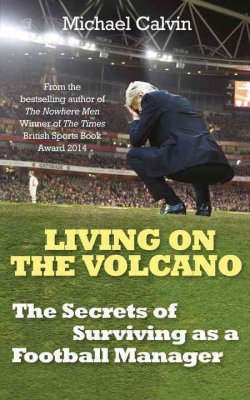
When it comes to sportswriting, Michael Calvin is an A-list, award-winning powerhouse. Whether you’re reading his columns for The Independent and BT Sport or one of his many brilliant books, top-quality insight and analysis are guaranteed. Mike is also one of the good guys, which is why he’s back for a second interview with Of Pitch and Page and why he’s (hopefully) forgiven me for drastically underestimating his phenomenal output (see below). On the back of rave reviews for his latest book Living on the Volcano, I asked him about research, writing and what he’s learnt about football management.

1. What made you decide to make football managers your next project after football scouts?

Scouts are still subjected to institutionalised disrespect, as are managers. That gave me the incentive to try to humanise what can be a pretty de-humanising job. I’ve always been struck by the fact that, despite their ubiquity, football managers have traditionally remained resistant to deeper scrutiny. I wanted to find out what made them tick, as people and professionals.

2. Was it more difficult to gain managers’ trust? Was there any material that had to be removed at a later date for confidentiality reasons?

I was fortunate that quite a few of the managers had read my previous football books, Family and The Nowhere Men. They knew what I was about: I was looking for authenticity. They responded to the prospect of being portrayed accurately, and with a degree of depth. A 100,000 word book gives a writer an ability to contextualise, so they were comfortable enough to drop their guard. We worked in a spirit of mutual trust and respect, which is very rare in the modern game.

3. Did your opinion change at all as the interviewing/writing went on? It strikes me that you were always sympathetic to the manager’s plight, but was there anything that really left you ‘eyes opened’?

I think they understood I empathised with their problems. Several said ‘you’ve been in dressing rooms. You know the territory.’ The most powerful question a writer can ask is ‘tell me how you do your job’. This wasn’t just an interview request; I wanted to watch them work, on the training ground and in internal meetings to develop an understanding of their character and the breadth of their responsibilities. I sensed a cultural shift in the emergence of a new, more emotionally intelligent generation, aged between 34 and 43.

4. Living on the Volcano is your third book – do you find the writing process getting easier each time?

Actually it is my sixth! I did a book on cricket captaincy with Ray Illingworth when I was 21 (don’t ask the publication date) and one called Only Wind & Water, which was on a round the world yacht race in which I competed (the publishers promptly went bust!) I also collaborated with Gareth Thomas on Proud, which was named Sports Book of the Year 2015 (sorry for showing off!) I love the research and writing process; the more books one writes, the easier it is to get one’s head around the scale of a project.

5. Were there any managers that you were sad not to include?

The only outright refusal was from Sam Allardyce, who rather grandly announced he wanted to share his thoughts through the LMA. He has a book out soon, funnily enough…. I had to be really disciplined about the number of managers I studied otherwise Volcano would have rivalled War & Peace. I was happy with the cross section, but wouldn’t have minded including Nigel Pearson and Keith Hill, at Rochdale.

6. At last year’s Manchester Football Writing Festival, you spoke about how the move to Twitter-speed news may leave the book as the only option for longer, more considered sports journalism. Do you feel we’re seeing a growth in high-quality football literature?

I do, and it is not just limited to football. I think the standard of British long form sportswriting has improved immeasurably over the last decade, to the point where it is more compelling than its North American equivalent.

9781780893273(1)

Now for the Quick Fire Round: as a management expert, who would you choose to…

7. Win the Premier League on a budget of £50million?

Arsene Wenger (provided everyone else had £50m)

8. Secure Premier League safety against the odds?

Bit counter-intuitive this one, since he failed to do so last season, but Sean Dyche.

9. Get a young side promoted from the Championship?

Karl Robinson, given time and more resources than he has at MK Dons.

10. Take a team from League 2 to the Premier League?

Obviously dependent on continuity of budget, but a natural development coach like Paul Tisdale at Exeter, Eddie Howe at Bournemouth, or Wolves’ Kenny Jackett, whose mentor at Watford, Graham Taylor, did just that.

 You can buy Living on the Volcano here

Eibar The Brave

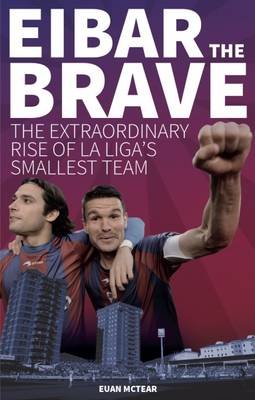
Eibar The Brave: The Extraordinary Rise of La Liga’ s Smallest Team

Euan McTear

Pitch Publishing, 2015

9781785310362I blame Castel di Sangro. Joe McGinniss’ 1999 classic set the bar too high for tales of sporting underdogs. Those expectations just aren’t realistic and the clue is in the title; ‘The Miracle of Castel di Sangro’ refers not just to the on-field triumphs but also to the once in a lifetime off-field access. Will we ever see the like again? Judging by Euan McTear’s Eibar The Brave, the answer is probably not. What is sadly missing from this excellent book about Spanish football’s greatest overachievers is the voice of the actors themselves. What was it like to go from playing in Segunda B to Primera division in just two seasons? I don’t really know. We hear from La Liga experts Sid Lowe, Guillem Balague and Jason Pettigrove but with the exception of Derby County’s Raúl Albentosa, the players are largely silent. Eibar is described as ‘the most relaxed football club in Spanish football’s top flight’; the Ipurua Municipal Stadium is never locked, and yet the closest we really get to the action is the crazy fans.

Rant over because despite this, against the odds, Eibar The Brave succeeds in bringing this incredible story to life. Like Eibar manager Gaizka Garitano, McTear does a fantastic job with somewhat limited resources. His match reports/diary entries are full of character, humour and affection, even when the scoreline doesn’t deserve it. The will-they-won’t-they story of their 2014-15 La Liga debut is neatly woven throughout, with space in between to delve back into the history books. Eibar The Brave is brilliantly researched, taking in the post-civil war founding of the Basque club, its promotions and relegations, its heroes (Xabi Alonso and David Silva amongst them), its stadium, its enterprising president and, most importantly, its fans. The Eskozia La Brava group in particular gets the airtime it deserves for providing such amazing ánimo in a stadium of 6,000 people, in a city of just 27,000.

In less than 200 pages, McTear even finds time to explore the wider issues at play in Spanish football, touching on financial regulations (with Eibar and Elche at opposite ends of the debt scale), TV rights, cup competitions, fan violence, regional politics and la cláusula del miedo. As such, Eibar The Brave is an informative guide to a league that you may watch but not necessarily always understand. The ins and outs of relegation head-to-heads, for example, take a bit of explaining to those schooled in goal difference.

This overall picture that McTear paints so engagingly serves to reiterate the special, if not unique, nature of Sociedad Deportiva Eibar. A debt-free, ‘family’ club that acknowledges its ‘natural home’ is in the third division, and yet finds itself playing against goliaths like Ronaldo and Messi on a weekly basis; a team that respects and involves its fanbase and gets undying love in return from all over the world. The unbelievable tale of Eibar certainly isn’t over, and hopefully McTear will be on hand to narrate the next instalment, perhaps with some new friends to keep him company.

Buy it here

The Footballing Trials of Bobby F. Grant

Chapter One

June 2004

‘And finally, the moment you’ve all been waiting for,’ Pete, the team manager shouted from the stage. I watched sweat drip down from his forehead to his long nose and then on to the floor by his feet. The poor man was stood in a sauna with all of his clothes on. The audience was getting loud and my dad was the loudest. But this was definitely the moment he’d been waiting for. ‘The Ripley Rovers Player of the Year is…’

My dad and his mates played a drum roll on the table. Pete paused and looked down at the piece of paper in his hand. But everyone knew who it would be. It was always the same kid.

‘…Paddy Grant!’

Howooooh! How-how-howooooh! My dad did the awful wolf howl that he always did and I moved a little further into the darkness. My mum laughed a little next to him but I could tell she was embarrassed too. Even my brother looked a little awkward as he made his way up to collect his award. His teammates patted him on the back and cheered his name as he passed. I was proud of him too, don’t get me wrong. Paddy is a brilliant footballer, but it’s hard to be a brilliant footballer’s younger brother.

I hated going to these presentation nights but I’m not the kind of kid who makes trouble. If I’d asked my parents to get a babysitter, it would have looked a lot like jealousy. Which it was, I suppose. I never won anything at my presentation nights for Fortvale FC. ‘Ripley Rejects’ was what most people called us and I was probably the worst of them.

As Paddy sat back down, Dad put his arms around his shoulders in a clumsy hug. ‘Great work, son!’ he bellowed in his ear. Unless Paddy’s game was cancelled, Dad never came to watch me. I’m not saying that so that you pity me; that’s just how it was. Sometimes he didn’t even ask about the score in my match when we got home. He would sit in his chair by the TV and grunt a hello, as if I’d just gone out to the shop for a minute. It was Mum who took me to matches and cheered me on from the touchline. Poor Mum.

‘Hi, Bobby!’

It was Charlie, Paul’s younger brother. Paul was Ripley’s second best player but Charlie was smarter than me. He didn’t even try to play football; he did break-dancing instead and he was really good at it. He was a nice kid but I didn’t really feel like talking.

‘Hi Charlie, how’s it going?’

‘Not bad, thanks. These nights are rubbish, aren’t they?’

I nodded and hoped that might be it.

‘How’s your football going?’

‘Not great. How’s the break-dancing?’

‘Good – we’ve got the National Championships next month, so I’m practising hard.’

‘Cool, good luck with that.’

A talent makes everything alright, even your brother’s presentation nights. Charlie went over to his parents to ask for another Coke. I’d already had two and my stomach felt all fizzy. As Paddy had his picture taken with the guest of honour, local football hero Trevor Thorne, I went outside to get some fresh air. Unless Mum got her way, which she rarely did, I still had a few hours to wait before I could go home.

In the carpark, I sat on the wall and thought about things. I think this was my biggest problem – thinking too much. Paddy never seemed to think about anything, except scoring lots of goals. He never had doubts or worries like I did. What if I gave away a penalty? What if I just couldn’t tackle anyone? What if the whole of my team told me I was rubbish and asked me to leave? These were all sensible fears but they really didn’t help me.

It had been a really bad season with lots of heavy defeats. If I wrote a story about 2003-04, the picture on the cover would be me sat in the mud and rain, my head in my hands, as the other team celebrated another goal. Perhaps one of my teammates in the background would be shouting at me for making a mistake. The title would be in big, bold capital letters like a newspaper headline: ‘HOW MANY TIMES?’ And not even my family would buy it.

When I started playing football, I gave myself a rating for each game like they did in Match magazine. I wrote them down in a notebook but when the ratings dropped week after week, I just gave up. I would only allow whole numbers and I couldn’t face giving myself ‘0’. There was nowhere to go after that, except minus figures. But then perhaps that was correct; by playing, I was making the team worse.

After a little while, Mum came looking for me. She gave me her smile of sympathy and sat down next to me. I don’t think she was having a good time either. She deserved a daughter.

‘You ok, Bobby?’

I nodded and hoped that might be it.

Mum stroked my hair, even though I’d asked her to stop doing that years ago. Normally I’d stop her but I needed my number one fan. ‘Thank you. I know it’s hard for you but Paddy is very grateful and so are we. You’re a good boy.’

She said it like it was a really good thing but I wasn’t sure. Very few people were famous for just being really good people. You needed to be good at something. I didn’t want to become a saint or a monk.

‘Mum, I’m thinking about giving up on football.’

I waited for her to say ‘No, you’re great, keep going’ but she didn’t. She didn’t look surprised at all.

‘I love football but I’m rubbish at playing it. I want to find something that I’m really good at.’

Mum stayed quiet. It wasn’t the first time that I had talked about retiring.

Chapter Two

August 2002

‘Unlucky kiddo,’ Dad said, ruffling my hair without taking his eyes off the road. He hadn’t had much practice at this side of things with Paddy.

I’d just finished my trial for Ripley Rovers and it had been a disaster. A total disaster. ‘Paddy’s brother’ was like a weight around my neck, dragging me down. I couldn’t jump for headers and I couldn’t chase the fast wingers. I kept trying to shake my legs into life but it felt like that time we’d practised swimming with our clothes on. Halfway through, my Dad walked off to watch another match. He’d had enough and so had I.

I shook his hand away and shot him my best evils. I didn’t want his sympathy; I wanted his optimism. ‘Bobby, I’m not sure football’s for you but I think badminton might be your sport’, or ‘Billy, forget about football. You belong on the stage!’ Something like that. Even the suggestion that we went for ice cream would have helped. Instead, we drove home in silence. I wanted to cry but not in front of Dad.

Mum was a little better but her smile looked like hard work. It was like a warm-up stretch that you really didn’t want to do. I could tell that she didn’t know what to say.

‘Football isn’t everything, love,’ she started but then she stopped. I could tell she was thinking because her mouth twitched from left to right. ‘There are loads of other fun things that you can try, Bobby.’ Then she looked at me to see if I liked this idea. Right then, as I sat on my bed in my dirty, smelly football kit, I didn’t. The idea of ‘trying’ anything seemed stupid. I gave her my best scowl.

‘Ok, well let’s give it one more shot then, shall we?’ I didn’t answer but she carried on anyway. ‘I spoke to Sally and she says they’re forming a team for the kids that didn’t make it at Ripley. They’re having a training session next week – what do you think?’

I was seven. Grandad retired from his fabric shop at 70, Dad wanted to retire from the bank at 65, the Southampton right-back Dan Petrescu retired at the age of 34. I couldn’t retire at seven.
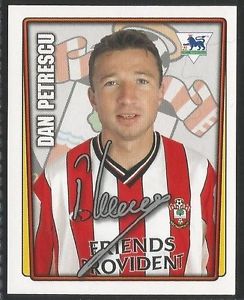
Petrescu

I recognised a few of the boys from the Ripley trials but most of them were new. The range of quality was incredible, like the clothes stall at the church fair. It was a real lucky dip. There were the no-hopers like me, the big kids who couldn’t move but could kick it a mile, the small players with lots of skill, and the quick players with no skill. We had it all. We would be playing in a league two divisions below Ripley Rovers but we would work our way up and beat them!

That’s what our new managers told us at the end of the first practice, as they passed around the registration forms. Steve and Chris were a strange pair; one small and square with a big face like Mr Potato Head from Toy Story, and the other tall with a big belly like Baloo from the Jungle Book. When they didn’t talk over each other, they were quite encouraging. At least they were at that stage, before we’d played any matches.

Thankfully, no-one was told not to come back – Fortvale FC was a rescue home that wouldn’t turn anyone away. It’s hard to say no to loyalty. It takes guts and it takes a real desire to make it to the top. Luckily, there was no chance of us making it to the top and so I became the first-choice right-back. They even made me captain for the final minutes of a 10-1 defeat. Mum had gone to sit in the car because the weather was bad, so she missed my proudest moment. I’m not sure she really believed me when I told her. That was fair enough.

‘Billy, make the tackle before he runs pa-’

And the left winger was gone, dribbling down the line to put in a cross.

‘Billy, step up, you’re playing everyone onside right no-’

And the centre forward was through on goal with just the keeper to beat.

No-one asked me to play – I was doing this to myself. I was choosing to do this for ‘fun’. When things got really bad, I’d look at Steve and Chris on the touchline as if to ask, ‘Why am I here? Why don’t you just take me off?’ For some reason, they never did. I think they were hoping one day I’d make the decision for them.

If I’d had friends on the team, it might have been different. We would have had fun in those short periods when we weren’t losing really badly. But sadly, I didn’t fit in at all. I liked books and drawing birds (we’ll come back to that later); they liked WWE and farting songs. Football was all that we had in common, and they didn’t even want to share that with me.

‘You look live you’ve lived a thousand years!’ Steve joked once after a really bad defeat, and so Chris nicknamed me ‘Turtle’. I think he meant tortoise but correcting him would have made things so much worse. The name stuck because it was true. I moved slowly and I never looked happy. ‘Turtle’. But you can’t do anything about your face. Mum says that when I was born, I looked like a really old man with all my wrinkles and they thought maybe I had been born backwards. Surprise, surprise, Paddy loves that story.

At the end of that first season, I was ready to quit. I didn’t want a transfer to the lower leagues, or a move abroad; I just wanted to retire. Over the summer, I tried playing cricket but I was even worse at that, if that’s possible. In rounders, I ran everyone out with the bases loaded, and I forgot to drop the bat. The pressure of team sports was too much; it gave me headaches. But I wasn’t ready to just be ‘the artistic child’. And so I signed up for another year of hell.

Autumn Football Titles – The Top Six

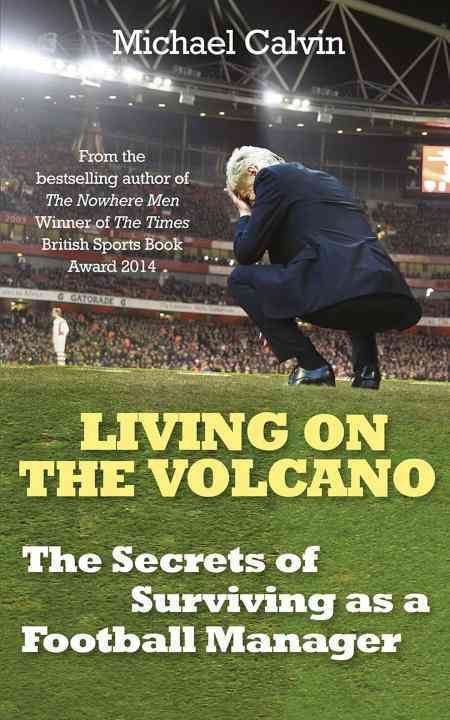
1. Living on the Volcano: The Secrets of Surviving as a Football Manager by Michael Calvin (out now)

A new Calvin book is always a treat worth waiting for, and Living on the Volcano is no exception. Football management is his biggest and toughest topic yet, but Calvin maintains that high level of range and insight that we’ve come to expect from him. For my full review, visit http://wp.me/p5bRPr-9v

9781780893273

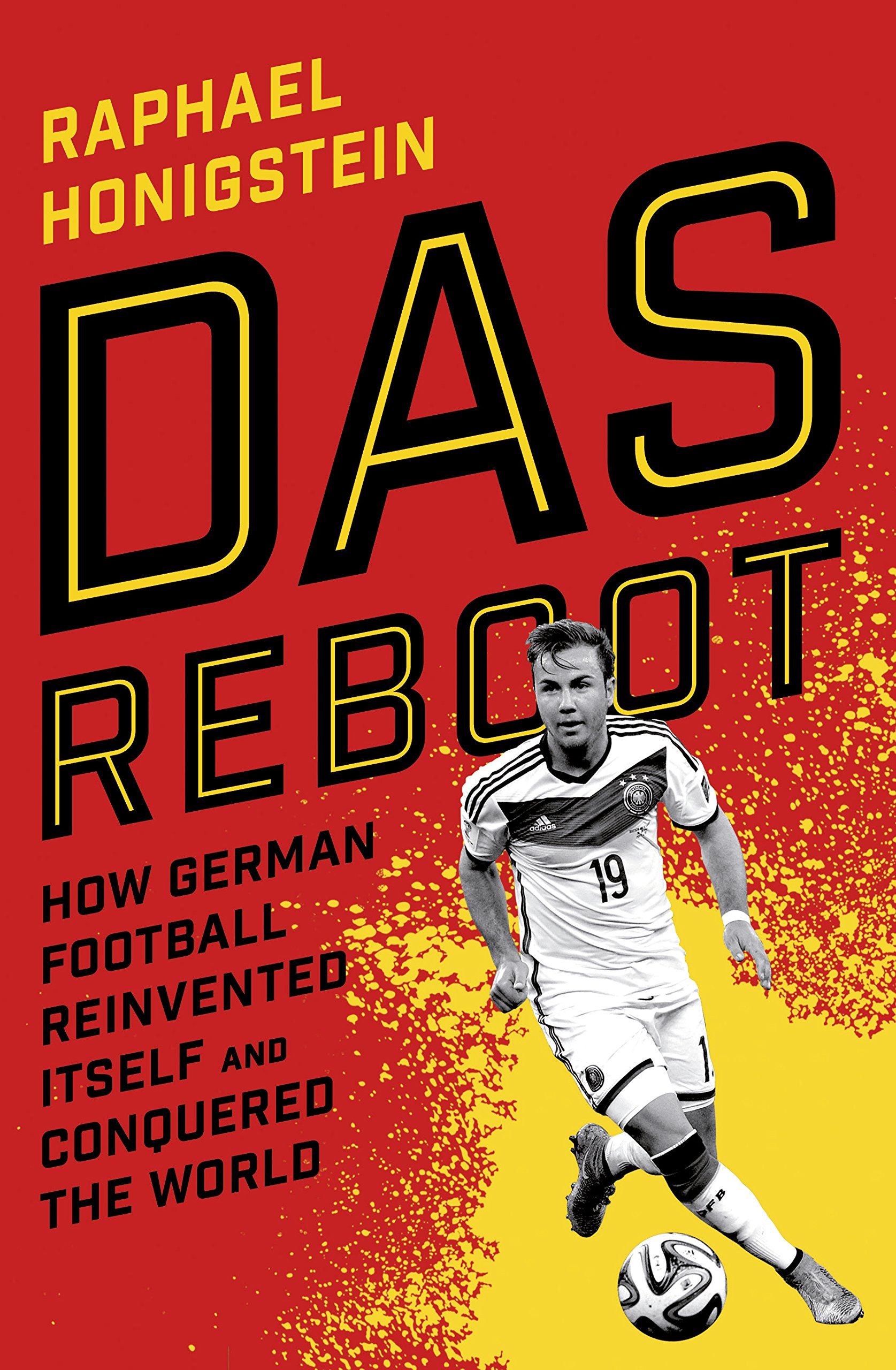
2. Das Reboot: : How German Football Reinvented Itself and Conquered the World by Raphael Honigstein (out 3rd September)

Since that 5-1 defeat to England that we’ll never let them forget, Germany have rebuilt themselves as world beaters at both club and international level. Every revolution must have its historian; over the last decade or so, Guardian and Blizzard writer Honigstein has emerged as the go-to man for all things Fußball. Great title, great jacket; this promises to be an excellent look at modern football’s biggest rebirth.

Das Reboot

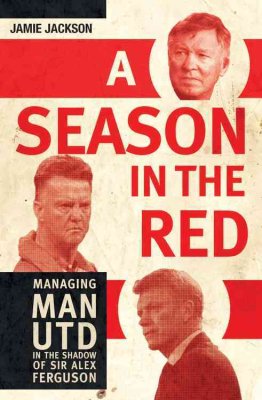
3. A Season in the Red: Managing Man Utd in the Shadow of Sir Alex Ferguson (out 20th August)

Have there ever been bigger boots to fill? Moyes taking over from Fergie at Old Trafford was a nice narrative that most people wanted to see work out. Sadly, it didn’t, for a variety of reasons. Ever wondered what went on behind the scenes during that turbulent 2013-14 season at Old Trafford? Guardian journalist Jamie Jackson is the man to tell you.

9781781315125

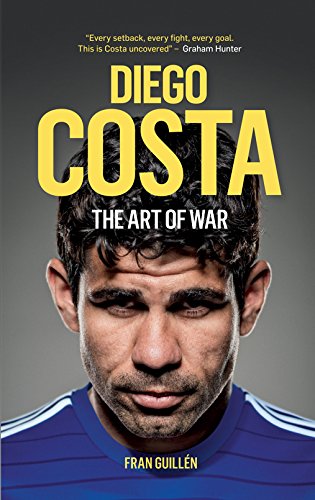
 4. Diego Costa: The Art of War by Fran Guillén (out now)

After a poor start to the season, Chelsea need their star striker back to his fearsome best; all power, speed and goals. While Costa works his way back to full fitness, read up on his fascinating journey to becoming one of the best players in the world and toughest opponents. For my full review, visit http://wp.me/p5bRPr-9F

51MRXQMm0eL

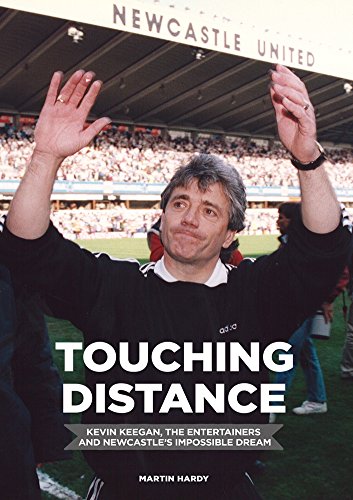
5. Touching Distance: Kevin Keegan, the Entertainers and Newcastle’s Impossible Dream by Martin Hardy (out now)

With billionaire owners now fixing the football hierarchy for years to come, we have to treasure the old stories of unexpected success. We’ve all heard about Newcastle’s 1995-96 season – Asprilla, Ginola, attacking football, goals galore and Keegan’s fate-tempting speech – but this promises to be the definitive account of those entertaining times on the Tyne.

Touching Distance

6. Autumn sees a number of autobiographies battling it out for that final spot: Steven Gerrard’s My Story, Sir Alex Ferguson’s Leading, Jose Mourinho’s Mourinho, Sam Allardyce’s Big Sam. It’s probably best not to expect too much from these.