Baresi’s Story

The 1994 World Cup final was a grand, tense affair but most of it passed me by. Only the penalty shoot-out woke me from my trance. I’d fallen in love, but not with the mischievous guile of Bebeto or Romario. It was an Italian defender who had caught my eye, and not young, wild-eyed Maldini. No, it was Franco Baresi, the captain, making possibly his final appearance for his beloved nation in the biggest game of all. And what a game he played.

Even now when I watch the footage, Baresi has the look of a man approaching fifty so you can only imagine how old he looked to a six year-old me. The wispy head of hair atop the deeply furrowed, prominent brow, the grimacing, the hobbling, the hand on the lower back. This aching man the bastion to fend off a Brazilian siege? It seemed impossible. What pace he’d ever had was all but gone but it didn’t matter when you could read the game as he could. Like fine wine, the football brain matures with age; by thirty four, Baresi’s was a rare vintage.

Not a single stride was wasted; he knew exactly where the ball would go and thus where he needed to be. He charged forward to intercept, he beat men to the ball. On the back foot, he blocked once and then twice, and then a third time if needed, the ball magnetically drawn to his outstretched feet. Where possible, he moved the ball with composure and grace, but then never has a man made the Row Z hoof look like such a cultured decision. His socks slumped to his ankles but Baresi fought on. Surely he had the gods on his side.

But in the end, they abandoned him. At the final whistle, he sank to the ground in agony. His teammates surrounded him, doing their best to revive their fallen leader. When an ambulance cart carried him off the field, it seemed his greatest day was done. But the best stories never end there; heroicism is relentless in its pursuit of glory.

Somehow, Baresi returned to take the first Italian penalty. On the edge of the area, he stood trying to shake the tiredness from his legs, a tragic figure in waiting. With the last of his energy he ran towards the ball and kicked it with all his might. It sailed over the crossbar and into the sea of fans behind the goal. The captain fell to his knees, his hands thrown over his face to hide his pain. The Divine Ponytail of Baggio would go on to miss the decisive penalty, but this will always be Baresi’s story.

article-2273991-175E75F2000005DC-671_634x521

Martin Greig Interview

2014 has been another great year for sports publisher BackPage Press. In April, their translation of Andrea Pirlo’s brilliantly original autobiography became an overnight bestseller and in October they released the English language edition of Martí Perarnau’s groundbreaking Pep Confidential to widespread critical acclaim. 2 books, 2 hits – with a success rate like that, if BackPage was a striker, it’d be challenging Messi and Ronaldo’s reign. I caught up with one half of BackPage, Martin Greig, to talk books and European football.

1. Do you see the boom in interest in European club football as a widening of tastes or a movement away from British club football?

I think it’s more a widening of tastes. The growth in popularity of Spanish football over the past 10 years has been very exciting, particularly as it has coincided with the resurgence of Barcelona under Frank Rijkaard and then Pep Guardiola. I don’t think people are moving away from British club football so much as revelling in the fact that they now have a much broader choice.

2. Do you feel like British football is currently lacking eccentric, articulate characters like Pirlo & Pep? Or is it more a case of European football being a bit more open, with more access for the media?

I think British football has characters, but Pirlo, Pep and Zlatan are exceptional personalities. It just so happens that these books have came out in close proximity, but there may not be any more like them for a long while. In Pirlo and Zlatan’s case, I don’t think it is a question of better media access. Gabrielle Marcotti made the point that the Italian press had witnessed very few signs of the quirky personality that emerges in Pirlo’s book. These players are doing it on their own terms, but the difference is that Pirlo and Zlatan have the confidence and class to steer away from the bland, cliche-ridden claptrap that often passes for footballer (auto) biographies.

3. Was tapping into the European football book market always a plan for BackPage?

Yes. Our first book, on Spurs and Dundee legend Alan Gilzean – In Search of Alan Gilzean – was aimed at a British market, but the plan after that was always to try and break into other markets. Our second book, Graham Hunter’s Barca: The Making of the Greatest Team in the World, was the perfect vehicle to achieve this: the story of a team who had become a global phenomenon, written by a journalist with an international reputation.

PIRLO

4. How did the Pirlo project come about? Were there other publishers competing for the English language rights?

It came out in Italy about 12-18 months before we published it. We have been following Pirlo’s career very closely for years and, when the book came on our radar, we knew we had to get a deal done.

pirlo

5. Did you make any changes to the Italian version?

Pirlo insisted on the subtitle ‘I Think Therefore I Play’ remaining the same in English. He – along with the Italian journalist who ghost-wrote the book, Alessandro Alciato – had a strong sense of the kind of book they wanted it to be. We made some minor changes, mainly trying to fill in any possible knowledge gaps with the use of footnotes, but we didn’t have to do much to it.

6. How was the translation process? Did the Italian co-author Alessandro Alciato work with Mark Palmer?

The translation process was a joy. Myself and Neil [White] had worked with Mark in journalism a few years ago. We knew he was an excellent translator, but also a superb journalist who knew how to tell a story in the best way. Mark read the initial manuscript and all the reviews. He told us it was really good, but as he was translating it he got more and more excited about the material. Mark went to Italy to meet the editor of the Italian edition, to help clear up a few issues, but had minimal contact with Alessandro, though I did meet him myself earlier this year in Madrid. It was before the book came out and, when I told him that I thought the book would be really big, he looked at me as if I had two heads! As an Italian, I guess Alessandro didn’t quite grasp the esteem in which a British audience holds Pirlo.

PEP

7. How did the Pep project come to your attention? With this one were you involved from the outset?

A journalist called Lee Roden spotted a tweet by the author, Martí Perarnau, saying that the rights for his Pep book in Spanish had just been sold to a German publisher. Lee dropped us a line to say it might be worth checking out if the English-language rights were available. I remember getting a call from Neil about it. I was down in Manchester with Graham Hunter doing an event. We asked Graham about Martí and he confirmed that he was a very well-respected journalist in Spain with a close relationship to Pep. When we got the manuscript, we read the introduction where Martí quoted Pep as saying to him: “I’ll give you total access. Write about anything.”  We moved quickly after that!

Pep

8. Was anything edited in or out of the English version? Was Martí involved in the translation?

Martí wasn’t involved in the translation, but he has been incredibly helpful throughout. We had a brilliant, football-savvy translator, who really engaged with the material, which gets quite technical in parts. As such, it didn’t take a big edit, though we worked very hard on getting the balance right in certain areas of the book. It’s obviously a sympathetic portrait of Pep – though definitely not uncritical in parts. Critics may say that it is overly sympathetic, but I think that is to completely miss the point. This is one of the best managers in the world laying out his coaching blueprint. It’s unprecedented. That was only able to happen because of Martí’s relationship with Pep.

9. Pep Confidential is published in partnership with Arena Sport. What’s the story there?

We’re friends with Pete Burns, who runs Arena Sport, which is an imprint of Birlinn. We had discussed working together in the past and, when Pep Confidential came up, we were rushed off our feet with Pirlo. We spoke to Pete about the possibility of joining forces, and it’s worked out well.

FINAL THOUGHTS

10. How have you found your experiences of newspaper serialisation? On the one hand, of course, it’s great exposure but on the other, sometimes people feel they’ve already read the best bits.

Some people may read every word of a serialisation and then decide they don’t want to buy the book, but I would argue they are in the minority. The argument is much more about awareness. I think the vast majority of people will catch bits and pieces, and if you can pique their interest, then they become potential readers. Newspapers get a real kicking these days, but traditional media remains very powerful. The media model is obviously changing and no newspapers are going to throw around big serialisation fees any more, but publishers and newspapers can still work together creatively.

11. What football book this year do you wish you’d been able to publish?

Dennis Bergkamp’s book was excellent. He’s one of my all-time favourite players and the book more than did him justice. I’m a fan of David Winner’s writing and loved Brilliant Orange, so it was exciting to read the Bergkamp book.

12. What’s on the cards for 2015?

We’re publishing the definitive book on Ferenc Puskas. We’re also starting sports book podcasts in association with Waterstones. We’ll be interviewing the author of one new release a month and the author of one classic sports book a month. We want to increase the conversation around good sports books. We’ve got two or three other projects which are not 100% confirmed yet. Obviously, Of Pitch and Page will be the first to know!

Pep Confidential

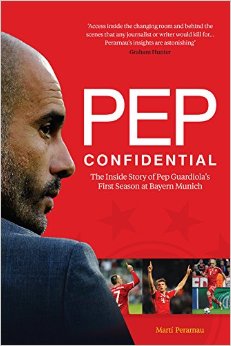
Pep Confidential: The Inside Story of Pep Guardiola’s First Season at Bayern Munich

By Martí Perarnau

BackPage Press, 2014

PepHaving read Another Way of Winning, Guillem Balague’s biography of Pep Guardiola, I felt pretty familiar with The Philosopher and his work. But Martí Perarnau’s Pep Confidential is another level of intimacy entirely; where Balague offered a well-focused panorama of Barcelona 2008-12, Perarnau delivers the equivalent of Team Cam. Bayern Munich 2013-14 – one year, one team, one very special manager. This is unrestricted access of the kind Castel di Sangro gave Joe McGinniss, combined with intelligent insight of the kind Philippe Auclair provided for Cantona and Henry. Rarely, if ever, has one season been so intricately and rigorously explained.

The detail is extraordinary, if a little overwhelming. Pages and pages are dedicated to training regimes and tactical minutiae. Rondos, pivotes, the False Nine, zonal marking – like the Bayern players, the reader is quickly immersed in Pep’s football ‘language’. Numbers, too, feature heavily – the law of 32 minutes, 4 second pressing, 40m running, 15-pass moves, the 16 ‘starter’ squad, the defensive line starting 45m from goal. There is even a stat for the average amount of time Pep spends gesticulating during a game (70% in case you wondered). And then there are the formations, many of which Pep and his staff invent in the early hours of the morning like mad scientists: 2-3-2-3, 4-1-2-3, 4-2-1-3, the successful 3-6-1 and the disastrous 4-2-4. In November’s 3-0 win over Borussia Dortmund, Bayern move through four systems in one game.

As well as Pep Master Tactician, Pep Confidential also showcases Pep Master Man-Manager. When his head’s not buried in game plans and video analysis, Guardiola is busy ‘squeezing’ the talent out of his players, whether that be developing his protégé Pierre Højbjerg, massaging the egos of Franck Ribery and Arjen Robben, consoling the injured, or teaching important new roles to Javi Martinez and the pivotal Philipp Lahm (pun intended). As a result of this generosity of spirit, players are quick to buy into his ideas. Dissenters are few and far between, with Mario Mandzukic the only named rebel. Rather than a stubborn visionary, Pep emerges as an open-minded lover of the game, eager to learn from German football and vice versa.

Pep Confidential feels like the kind of dossier Guardiola himself would love to read about each and every team he faces: exhaustive, repetitive, obsessive to the verge of insanity. 120 pages in and the season is just starting in early August; 300 pages in and the season-defining defeat to Real Madrid is mentioned for the first time. Perarnau opens the book with Guardiola’s fascinating conversations with Grandmaster Garry Kasparov, and chess proves a very apt point of reference throughout. ‘Patience and passion. Guardiola’s two main weapons’ – for Pep, perfect football is tac-tac-tac (never to be confused with the dreaded tiki-taka) then pam!, deft midfield dominance leading to incisive, goalscoring chances. The one time he betrays this principle, his team are beaten 4-0 at home by Ronaldo and co. and knocked out of the Champions League. As Karl-Heinz Rummenigge puts it, ‘he deserted the middle of the pitch and opted for much more direct football’. On this occasion, Perarnau loudly condemns Pep’s choice of tactics, but then Guardiola has always been his own harshest critic.

As brilliant a portrait of Guardiola as it paints, Pep Confidential is perhaps most significant in its study of a team’s momentum over a season. Following on from the treble success under Jupp Heynckes, it’s a story of Bayern Munich trying to maintain focus and desire in the face of exhaustion and complacency. Hot on the heels of the joys of March, come the woes of April. As Perarnau concludes, ‘a team is a living entity, not a frozen image. It grows and flows, retreats and advances – a team is the sum of all its successes.’

Buy it here

Seven Features of a Truly Memorable Match

Considering this is a blog about football books, I feel I’ve been remarkably restrained about discussing Fever Pitch. Until now that is. In his landmark work, Nick Hornby picks out what he sees as the ‘Seven Features of a Truly Memorable Match’. They are:

  1. Goals
  2. Outrageously bad refereeing decisions
  3. A noisy crowd
  4. Rain, a greasy surface, etc.
  5. Opposition misses a penalty
  6. Member of opposition team receives a red card
  7. Some kind of ‘disgraceful incident’

22 years on, I’ve enlisted the very generous help of my favourite sports writers and novelists to put together an alternative list.

1. The diva tantrum
By Nick Quantrill, author of the Joe Geraghty crime novels, “Broken Dreams”, “The Late Greats” and “The Crooked Beat”

Hull City 0-0 QPR, 29th January 2011

Laughs at Hull City matches during 2010/2011 were in short supply. Freshly relegated from the Premier League and facing financial meltdown, the club was undergoing rapid change with faded showman, Phil Brown, replaced by the Nigel Pearson’s dour pragmatism.

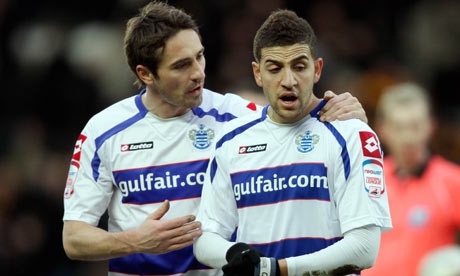
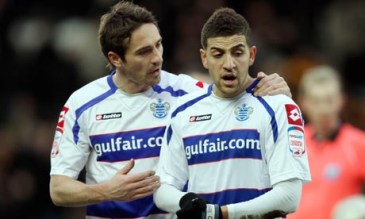
QPR arrived at the KC Stadium as champions-elect, and with star man, Adel Taarabt, in fine form. The game itself followed the established pattern of a lot of huff with little skill, but all eyes remained firmly on Taarabt. Starting out wide, he struggled to make an impact on the game as two well-organised banks of four hurried and hassled him with vigour and energy.

Waving his arms theatrically in the air when a pass wasn’t delivered on a plate into his feet, and seemingly taking offence at every possible opportunity, Taarabt’s every reaction provoked cheers from a home support sensing some sport to be had from enquiring as to where his dummy had gone. Electing to turn his back on the game and simply walk up and down the touchline, taking no further part in proceedings, Taarabt upped the ante, slowly heading across the pitch in the direction of the bench, signalling that he’d simply had enough for the day and wanted to be substituted.

Throwing his gloves to the floor only served to bring more howls of laughter from the home support, but any suggestion he was carrying an injury was banished when he showed a sudden interest in taking a free kick on the edge of the area. After jostling with his own teammates and receiving a warning for his actions from the referee, he hilariously slammed the ball into Row Z before the half-time whistle finally put him out of his misery.

Post-match, a preening Neil Warnock, pumped full of self-interest and misplaced fury, bizarrely placed the blame squarely at the feet of the home support for antagonising his star man. Nice try, Mr Warnock, but for all the laughs it provided, a quite unique and incredible tantrum from a player whose career is unlikely to match the heights he imagines for himself in his own head.

Watch footage here
Hull-v-QPR-004

2. The mild pitch invasion
By Anthony Clavane, sportswriter for the Sunday Mirror and author of Promised Land: A Northern Love Story and Does Your Rabbi Know You’re Here?

Leeds 1-2 West Brom, 17 April 1971

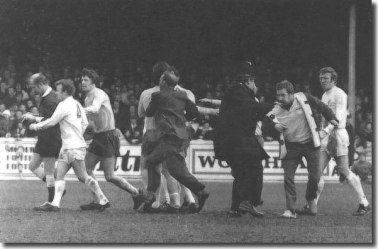
Leeds United lost the title to Arsenal by a single point in the 1970-71 season. This was blamed on a referee called Ray Tinkler, who failed to spot Colin Suggett being about 15 yards offside before Jeff Astle tapped in the West Brom winner in a 2-1 win for the Baggies at Elland Road.

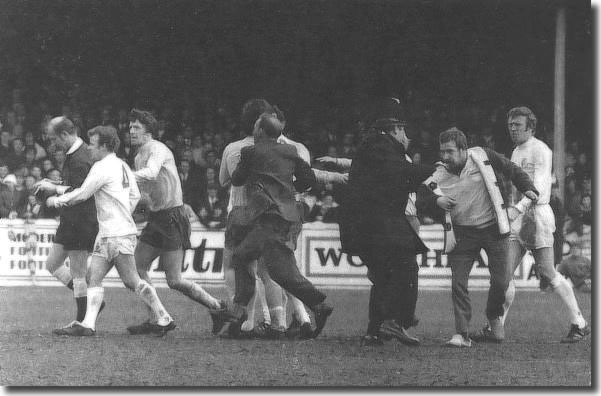
I’ll never forget the Leeds manager Don Revie shaking his head in disbelief and looking up to the sky, before imploring the linesman to put right the wrong and get Tinkler to change his mind. A few fans, several of whom were middle aged, invaded the pitch, which led to Leeds having to play their first four matches of the following campaign away from their fortress. In the post-match interview the Don refused to condemn the invasion. He said a whole season’s graft had been undermined by one terrible decision. His interviewer, the brilliant Barry Davies, appeared to sympathise. That night, on Match of the Day, Davies screamed: ‘Leeds will go mad, and they have every justification for going mad! Don Revie, a sickened man. Just look at him, looking at the heavens in disgust!
7104wba

3. The unlikely goal from a club stalwart
By Gareth R. Roberts, author of That Immortal Jukebox Sensation and What Ever Happened to Billy Parks?

Liverpool 2-1 Borussia Monchengladbach, May 25 1977

This was the greatest season in Liverpool’s history. This was the year when every obsessive minute, lovingly employed by first Bill Shankly, and then Bob Paisley, came to fruition; this was the season when Liverpool threatened to sweep all before them. By the first week of May, incredibly, they were still in the race for a unique and amazing treble: the League, the FA Cup and the European Cup.

The League was won after a goalless draw with West Ham at Upton Park, leaving Liverpool facing two finals in a week: first up, Man United at Wembley – the old Lancastrian enemy, an epic final in brilliant sunshine on a pitch burned yellow by a spring heatwave. Sadly for Liverpool fans, it was United who lifted the Cup after the flukiest of winners off Jimmy Greenhoff’s, not insubstantial, backside.

The challenge for Bob Paisley’s men was to physically and emotionally lift themselves to face Monchengladbach in Rome three days later. The Germans were a force in European football with the likes of Vogts, Heynkes, Stielike, Bonhof and the wonderful Dane Allan Simonsen.

Liverpool, though, had a couple of cards up their sleeves – one, was the incredible support of thousands of Scousers. The stories of Liverpudlians using every ruse going and every mode of transport possible to get to Rome are legendary.  The other card they had was an indomitable spirit, and no-one personified this spirit more than Tommy Smith.

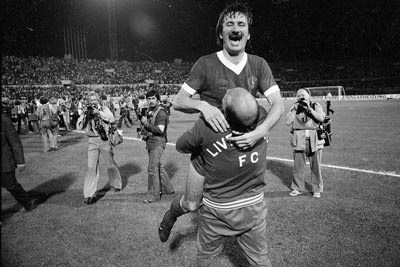
Smith, a Liverpool man born and bred, had been at the club as a schoolboy when Bill Shankly arrived and started to create the legend. Smith had played in every position, and fulfilled every role at Anfield. He was so hard that they said that he wasn’t born, he was quarried. He had a fearsome reputation during a time when an absence of cameras and more lax refereeing meant that footballers could sort things out in a more cynical way. That night, May 27th 1977, was to have been Tommy’s 600th and last game, the Anfield Iron was hanging up his boots to slide into the oblivion of retirement. Of course, no one who had ever watched him play expected him to go gently into that good night, not that night, no, the sentiment of the occasion would have no effect on him, he would be as committed as he was in his previous 599 appearances; but no one expected him to score a goal either, because, with the exception of a handful of penalties, one thing Tommy Smith wasn’t renowned for, was his goalscoring. In his 599 appearances he had scored less than twenty goals.

The match kicked off, Liverpool were nervous; Simonsen looked dangerous, quick and elusive. Clemence had to dive to his right to save from Heynkes then Bonhof hit the post, before the wonderful McDermott put the reds ahead with a crisp shot after a perfect run into the area. The lead looked tenuous and sure enough Simonsen sneaked between a couple of defenders to level in the second half.  Now Monchengladbach were in the ascendency, Bonhof and Stielike were starting to exert their silken influence in the midfield – Heynkes was looking increasingly dangerous. This was the period when games are won and lost, this was the time when the pendulum of pressure can swing either way. Only one team can win a cup, and the Germans were looking the more likely.

Then Liverpool won a corner on the left, Steve Heighway lined the ball up and raised his arm. Smith and Hughes made their way into the penalty area. The ball sailed towards the six yard box. The ball travelled through the air. The ball. Heading on its way to assist in a moment of immortality. Smith rose. He leapt like he’d never leapt before. He timed his jump perfectly, he met the ball like the greatest centre forward that ever lived, like Lofthouse or Mortensen or Law and put the ball into the net. What a moment. What a career. An unexpected goal from a true hero.
shakeshaft_tommy_smith

4. The goal celebration
By Matt Oldfield, editor of OfPitchandPage

Chelsea 1-0 Middlesbrough, 21st August 1996

With Hoddle taking over from Venables as England boss, The Blues decided to promote Ruud Gullit to player-manager. What the dreadlocked Dutch legend lacked in managerial experience, he made up for in continental connections. Frank Leboeuf, Gianluca Vialli and Roberto Di Matteo were the first to arrive; what these medal-winning internationals thought of their new teammates (Frank Sinclair, Andy Myers, Eddie Newton) one can only imagine. It was a unique blend, and expectations were high. A dull 0-0 away at Southampton was hardly the dream start we were looking for, and things weren’t looking much better back at The Bridge. Chelsea were heading towards another goalless draw, struggling to break down a Middlesbrough side sporting a few new stars of their own in Brazilian midfielder Emerson and Vialli’s former Juve strike partner Fabrizio Ravanelli.

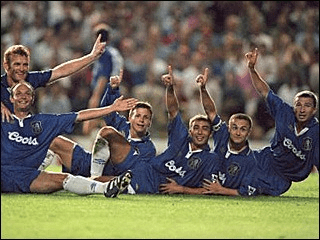
With 85 minutes gone, Di Matteo, making his home debut, receives the ball about thirty yards from goal, dead centre, one defender in front, one fast approaching behind. With calm assurance, the Italian works an inch of space and rockets a drive into the bottom left corner. An excellent, pinpoint finish, but that’s only half the story. In the resulting frenzy, Di Matteo lies nonchalantly on the grass with his left arm pointing up at the sky. Captain Dennis Wise follows his example, as do Jody Morris and Dan Petrescu. Leboeuf throws himself down next to them, limbs spread like a starfish, and defensive partner Erland Johnsen crouches behind him, again with that left hand pointing. It was a team celebration like no other; the revolution had begun. Two months later, Gullit signed Gianfranco Zola. The rest is history.
Chelsea celebration

5. The non-celebration
By Martin Greig, one half of BackPage Press and author of Road to Lisbon and The Zen of Naka: The Journey of a Japanese Genius

Celtic 1-1 Spartak Moscow (Celtic win 4-3 on penalties), 29th August 2007

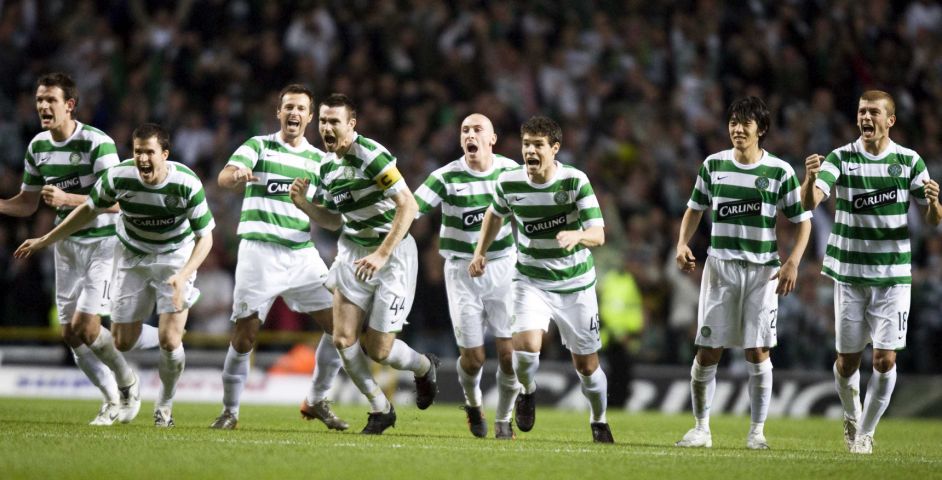
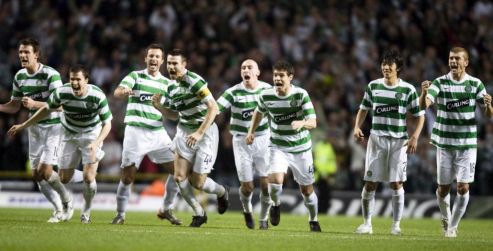
There is a photograph of the Celtic players seconds after they have secured qualification for the group stages of the Champions League against Spartak Moscow at Celtic Park. Artur Boruc has just saved Maksym Kalynychenko’s penalty in the shoot-out, having earlier kept out Egor Titov’s. Lined up in a row across the halfway line, they have all started to run towards the Polish goalkeeper to celebrate. When his Celtic team-mates reach Boruc, there is a mass pile-on involving all the players and coaching staff. Well, not quite all of them. Shunsuke Nakamura – who had missed a penalty in the shootout and three chances during extra-time – smiles briefly then walks straight off the park with his head bowed.

Afterwards, Nakamura said: “I did not celebrate with the other players at full-time. I was really disappointed with myself because I missed so many chances during the game. I missed three in as many minutes. I sat and thought about what happened and what I had done.”

The concept of group responsibility is huge in Japan. From a young age, Japanese are indoctrinated with the idea that their group, whether it be a corporate organisation or football team, even a political party, is of paramount importance. Group responsibility dictates that an individual feels worse about damaging their group and colleagues than they do about the personal impact it will have on them.

In British football, a player who refuses to celebrate after scoring against a former club achieves respect. That night, Nakamura took the ‘non-celebration’ to new levels.
Naka

6. The inexplicable defeat
By David Winner, author of Brilliant Orange: The Neurotic Genius of Dutch Football, Those Feet: A Sensual History of English Football, Stillness and Speed: Dennis Bergkamp and #2Sides: Rio Ferdinand

Holland 1-2 West Germany, 7th July 1974

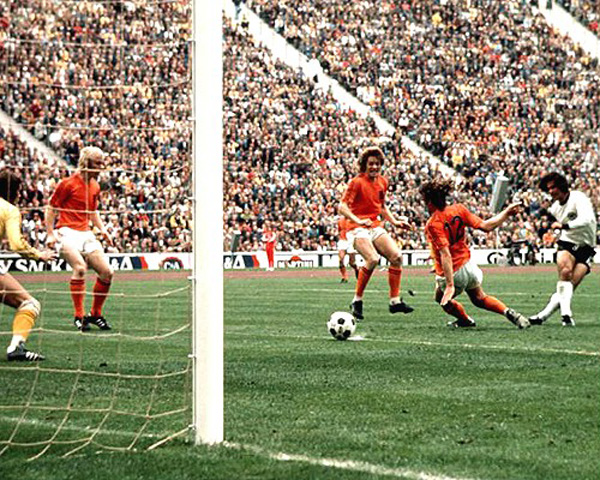
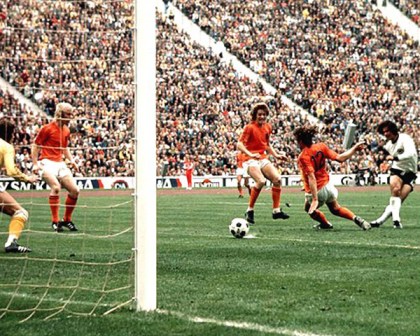
The 1974 World Cup Final, where Holland lost after taking the lead in the first bloody minute! It was two minutes before a German even touched the ball and the Dutch still lost! 40 years on and I’m not over it at all. I still replay scenes from that match. Cruyff and co. never won a World Cup and it gnaws away. If they had, they’d probably have won two or three because they’d have had that habit of winning. The ‘beautiful losing’ started that afternoon. Previously, they were unstoppable like their direct successors, the recent Spain and Barcelona sides. But that Dutch team never recovered. Years later when I met the players, they’d speak very calmly about everything else in their careers but when they got to that game, it was like hitting a wall. It was a tragedy and you didn’t need to be Dutch to feel it; even some Germans weren’t that thrilled.

I’m also old enough to remember the shock and grief surrounding the assassination of President Kennedy. I made the comparison in a speech I gave in Holland at the Johan Cruyff University 10 years ago and I joked about my ‘quite frankly unforgivable bad taste in mixing up a moment of genuine trauma and national tragedy with the mere shooting of a politician’. I felt very bad for saying it but I can honestly say that the Dutch defeat has had more of an impact on me over the years. I still feel it even now.
gerd-muller-germany-1974-world-cup

7. The “couldn’t have scripted it better” ending
By Tom Oldfield, author of Cristiano Ronaldo: The £80 Million Man, Nadal: The Biography and Arsene Wenger: The Unauthorised Biography of Le Professeur

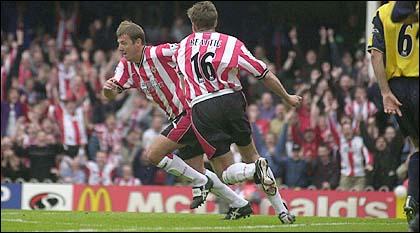
Southampton 3-2 Arsenal, 19th May 2001

It was with mixed feelings that Southampton were bringing down the curtain on 103 memorable years at The Dell. Moving to a sparkly new 32,000-seater stadium represented an important step forward for the club but The Dell had become a huge part of Southampton’s identity over the years (and, at times, a trump card in avoiding relegation). It just added to the occasion that the visitors were a star-studded Arsenal side featuring Thierry Henry, Dennis Bergkamp and Patrick Vieira.

It was already an emotionally-charged afternoon – and then, with 17 minutes to go, Southampton manager Stuart Gray cranked the atmosphere up another notch by bringing on substitute Matt Le Tissier, the man nicknamed “Le God”, who had saved so many seasons for Saints over the years with moments of genius, scoring 208 goals along the way. Bringing him off the bench seemed like a nice chance for the fans to show their appreciation.

But, with the game heading for a 2-2 draw, Le Tissier had one more trick up his sleeve. In the 89th minute, a long ball bounced enticingly just inside the penalty area and the Southampton number 7 swivelled to smash a left-footed half-volley into the top corner. Cue pandemonium at The Dell. When the final whistle sounded minutes later, Southampton fans completed an unforgettable day with a joyous pitch invasion. They could not have scripted it better. The Dell would soon be gone, but the memories would live on.
LeTissArsenal

Club Soccer 101

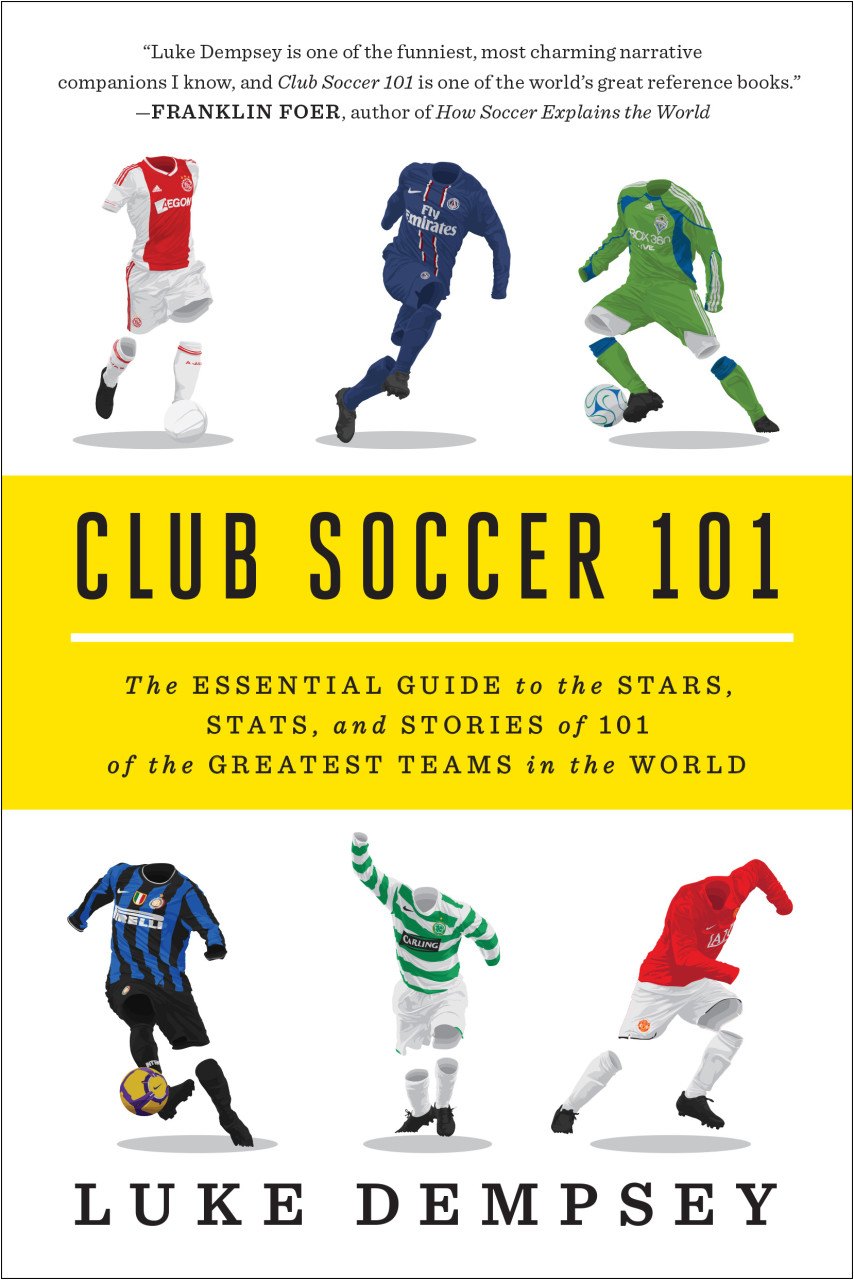
Club Soccer 101: The Essential Guide to the Stars, Stats, and Stories of 101 of the Greatest Teams in the World

By Luke Dempsey

W.W. Norton, 2014

clubsoccermech.indd

When I think of football reference books, I picture a library of fat, blue, abandoned Rothmans Yearbooks collecting thick cloaks of dust. Like the knife-sharpening man, the concept of football facts on paper has surely been put out of business, hasn’t it? After all, websites like Squawka and Opta can provide you with more detailed and more up-to-date information at the mere touch of a button, and for free. Faced with this burgeoning stat market, Soccer 101 is a very pleasant reminder that reference books need not be dry, monumental and costly. Luke Dempsey’s labour of love gives the lowdown on 101 of the world’s greatest club sides in less than 450 pages of a nice, waxy paperback (£9.99). Excluding the acknowledgements, appendices and index, it works out at 4.16 pages per team (no charge for that calculation!).

Of course, this can only be achieved by sacrificing a bit of depth for X-Factor. The selection is strong and the writing is sharp and witty, full of wry asides and great anecdotal particulars. Dempsey pokes gentle fun at the likes of Paolo Di Canio, Felix Magath, ‘Woy’ Hodgson and Alexi Lalas, plus more risqué fun at Copenhagen’s initials (FCK). The surprise inclusion of Norwich City is worth it for the description of ‘one-hit wonder’ Jeremy Goss’ winner against Bayern Munich in the 1993 UEFA Cup: ‘It was a result no one imagined could happen; it was German arrogance in the face of plucky little Brits dressed like birds.’ Other highlights include Eusebio’s sportsmanship, Duckadam’s penalty heroics and Amadei, the 15-year-old baker. To tell you which clubs they played for would only spoil the treasure trove experience.

There is plenty of more serious content too, however. Pinochet’s Colo Colo, Franco’s Real Madrid, Il Duce’s Lazio, World War Two’s ravaging of Central and Eastern Europe; Soccer 101 establishes the important political contexts that define the present day. As brief as the club summaries are, the key details are all there for the budding football historian: ‘the stars, stats and stories’, as the subtitle suggests. Each team’s section begins with a fact file – location, date of origin, nicknames, stadium (with capacity), home colours, leading goal-scorer and most-capped player. Sadly, there are a few blanks for the less-celebrated teams but it’s a tiny hole in the overall fabric.

Soccer 101 is the perfect companion for football nights home and away, familiar and exotic – Arsenal in the Premier League, Bayern Munich in the Champions League, Cruz Azul in the World Club Championship, Dinamo Zagreb in the Europa League. Dempsey’s guide is a must for fans world over, a reference book that’s guaranteed to be well-thumbed.

Buy it here