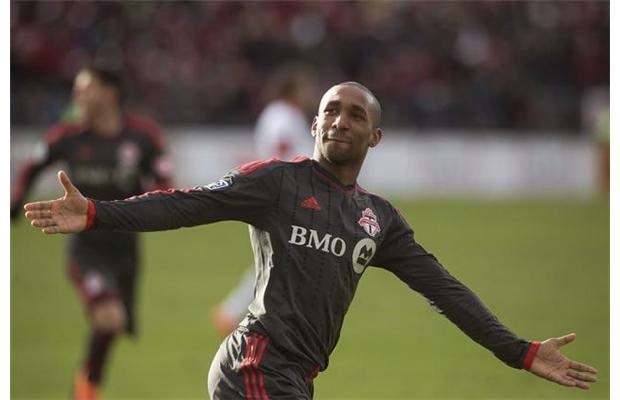
Defoe in T.O. – An Update

By Tom Oldfield

The MLS stops for nothing – not even the World Cup. And that made for a fun Saturday, with two World Cup quarter-finals, followed by a Toronto FC nightcap and the chance to see the latest instalment of the Jermain Defoe show.

Defoe’s omission from England’s World Cup squad did not sit well with the striker – he made no secret of that. Watching club colleagues Julio Cesar and Michael Bradley leave for Brazil cannot have been easy, but England’s loss has been Toronto FC’s gain.

Ryan Nelsen’s men welcomed Bradley back into the starting line-up on Saturday against DC United but it was Defoe who featured most prominently in the first half, with three half chances. One flew wide, the other two were well saved.

Defoe already has more help than he did when the season began. His partnership with Luke Moore – he of Aston Villa, West Brom and Swansea fame – is improving with every passing week. It was Moore who levelled for Toronto FC against DC United after Defoe wreaked havoc down the left flank. DC United would go on to claim a 2-1 win and move to the top of the Eastern Conference.

In ten days’ time, Toronto FC welcome Tottenham to BMO Field for a friendly as part of the Londoners’ pre-season tour. That will bring Defoe face to face with former team-mates and good friends.

At this point, the Defoe experiment gets the thumbs up and the striker can have few regrets about choosing the MLS. His scoring burst at the start of the campaign ensured that the hype was justified and he has impressed since recovering from a hamstring injury, with eight goals to his name thus far.

Toronto FC sit fourth in the Eastern Conference at the time of writing, with games in hand. There is a long way to go but it would be a surprise if they were not among the top seeds heading into the playoffs.

The Blizzard + Eight by Eight + Rabona

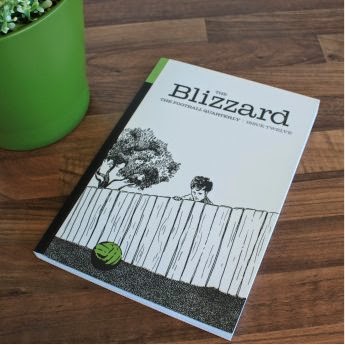
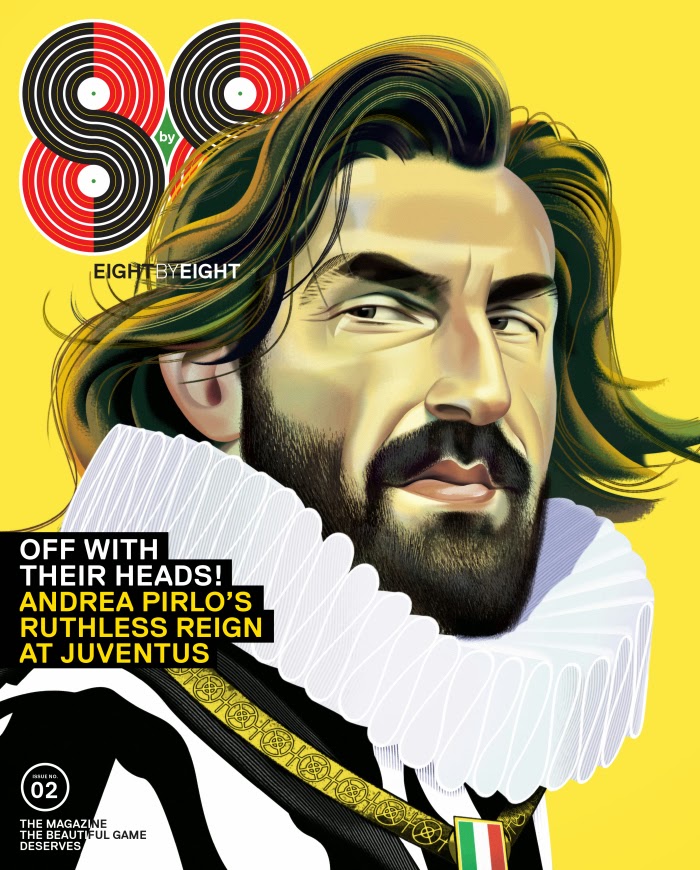
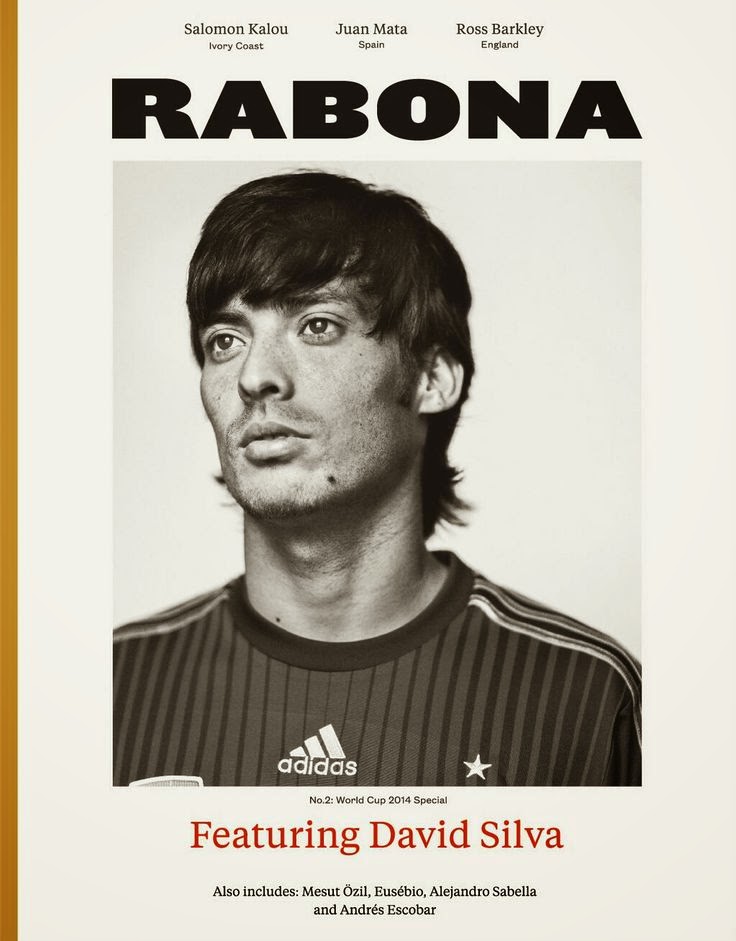
The Blizzard (Issue 12), Eight by Eight (Issue 2) and Rabona (Issue 2)

In decades past, football magazines were a small, select bunch; Shoot and Match for the kids, World Soccer for the international fans, FourFourTwo for the Premier League fans and WSC for the real fans. In the last few years, however, the market has been flooded with more and more creative and scholarly options. Mundial Mag, The Football Pink, Pickles Magazine, The Howler, The Blizzard, Eight by Eight, Rabona – welcome to the football ‘hipster’ movement, I hope you brought your wallet.

The Blizzard (£12 for latest edition, pay-what-you-want for back catalogue), the brainchild of Inverting The Pyramid author Jonathan Wilson in 2011, looks and reads like football’s answer to The Paris Review. The Contents pages read like a Who’s Who of the sport’s best writers: Sid Lowe, James Horncastle, Graham Hunter, Philippe Auclair, David Winner, Simon Kuper and Tim Vickery, to name but seven. At nearly 200 pages a time and with articles about chess, pianists and political polling, The Blizzard is not for the fair-weather football fan, but its quality is undeniable. Issue 12 opens with the Barcelona-Real Madrid rivalry. We get the Lowe-down on Carles Rexach and Jorge Valdano, a Miguel Delaney interview with the David Bowie of football, Johan Cruyff, and best of all a wonderful extract from Hunter’s Spain on the career of Vicente Del Bosque. As trilogies go, you don’t get much better than that.

The range and scope of the publication are perhaps its most impressive features. Highlights include James Montague, ‘The Indiana Jones of soccer writing’, on the fascinating story of Guma Aguiar, the ‘Messiah’ of Beitar Jerusalem, and Richard Jolly’s persuasive comparison of the careers of Ryan Giggs and New York Yankees’ short-stop Derek Jeter. There’s even a brilliantly bizarre piece of fiction from Iain Macintosh. This instalment of the story of Bobby Manager features guest appearances from Brian Clough, Peter Taylor, Karren Brady and Carlton Cole. If there’s one criticism to be made of The Blizzard it’s that, for a magazine about the beautiful game, it’s all a bit staid and text-heavy. Bartosz Nowicki’s striking photos of Cardiff City’s Premier League promotion are a welcome relief, but more would be nice.

The same could never be said of Eight by Eight ($15.99, or £12 at Foyles), a trendy new quarterly publication from New York City that brilliantly showcases the rapid rise in football artwork. In Issue 2, there are 23 contributing artists, one more than there are contributing writers. The cover image of Andrea Pirlo as a 17th century royal is only the start of the visual delights. Particularly impressive are Dylan Fahy’s stunning 7-page timeline of the history of Juventus and Ben Kirchner’s illustration of their midfield quartet of Paul Pogba, Arturo Vidal, Andrea Pirlo and Claudio Marchisio. Eight by Eight is an absolute joy to behold.

The written content, too, is of a very high quality, aided by the fact that Eight by Eight and The Blizzard share the prestigious talents of Jonathan Wilson, Miguel Delaney, Philippe Auclair and Paolo Bandini. In line with the high-design, magazine feel, the articles here have more of a commercial appeal, twinning big name subjects with solid insight. Some cover less than one page, none exceed three. Wilson reports on Wayne Rooney, Delaney on Roy Keane, Bandini on the Juventus midfield. Best of the portraits, however, is Ken Early’s excellent analysis of Steven Gerrard’s footballing strengths. More weighty themes are covered in Auclair’s moving and angry look at France’s problems with race and religion in light of Nicolas Anelka’s quenelle gesture.

On the whole, words and images are balanced nicely but at times the illustrations do disrupt the flow, forcing pieces to conclude on later pages. Overall, there is perhaps just a little too much going on visually, but these are early days for the publication.

London-based magazine Rabona (£5.75) have taken a very different, minimalist approach to all matters ‘football trendy’. With over 125 sparsely-filled pages, image and text certainly have plenty of room to co-exist harmoniously. Issue 2, the World Cup 2014 Special, even opens with an elegant study of World Cup matchballs and kit badges – this really is a hipster’s paradise.

Rabona sits pretty beautifully between the poles of The Blizzard and Eight by Eight. While the player interviews (Mata, Kalou, Barkley and Silva) aren’t exactly mind-blowing, the journalistic pieces are excellent. James Montague writes on Swiss immigration and identity, James Young tackles Brazil’s social situation, Seth Libby looks at Bob Bradley’s fascinating time in Egypt, and Carl Worswick considers Colombian footballer Andrés Escobar’s murder 20 years on. All of this very political content is teamed up with crisp design, striking photography, a glossy mid-section and some great player sketches from Kate Copeland. Better proofreading aside, it’s difficult to think of ways to improve the reading experience.

It seems harsh to be picking holes in such fantastic magazines. Between them, The Blizzard, Eight by Eight and Rabona represent the full spectrum of a really exciting development in football writing. How nice it is to be spoilt for choice.

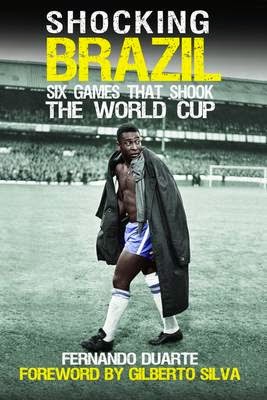
Shocking Brazil: Six Games That Shook The World Cup

Shocking Brazil: Six Games That Shook The World Cup

By Fernando Duarte

Arena Sport Books, 2014
Modern non-fiction is often as much about reinventing the wheel as it is about offering the reader new information. As simplistic as it is to say, facts are facts and once they’re known, they’re known. So new authors shuffle the existing pack before (fingers crossed) revealing a hidden ace or two: a modern perspective perhaps, a more accessible tone, and hopefully some unique insight and testimony. In Shocking Brazil, regular Guardian contributor Fernando Duarte lays down all three as he traces the history of Brazilian football through six of its biggest World Cup disappointments: 1950, 1966, 1974, 1982, 1998 and 2010.

Focusing on the losses may seem a fairly negative angle to take, especially for a Brazilian native. However, Shocking Brazil doesn’t feel pessimistic; instead the approach is realistic with patches of optimism. Rather than ignoring the Seleção’s well-known history of success – 1958, 1962, 1970, 1994 and 2002 – the narrative celebrates this by detailing the setbacks that led to these triumphs. The result is a necessary and successful reconfiguration of Brazilian footballing history; as Duarte puts it, ‘The losing stories are a significant source of untapped information on the development of the game.’ Would Pele and co. have gone on to win back-to-back titles if it weren’t for the Maracanazo in 1950? Would Ronaldo have played as well in 2002 if he’d won it in 1998?

With its ‘tales of mismanagement, corruption and chaos’, Shocking Brazil highlights the recurring obstacles and distractions that the Seleção have faced over the years. The fascinating ‘political intrusions’ that hindered the 1950 and 1974 sides may have subsided somewhat in recent years, but they’ve been replaced by equally demanding sponsors and contracts. As expected, Duarte is at his most enlightening when dealing with these more recent, and less-discussed, events, including conspiracies linking Nike to Ronaldo’s 1998 breakdown, and Dunga’s battle with the Globo media empire in 2010. Written with the informal charm and wry humour of a die-hard fan, these sections feel as vibrant and fresh as Neymar Jr himself.

What the book so brilliantly conveys is the multiple layers of politics at play in Brazil, and the massive disruptions they can cause. Historically, the national football sphere, like the government sphere, has been dominated by dictator figures looking to exploit, as much as maintain, the success of the team. Between the shoddy preparation for 1966 and the shambles made of the 1998 Ronaldo health-scare, Duarte has only bad things to say about the CBD; ‘Brazilian management has been historically flawed in its organisation and structure.’ One of the best features of Shocking Brazil is its discussion of the domestic game alongside the national game. Two of Duarte’s most prominent themes run parallel with good reason: the mass exodus of talent to Europe, and the Seleção’s abandonment of ‘The Beautiful Game’ following the 1982 post-mortem. With the notable exception of Neymar, the Campeonato Brasileiro has been severely weakened since the ‘Dunga Era’. As Gilberto Silva, one of the numerous high-profile contributors, concludes,’It is unacceptable that in the 21st century we still have clubs run so poorly.’

And on top of the weight of all this incompetence, dishonesty and greed, is the expectation of a population of 200 million people. ‘A third consecutive failure in the World Cup could have serious consequences for Brazil’, Duarte predicts ominously. In many respects, Shocking Brazil reads like a very handy ‘what to expect’ guide for World Cup 2014, where the Seleção have the additional pressure of home soil for the first time since the disaster of 1950. High-profile omissions, patchy form, a lone superstar; all familiar factors. After Thursday’s unconvincing 3-1 victory over Croatia in the opening match, Hugh McIlvanney wrote, ‘Improvement can be expected but greatness seems out of reach’. A goalless draw against Mexico suggested even progress might prove slow. As in 1998, 2006 and 2010, Scolari’s team seems unlikely to set the world alight. And as in 1966 and 1974, Brazil are up against European sides like Spain and Germany that will know their style and show no fear. So will World Cup 2014 prove to be a sixth triumph or a seventh disaster?

Buy it here
Chasing The Game

Chasing the Game

By Paul Gadsby

Matador, 2014

Towards the end of Paul Gadsby’s Chasing the Game, one character remarks to another, ‘My old man always said never trust a bloke who doesn’t like football.’ Strangely, a similar level of scepticism is reserved for novels that do like football. Sport has rarely travelled well into the realm of fiction, David Peace’s The Damned United and Chad Harbach’s The Art of Fielding being the notable exceptions. But at its core, the former is a Shakespearean tragedy, while the latter is a coming of age tale. In each case, the game itself plays out as little more than a plot device.

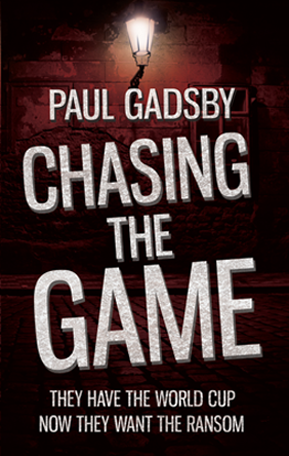
In this his debut novel, Gadsby isn’t looking to buck that trend. It may end with Bobby Moore and co. celebrating their 1966 World Cup victory, but Chasing the Game centres on the dealings of London’s criminal underworld. Full of period detail and moody violence, it’s much more Peaky Blinders than Roy of the Rovers. With his mentor dead and his father in prison, Dale Blake finds himself the new leader of one of London’s toughest firms. Under pressure to grow the business and show who’s boss, Dale agrees to an audacious plan – stealing the Jules Rimet trophy from Westminster’s Central Hall.

As he explains in the acknowledgements, Gadsby takes the undisputed facts about the infamous robbery and has some good old-fashioned fun. With the exception of Pickles the dog, all names are changed (FA Chairman Joe Mears becomes Clement Spears), and many characters are constructed from scratch, namely the gang members and their families. Multiple narrative perspectives are handled well, the pacing and plotting are strong, and the dialogue rings true. The prose won’t worry McEwan and Barnes too much, but that’s not the point. The pages turn, and the reader is drawn into the murk.

The occasional over-description aside, Chasing the Game is a well-crafted and entertaining novel. Despite its timely release for the buzz around Brazil, its readership should extend beyond the World Cup dreamers. Because if you’re in the market for historical crime fiction with a lot of heart, Gadsby’s your man, whether you like football or not.

Buy it here

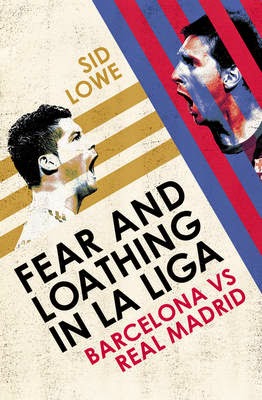
Fear and Loathing in La Liga

Fear and Loathing in La Liga: Barcelona vs Real Madrid

By Sid Lowe

Yellow Press, 2013

With Atletico Madrid winning La Liga this year you can forgive Sid Lowe for finding their success a bit of a nuisance. Having written about the rivalry of the second and third-placed teams, he recently tweeted, tongue firmly in cheek, that his book was ‘pointless bollocks’. Fear and Loathing in La Ligais in fact neither pointless nor bollocks, especially after Real Madrid’s ‘La Decima’ triumph in Europe. Instead it’s an informative, engaging, and enjoyable look at what remain Spain’s two biggest clubs. The success of Atleti this year has been astonishing, and their efforts in breaking the Barca-Real duopoly only further highlight the dominance of the big two in the past decade and throughout the history of the Spanish game. Atletico are still a long way behind as the third most successful team in the history of the Spanish league, winning only their 10th title compared with Barcelona’s 22 and Real’s 32. The last nine winners of the Ballon d’Or plied their trade at these two giants, and they are the two clubs with the most Champions League trophies since the competition’s rebranding in 1992. Individually, Barcelona and Real Madrid are both European giants; but as enemies, they’re the most famous clubs in the world.

From the start Lowe is keen to highlight the complexity of the rivalry, dismissing the common-held dichotomies: Madrid bad, Barca good, Madrid facists, Barca freedom fighters. Dealing with the common accusation that Madrid were Franco’s team, for example, Lowe points out that the city of Madrid suffered greatly through, and as a consequence of, the Second World War, and that the club that emerged was weak and failed to win a single league title in the first 15 years of Franco’s dictatorship. Not that Barca’s ‘victim complex’ is without some foundation; the controversial 11-1 Copa del Generalissimo defeat in 1943 is explored in detail, and the sole surviving member of the Barca team from that day tracked down and interviewed about the military intimidation. Lowe’s considered argument is that the establishment’s support of Madrid was a result of their success rather than the cause of it. A government seeking international recognition needed popular representatives and Real with their five consecutive European Cup victories in the late 1950s embraced their role as ‘the best embassy Spain had’. This level of balanced analysis is found throughout Fear and Loathing, as Lowe sifts through the mass of myth and folklore.

The rivalry – and thus the book itself – is also full of interesting parallels and contrasts. Both clubs lost their Civil War-era presidents to the Republican cause but whereas Barca’s Josep Sunyol became a martyr figure, Real’s Rafael Sanchez Guerra is largely forgotten. Barca’s ill-fated appointment of the original ‘Special One’, Helenio Herrera, to break Real Madrid’s dominance, is mirrored fifty years later by Jose Mourinho’s unsuccessful attempt to oust Guardiola’s Barcelona. In the transfer market, the constant attempts to outdo each other turn out to be nothing new. For Neymar and Gareth Bale in 2013, think the likes of László Kubala and Alfredo Di Stéfano in the 1950s. If anything, the rivalry is less hostile today; the Spanish government was forced to intervene in the Di Stéfano saga.

In amongst these stories, the sheer breadth and depth of research is plain to see. Lowe, an historian by trade, trawls the archives to uncover fascinating documents about the Di Stefano transfer and Sunyol’s death. He also gains unprecedented access to many of the protagonists in each club’s story – Zidane, Di Stefano, Cruyff, Iniesta, Joan Laporta, and best of all Figo, who offers a very interesting insight into his (in)famous transfer between the two clubs. Lowe has stated that he had to trim about a third of his original draft for the book and that would certainly explain the sparse references to greats such as Maradona, Henry and Gravesen. Here’s hoping for a director’s cut to further the education.

All in all, Fear and Loathing is a great achievement and a very worthy addition to the Spanish football canon. It’s accessible and full of facts and anecdotes that will be new to even the most knowledgeable of football fans. One often gets the sense from reading Lowe’s articles and listening to his contributions on The Guardian’s ‘Football Weekly’ podcasts that he tires of reporting on these two Spanish giants but that doesn’t come across in this book at all. The Michu epigraph – ‘Barcelona or Madrid? Oviedo’ – highlights Lowe’s awareness that though this rivalry does dominate Spanish football, it’s not the be-all and end-all. Though hopes of a book about Getafe and Valladolid’s rivalry are slim, one does hope that we see another Sid Lowe masterpiece in the not too distant future.

John Mottram

Buy it here