Thierry Henry: Lonely at the Top

Thierry Henry: Lonely at the Top: A Biography

By Philippe Auclair

Pan Macmillan, 2013
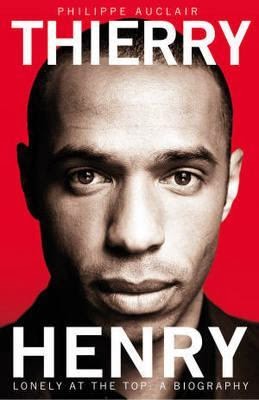
A sports biography that strays beyond the sporting facts is something to celebrate. A sports biography that prefers to call itself ‘a biographical essay’ and sets out ‘to try to understand how and why such a magnificent footballer…has inspired such extremes of feeling’ deserves a piñata and party bags. For Auclair, this is no empty threat; what he did for Eric Cantona (The Rebel Who Would Be King), he’s now done for Thierry Henry, the classy King of Highbury but also ‘the selfless egotist, the insufferable charmer, a walking oxymoron in shorts’. It’s another fascinating subject matter for a brilliantly incisive biographer, especially one who happens to be an Arsenal-supporting Frenchman living in London.

Yes, Philippe and Titi are a match made in heaven, even if, despite years of interviews and conversations, the journalist is ‘not a friend of his, and could never have become one’. Does distance make the heart grow fonder? In Auclair’s case, it makes the heart grow fairer, and more intrigued. Rightly or wrongly, Henry’s every word, gesture and decision is scrutinised here, from Les Ulis prospect all the way through to New York celebrity. Lonely at the Top addresses the need for an objective judgement of France’s highest ever goalscorer, an examination of the myths side by side: Henry the player and Henry the person.

1 French, 2 English and 2 Spanish league titles, 1 Champions League, 1 World Cup and 1 European Championship. Surely the trophy cabinet of a true footballing legend? And yet, Henry remains a ‘nearly man’ in many eyes; no ‘single moment’ to define him, no Ballon D’Or win and famously only 1 goal in the 9 major senior finals he played in, that one being the 2003 Confederations Cup. ‘He still owned them [the trophies] but he didn’t seem to ‘own’ them, somehow’. As Auclair’s chronology demonstrates, either side of the dizzy heights of his Arsenal career, Titi never quite lived up to expectations at Monaco, Juventus and even Barcelona (a ‘parenthesis’ according to his biographer). For France, Henry’s goal record hid the disappointing fact that he and Zidane failed to gel during their peak period, at the 2002 World Cup in particular. In terms of the ‘genius’ tag, an adopted nonchalance disguised a footballer working hard to get the most out of a raw blend of pace and power.

And yet, between 2001 and 2004, Henry was unstoppable. As the focal (and significantly central) point of Wenger’s ‘Invincibles’, Titi led the Gunners to 2 Premier League and 2 FA Cup trophies, winning back-to-back PFA Player of the Year awards. In these 3 seasons, he scored a phenomenal 103 goals in 155 matches, including many that were crucial and/or breath-taking. He won the French Player of the Year award four years in a row (2003-6), and was runner-up in the FIFA World Footballer of the Year in both 2003 and 2004. Paradox Number One: Henry the footballer.

Paradox Number Two: Henry the man. The infamous ‘Hand of Gaul’ against Ireland in 2010 only served to reinforce his reputation as an arrogant and unlovable individual. Auclair and others speak of ‘a many-sided man’ with a ‘calculating streak’, ‘increasingly aloof’ and renowned for his ‘essential remoteness’. No-one argues with Monaco and Arsenal teammate Gilles Grimandi’s assertion that Henry has no real friends in football. Patrice Evra, Robert Pires and David Trezeguet come close but don’t quite make his very exclusive inner circle. Lonely at the Topastutely traces Henry’s near-universal distrust back to a difficult relationship with his demanding father and a botched transfer to Real Madrid in 1996. This early betrayal, Auclair argues, ‘hardened him’.

And yet, Henry has never shied away from the cameras. He gave regular interviews throughout his time in England and, like most footballers, what he said was always polite, usually humble and occasionally insightful. In 2008, Premier League fans voted him their most popular player ever. So how does this all add up? What we have, Auclair argues, is a highly insecure figure who ‘craved assent and praise as no other footballer I have come across did’. In his dogged pursuit of greatness, Henry adopted a public mask, surrounding himself with propagandists and ‘starfuckers’ in an attempt to control his image. A very convincing argument indeed.

While Henry is, of course, the focus of Lonely at the Top, the bigger picture is always intricately filled in. The Clarefontaine, Monaco and Barcelona set-ups are discussed in detail, while the ebb and flow of Henry’s time at Arsenal is given the attention it deserves, as he graduates from struggling misfit, to leader of champions, and finally to one-man team. Arguably the book’s most fascinating sections, though, cover Titi’s rollercoaster ride with Les Bleus, from World Cup winners to shamed, first-round knockouts in the space of 12 years. Auclair lays out the national context boldly and succinctly; ‘a fractured society ridden with post-colonial guilt and neuroses, which had desperately wanted to believe in the 1998 black-blanc-beur utopia and was now forced to smell its own shit.’ Biography this may be, but like Henry at his pinnacle, it’s a few cuts above the rest.
Buy it here

8 Football Books to look out for in 2014

March

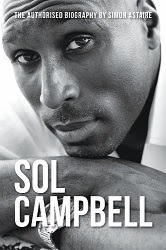
Sol Campbell: The Authorised Biography by Simon Astaire (Spellbinding Media)
This first ever authorised portrait of the Tottenham, Arsenal and England legend should be fascinating. Racism, homophobia, the Judas switch across North London, the Notts County debacle – it’s a story that has it all. Despite his high-profile career, Sol remains a quiet, sensitive enigma – I’m hoping for a Philippe Auclair-style character study.

The Game of Our Lives: How Football Made Britain Great by David Goldblatt (Penguin)
Goldblatt follows up his mammoth global history, The Ball is Round, with a more pared-down look at his homeland over the last two decades. The spectacular rise of the Premier League is explained within the social context of post-Thatcherite Britain – Penguin call it ‘a must-read for the thinking football fan’.

April

Andrea Pirlo: The Autobiography (BackPage Press)
Originally published in Italian last year as Penso Quindi Gioco (I Think, Therefore I Play), the Italian maestro’s story is about to reach a worldwide audience. ‘The Architect’ has won it all: 2 Champions League medals, 4 Scudetto titles, a Coppa Italia and a World Cup. He’s the ultimate creative thinker on the pitch and, if the snippets that BackPage have released in their brilliant #PirloThursday tweets are anything to go by, he’s no different off it.

Danish Dynamite: The Story of Football’s Greatest Cult Team by Rob Smyth, Lars Eriksen and Mike Gibbons (Bloomsbury)
Before the Euro 1992 winners, there was ‘Danish Dynamite’, the hip, Hummel-clad, Michael Laudrup-led side who rose from international obscurity to become everyone’s second favourite team thanks to their exciting performances at Euro 1984 and World Cup 1986. Told for the first time, this story should be just as much of a surprise hit.

May

Bend it like Bullard (Headline)
From a cult team to a cult player. Soccer AM-favourite Jimmy Bullard is a cockney geezer with a smile on his face and stories to tell. At 20, he swapped painting and decorating for professional football, working his way up to the Premier League with surprise package Wigan Athletic, before spells at Fulham and Hull. All-action and larger-than-life, Bullard is guaranteed entertainment. I wonder if Nick Barmby gets a mention?

Thirty-One Nil: The Amazing Story of World Cup Qualification by James Montague (Bloomsbury)
James ‘The Indiana Jones of soccer writing’ Montague received widespread acclaim for When Friday Comes, his 2009 book on football in the Middle East during the Arab Spring (When Friday Comes). Since then, he’s been travelling the globe, following the (mis)fortunes of international minnows attempting to qualify for the 2014 World Cup in Brazil. A funny and insightful exploration of a whole lot more than sport.

August

In Search of Duncan Ferguson: The Life and Crimes of a Footballing Enigma by Alan Pattullo (Mainstream)
This first ever biography of one of British football’s fiercest competitors should be an absolute treat. To date, Ferguson’s footballing legacy is unequivocally negative; the most red cards in Premier League history and the first professional footballer jailed for an offence committed on the pitch. And yet, ‘Big Dunc’ is also still the Premier League’s highest ever scoring Scot, a classic target man who combined aerial prowess with genuine skill. A talent deserving of examination, then.

Autumn

Roy Keane with Roddy Doyle (Orion)
I’m not sure publishing has ever seen anything quite like it; a bitterly controversial footballing icon teaming up with a Booker Prize-winning novelist. The second instalment of Keane’s autobiography, provisionally titled ‘The Second Half’, promises to be every bit as fascinating as the first. Said to blend ‘memoir and motivational writing’, it’s sure to include a response to Sir Alex’s recent comments.

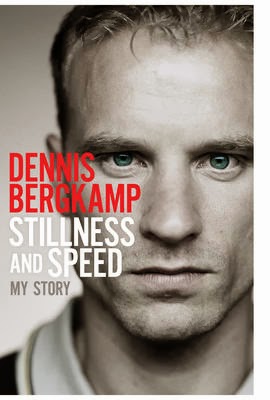
Stillness and Speed: My Story

Stillness and Speed: My Story

By Dennis Bergkamp

Simon & Schuster, 2013

In his introduction to this excellent study of the Dutch master, David Winner suggests that ‘A footballer like no other ought to have a book no less distinctive’. And distinctive this book is, although you feel its winning format could very soon become the norm. Footballing autobiographies have long been a cause for mockery and/or scepticism. Much hinges on the unspecified role of the ghost writer; is this shadowy figure sticking faithfully to the player’s words, or taking all manner of artistic license? Stillness and Speed negates that question and the question of ghost writers altogether. ‘My Story’ may be the subtitle and ‘Dennis Bergkamp’ may grace the spine, but this is very much a collaborative project. Instead of ‘assisting’ with a standard autobiography, Winner builds a brilliant biography around in-depth interviews with The Non-flying Dutchman. Would he have come to life in the way he does in conversation, if he’d written his own story? It’s unlikely.

The levels of interaction are the greatest strength of the format. Winner is a terrific interrogator, fun, fierce and provocative, always ready to ask the difficult question and persist with it, chipping away at the cool reserve. When discussing penalties, for example, Bergkamp finds himself firmly on the back foot, fending off criticisms of his national team’s shoot-out performances.

DB: ‘You’re telling me he [Frank de Boer, Euro 2000] took the penalty wrong?’

DW: He did take the penalty wrong. It was terrible.

DB: ‘No, it was a miss.’

DW: It was a terrible penalty.

DB: ‘He missed the penalty, therefore it’s not good. You can’t have a good penalty that is saved. I’ve tried to explain that…’

The professional that he is, Bergkamp fully commits to Winner’s innovative style, even responding to what others have said about him earlier in the chapter. In ‘Intermezzo’, covering his unhappy spell at Inter Milan, he advises Winner on who to speak to, saying ‘We need an opinion, don’t we? … I don’t mind, as long as I get a chance to react.’ And after ‘Their Truth’ (three cautiously critical interviews with the manager and two teammates), we get ‘My Truth’, the carefully considered retort. It’s the football writing equivalent of Lars Von Trier directing an episode of Eastenders.

So what do we learn? Bergkamp’s dogged pursuit of footballing perfection extends to a keen interest in both physiology and geometry (‘you have to get all angles and the maths correct…It’s like solving the puzzle’). The Dutch legend is as eloquent as you’d expect on the subjects of touch, time, passing and space. Have YouTube at the ready, as we’re treated to in-depth studies of key assists and goals, including that one against Newcastle. And it turns out there’s warmth beneath the ice; while he was never too bothered about making friends in football, once he’d settled at Arsenal he became the team prankster, putting Martin Keown’s clothes up step-ladders and pulling Ray Parlour’s shorts down at training.

All very entertaining but then there’s the other, more intriguing side of Dennis that conforms to that age-old Dutch stereotype. Quiet and polite he may often be, but he’s also confident, driven and obstinate. He’s an ‘adventurer’ who has always made his own decisions, whether that be choosing Inter over the Dutch-haven of AC Milan, or refusing to travel by plane. He had no idols growing up and he’s never been a follower – for Bergkamp, football is all about being unique. Early on, he tells us, ‘My best trainers were the ones who let me do my own thing: Cruyff, Wenger and Guus Hiddink’. Those who tried to dictate his play, on the other hand (namely Louis Van Gaal and Ottavio Bianchi), quickly found themselves with an unhappy player on their hands.

As you’d expect from the writer of the classic Brilliant Orange, many of Winner’s most detailed and illuminating sections here concern matters Dutch. Stillness and Speed begins and ends at Ajax under the watchful eye of the footballing revolutionary Johan Cruyff, with Bergkamp first as a Cup Winners’ Cup-winning school kid and later as the coach of De Toekomst (‘The Future’). In between these bookends, twin chapters ‘Player Power’ and ‘Power Player’ deftly unravel the national team disappointments at Euro 96, World Cup 98 and Euro 2000. As Thierry Henry puts it, ‘That Dutch team with Dennis didn’t win anything – crazy! Too crazy for me.’

Where the book feels surprisingly hollow is in the 130-plus pages on Bergkamp’s 11 years at Arsenal. Abandoning strict chronology, Winner opts for a thematic approach, with chapters on fitness, cheating, leadership and penalties. Detail is substituted for overview. We’re told of ‘The Plan’ that Dennis signed up for but we’re not really told aboutits development, its ebb and flow. Instead of season-by-season analysis, these chapters are dominated by laudatory quote after laudatory quote from the likes of Ian Wright, Tony Adams and Thierry Henry. The surface is more stroked than scratched; Nicolas Anelka, Bergkamp’s strike partner for 2 key seasons (1997-9), is only mentioned once in passing, while Arsenal and Holland teammate Giovanni van Bronckhorst is never mentioned. Instead, a chapter is given over to Bergkamp’s interest in golf. Perplexing, frustrating, but Winner did warn us; a distinctive book for a truly distinctive footballer.

Buy it here

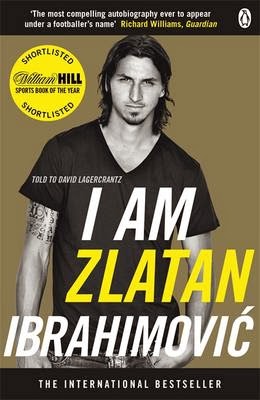
I Am Zlatan Ibrahimović

I Am Zlatan Ibrahimović

By Zlatan Ibrahimović (told to David Lagercrantz)

Penguin, 2013

‘It was a fairy tale, and I was Zlatan Ibrahimović.’ If you’re looking for a book that confirms everything you thought about the modern football mindset, this may well be it. There are fast cars, tattoos, video games and fights (Van der Vaart, Zebina, Mijhailovic, Onyewu to name but a few) galore. Of his Ajax, Inter Milan and Barcelona teammate Maxwell, Zlatan admits, ‘I’m surprised he got to be so good. Guys that nice don’t usually make it in football. You’ve got to be tough and hard’. ‘Hate’ and ‘revenge’ are words that occur again and again here; Zlatan’s story is one of thriving on the former and striving after the latter.

It might not surprise you to hear that Zlatan can ‘bear incredible grudges’; against the middle-class parents who started a petition to get him ejected from his youth team, against the Malmo management who cheated him out of money in his Ajax transfer, against every reporter who’s ever condemned him, against the Swedish team for sending him home from international duty, against cowardly Guardiola who ‘destroyed my dream’. I am Zlatan is packed with Godfather-style tales of retribution – ‘I don’t forget … I remember, and I get my own back’. There are several sizeable chips on Zlatan’s shoulder, not least his class/ethnic background and his relationship with his one-time alcoholic and distant father (‘I’d been trying to get attention all my life’). The wronged victim stance gets a little hard to stomach at times (on arrival at Ajax, he’s too poor to stock his fridge because he’s spent it on a Mercedes) but it’s all part of the man, the myth.

As is the money. ‘A footballer’s career is short’ he philosophises. ‘He’s got to look after his own interests.’ I am Zlatan covers five transfers (not including PSG) and is at its most fascinating when dealing with Ibra’s role in proceedings. The significance he attributes to them is striking; ‘There’s one game on the pitch. There’s another on the transfer market, and I like them both’. With the help of his mafioso agent, Mino Raiola, Zlatan pushes for transfer after transfer – from Ajax to the bright lights of Italy where ‘footballers are gods’, from Serie B-condemned Juventus to superstar-less Inter, from Champions League-less Inter to Spanish giants Barcelona and then from Messi’s Barcelona to superstar-less AC. There are mind-games aplenty; for his move to AC, Zlatan tells Barcelona that he will only sign for rivals Real – ‘the idea was that those guys would become so demoralized, they’d have to let me go cheap, which would help us get a good personal contract.’

Money, fame and success are the priorities, and in larger quantities than anyone else. ‘Everybody’s interested in the one who’s number one’, we’re reminded again and again. Zlatan chooses Inter over AC first time round because he doesn’t want to play second fiddle to Kaka, while if we read between the bitter lines, Barça doesn’t work out because of their no-star philosophy. In case you hadn’t realised, Zlatan isn’t exactly a model ‘team player’ – he wants teammates in the way a general wants an army behind him. Just as he looks to have bucked the trend at Inter by bonding the club’s many cliques, he tells you he negotiates an improved contract in return. The book is full of record boasts, whether it be transfer fees, goals scored or the number of Barca fans that turned up for his unveiling. He emerges as a figure who isn’t exactly hard to please, just expensive and tiresome.

But is there anyone who Zlatan doeslike? Without spoiling too much, Ronaldo and Van Basten emerge as heroes, while Maxwell, Thierry Henry, Patrick Vieira, Henrik ‘Henke’ Larsson and Olof Mellberg are players he trusts and respects. In terms of managers, Fabio Capello and Jose Mourinho are the two that emerge unscathed and, in fact, adored. Capello is credited with developing his ‘winner’s mindset’ during his spell at Juventus, while at Inter Mourinho was ‘a guy I was basically willing to die for’. With Capello, it’s the mental toughness that Zlatan admires but with Mourinho it’s the added personal touch that wins him over.

Because for all the posturing, Zlatan is a figure who needs to be loved. The ambition to entertain is as key on the page as it is on the pitch. You don’t read this for the historical detail (in the Bosnian War, his father’s town ‘was being raped, more or less’) or the insider’s view on the Juventus match-fixing scandal (‘we were the best and had to be brought down’). You read I Am Zlatan for the cult of ‘Ibra’, for the prima donna antics and boastful lines like ‘An injured Zlatan is a properly serious thing for any team’. As much as it’s a fairy tale, it’s also pure pantomime.

Buy it here

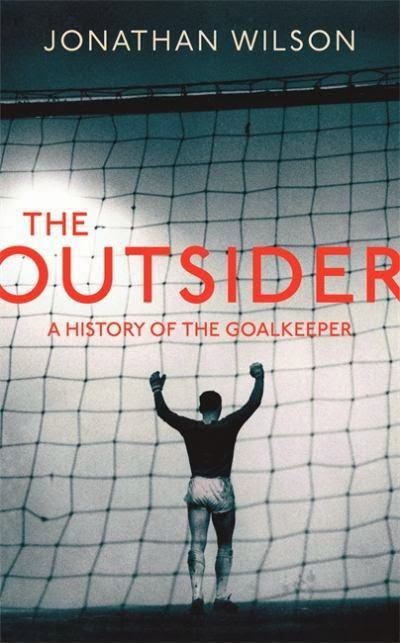
The Outsider: A History Of The Goalkeeper

The Outsider: A History Of The Goalkeeper

By Jonathan Wilson

Orion, 2013

‘He is the lone eagle, the man of mystery, the last defender’ – unfortunately, history hasn’t always shared Vladimir Nabokov’s romantic vision of the goalkeeper. Until the Twentieth Century, he was an ‘unspoken other’ – goalkeepers only started wearing different shirts in 1909 – and according to football writer Jonathan Wilson he ‘is doomed always to be an outsider’. Distrust and disregard have long surrounded a role burdened with the ultimate, decisive responsibility and ‘all its potential for greatness’. Powered by this paradox, The Outsider relates a fascinating narrative arc from ridicule to recognition, from alienation to reintegration.

Each chapter is a case study analysing a different topic, whether that be geographical (Russia, Africa, South America, Britain, USA) or stylistic (‘The Sweeper-Keeper’, ‘Land of the Giants’, ‘The Fear of Penalties’), or both. But at the heart of each country and each technical phase, Wilson demonstrates, are the same core goalkeeping debates – reactive shot-stopping vs proactive sweeping, reflexes vs anticipation, calm solidity vs risky extravagance, strength vs agility, aggression vs composure, ‘the stoics who quietly absorbed the punishment, and the extroverts’. The Outsider is a celebration of the variety of skillsets that have graced the goal, even if it concludes with the progression towards a more rounded approach in the new generation led by Iker Casillas, Manuel Neuer and Hugo Llloris; ‘it’s rare now to find goalkeepers who don’t both command their box and feel comfortable with the ball at their feet as well as having a basic competence at saving shots’.

The many goalkeeper profiles in the book present some interesting common denominators, including a beginning as an outfield player and a background in athletic, dextrous sports such as handball (Peter Schmeichel), volleyball (Buffon, Taffarel) or basketball (Brad Friedel). And, of course, there are also more obvious core parallels, such as confidence, bravery and mental toughness, or as Serbian keeper Milutin Šoškić puts it, ‘a goalkeeper must be hard with feelings’. Wilson is an impressive curator and historian but where both he and his book excel is in the realm of investigative journalism. The chapters where he goes in search of his own answers are particularly compelling, as he interviews the great Cameroonian rivals Thomas Nkono and Joseph-Antoine Bell, for example, or America’s coaching guru Šoškić and Steau Bucharest’s shoot-out hero Helmut Ducadam.

This is sports writing for the stout of heart and mind. In Wilson’s highly capable hands, a history of goalkeeping becomes a history of football and even, at times, a small-scale modern world history. The keeper is placed at the centre of concentric circles of ‘perception’: football, culture, geography, politics, history, philosophy, literature. Be prepared for Nietzsche and discussions of ‘the dissonance between the apparent simplicity of the signifier and the complexity and layered meaning of the signified’. But this scholarly approach, as Wilson explains, is a fitting tribute to a role that has often been linked with the artistic temperament – ‘individuals, not necessarily intellectuals, but at the very least people who think for themselves’.

It’s hard to find fault with such a comprehensive study. Perhaps the slightly odd positioning of a chapter on Lev Yashin and the Soviet tradition in between chapters tracing the largely British pre- and inter-war history? For the most part, though, Wilson knits together theme and chronology nicely by picking out stand-out figures (Van Der Sar, Buffon etc.) and then retracing their national histories. Occasionally, however, this approach does throw up puzzling results, such as the equal coverage for IFFHS’ second best goalkeeper of all time, Dino Zoff, and virtually unknown Ghanian Robert Mensah. The lack of technical detail regarding the Italian great is noticeable, but The Outsider sticks to its storytelling guns throughout, sometimes prioritising eccentric anecdotes over conventional (and much-repeated) biography. As Wilson explains in the prologue, this is ‘not an encyclopaedia of goalkeeping’.

And that’s the only minor drawback; for all its tremendous scope, The Outsider remains a selective study, where lengthy discussions of book and film plots and historical anecdotes do occasionally crowd out insight. The psychological angle in particular feels frustratingly underdeveloped, or at least unassembled. Except for scattered references to goalkeepers with ‘a shadow across his soul’, the issue only really comes into focus during the final chapters covering Buffon’s depression and Oliver Kahn’s mid-life crisis. Goalkeepers yo-yo between the very extremes of life; as Wilson puts it, ‘No sportsman, surely, so regularly confronts the arbitrariness of the fates.’ As well as those forever haunted by high-profile mistakes, we’re told of many great goalkeepers who recovered from early setbacks: Yashin, Gilmar, Frank Swift and Gordon Banks to name but a few. But how? Perhaps, despite Wilson’s sterling efforts, the goalkeeper will always remain that ‘man of mystery’.

Buy it here