Football autobiographies that should be translated into English

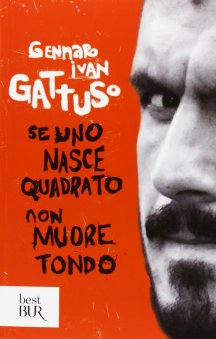
  1. Se uno nasce quadrato non muore tondo by Gennaro Ivan Gattuso (Biblioteca Univ. Rizzoli)

Gattuso.jpg

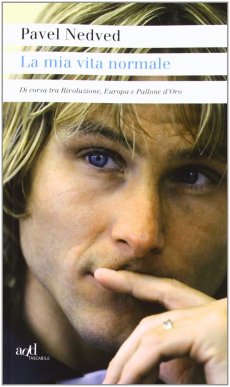
  1. La mia vita normale by Pavel Nedved (Add Editore)

Nedved

  1. Simeone partido a partido : si se cree, se puede by Diego Pablo Simeone (Plataforma Editorial S.L.)

Simeone

  1. Giocare da uomo by Javier Zanetti (Mondadori)

Zanetti

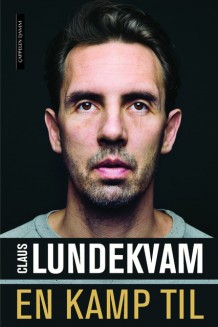
  1. En Kamp Til by Claus Lundekvam (Cappelen Damm)

Lundekvam

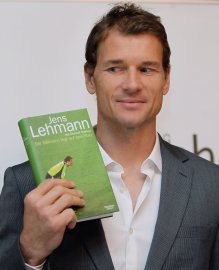
  1. Der Wahnsinn liegt auf dem Platz by Jens Lehmann (Kiepenheuer&Witsch)

Lehmann

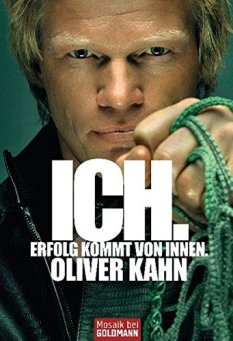
  1. Erfolg kommt von innen. by Oliver Kahn (Goldmann Verlag)

Kahn

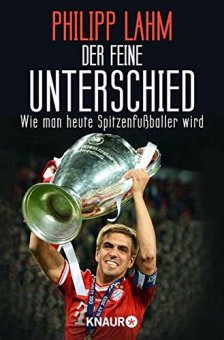
  1. Der feine Unterschied by Philipp Lahm (Droemer Knaur)

Lahm

  1. Capitaine by Marcel Desailly (Stock)

Desailly

  1. La parole est à la défense by William Gallas (Editions du Moment)

Gallas

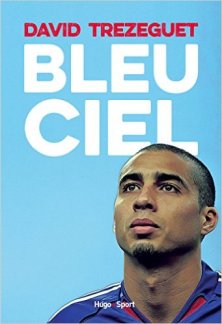
  1. Bleu ciel by David Trezeguet (Hugo Sport)

Trezeguet

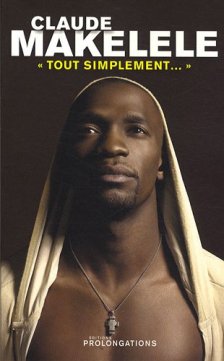
  1. Tout Simplement by Claude Makelele (Editions Prolongations)

Makelele


Sergio Kun Agüero: Born to Rise

Born to Rise: My Story

By Sergio Kun Agüero and Daniel Frescó

Trinity Mirror Sport Media, 2015

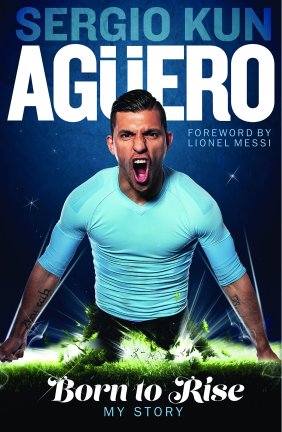
Aguero.jpgOn first glance, Born to Rise: My Story looks like classic Christmas football fan fodder. On the cover, Agüero roars out of a football pitch in a plain light blue shirt (Manchester City obviously refused to give image rights), his Elvish tattoo on display. His name is big and central, next to that of his best friend Lionel Messi, who provides a pretty insipid three-page foreword.

However, take a second look, and you notice the size of the book. At 540 pages, Born to Rise is a hefty tome, the football autobiography equivalent of an old-school epic. So what exactly is there to fill all of those pages? The answer is – shock horror – plenty.

But first, a bit of a spoiler: this isn’t really an autobiography, or even a David Winner/Dennis Bergkamp-style fusion. There are first-person Agüero extracts dotted throughout but this is largely a biography written by Argentinian journalist Daniel Frescó.

On the whole, this format is a positive thing, especially for Agüero’s early years in Argentina where Frescó is able to call upon an impressive array of personal and professional sources. 200 pages into the book and ‘Kun’ is still only 13 years-old, excelling in the Independiente youth teams. For British fans, this incredible, pre-City detail is surely a real selling point. Perhaps most interesting of all is the groundbreaking financial/legal relationship between Agüero and the IMG group. And if you feel things are moving too slowly, there are boxes detailing his career highlights (debut, first goal, the Premier League winner against QPR) peppered throughout.

The downside to the format is that at times, Born to Rise feels a little too much like a propaganda piece. Agüero’s controversial departure from Atlético Madrid (he refused to celebrate goals as he tried to force through a transfer) is described in the dry language of a PR document: ‘throughout these times, Sergio left nobody in doubt as to his allegiance towards Atleti, identifying with the club’s values and adopting them as his own, as for him befits such a compliment. Elsewhere, the writing reads like a CV: ‘Kun had learnt to balance the obligations that come with such prominence with being able to enjoy his free time.’

These detours into bland biography aside, Born to Rise is a refreshingly comprehensive look at one of the best footballers in the world, and particularly the rise itself, from dirt pitches in an Argentinian slum to international tournaments and top European league titles. 500-plus pages may seem daunting if not excessive but Agüero’s rags to riches story is certainly worth reading.

Buy it here

New Football Titles – May 2016

With a few notable exceptions (George Rinaldi’s Calcio’s Greatest Forwards, Michael Gibbons’ When Football Came Home), the yearly football book schedule doesn’t really kick off until the darling buds of May. Here are the big titles to look out for:

1. Soccermatics by David Sumpter (Bloomsbury)

Football statistics have never been so popular and neither, perhaps, have mathematics. So Professor Sumpter’s idea is perfectly-timed; think Soccernomics but looking at the geometry of formations and the role of probability theory at the bookies. Forget Popular Science, this is Popular Maths.

Buy it here

Soccermatics

2. Forever Young: The Story of Adrian Doherty, Football’s Lost Genius by Oliver Kay (Quercus)

We know about Ben Thornley but do we know about the Class of 92’s other unfulfilled talent? Well, we soon will. Adrian Doherty was a brilliant winger and a highly intriguing character in a world of Nicky Butts. Told by one of the UK’s best sports journalists, this promises to be a fascinating but tragic tale.

Buy it here

Forever Young

3. The Romford Pelé: It’s only Ray Parlour’s autobiography (Century)

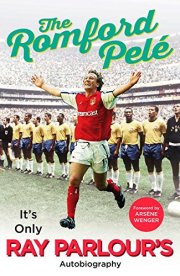
Bend it Like a Bullard must have sold pretty well last year because here’s another cockney geezer holding court. An underrated player and a renowned joker, Parlour is nothing if not entertaining. The brilliant cover image is worth the price alone.

Buy it here

Parlour

4. Rocky: The Tears and Triumphs of David Rocastle by James Leighton (Simon & Schuster)

From one Arsenal legend to another. David ‘Rocky’ Rocastle died 15 years ago at the age of just 33 after suffering from non-Hodgkin lymphoma. A skilful midfielder, Rocky was part of the Gunners team that won the 1989 league title in such dramatic fashion (see Fever Pitch). Leighton’s book features moving testaments from friends, family and team-mates.

Buy it here

Rocky

5. Four Lions by Colin Shindler (Head of Zeus)

The 50 year anniversary of ’66 will be celebrated to death (Henry Winter, Bobby Charlton…) so it’s nice to see a book taking an interesting angle. Colin Shindler is a social and cultural historian and uses the careers of 4 England captains – Billy Wright, Bobby Moore, Gary Lineker and David Beckham – to explore post-war Britain and a half-century of change.

Buy it here

Four Lions.jpg

6. Retired by Alan Gernon (Pitch Publishing)

There are few things I enjoy more than a great ‘Where are they now?’ story. Iain Dowie is now the regional sales manager for ‘Go To Surveys’ in case you didn’t know. This book explores the many trials and tribulations of hanging up the boots.

Buy it here

Retired

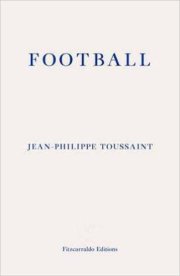
7. Football by Jean-Philippe Toussaint (Fitzcarraldo Editions)

A book about football by a prize-winning writer – if Eduardo Galeano is anything to go by, what’s not to love? There’s even an essay on Zidane’s headbutt.

Buy it here

Toussaint

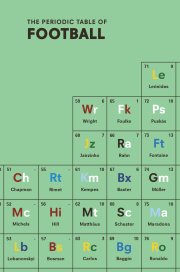
8. The Periodic Table of Football by Nick Holt (Ebury Press)

‘108 elements from the football pantheon arranged by their properties and behaviour on and off the pitch’ – a brilliant concept and a lovely gift book.

Buy it here

Periodic Table.jpg

A Patient Man: The Career of John Obi Mikel

On a cold December night, John Obi’s phone rang. It was Victor Moses. It was so easy to forget about Victor – was he still a Chelsea player?

‘They say Guus is coming back!’

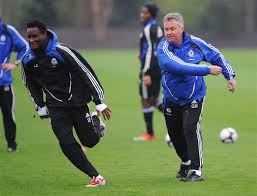
The news left John Obi with mixed feelings. On the one hand, it would be nice to feel wanted again but on the other, it would mean a lot more playing and a lot more running. On balance, the negatives seemed to outweigh the positives. John Obi had always been happy to play understudy to the likes of Nemanja Matić, Claude Makelele, Michael Essien and Steve Sidwell. He wasn’t a 45-games-a-season kind of midfielder but he could accept that. There was honour in treading water.

He did, however, have very fond memories of that 2008-09 season. First Big Phil and then Guus; finally, two managers who had really understood him. With box-to-boxers like Frank Lampard and Michael Ballack alongside him in midfield, John Obi could stick to his favoured middle third. He was nominated for club player of the season. If it had been a more acceptable sport for men, he would have loved to play netball. What some critics saw as laziness, he preferred to think of as ‘discipline’. He did it all for the team.

John Obi 1

He could still remember arriving at Stamford Bridge for £16million in 2006. The Chelsea fans were delighted because they’d pipped Man Utd to the post. He was young, tall and strong and he was the second best player at the 2005 Under-20 World Cup behind Leo Messi. But John Obi couldn’t understand the fuss; he wasn’t a replacement for Eddie Newton, he wasn’t the new Celestine Babayaro. He couldn’t even do a back flip. All he had was a rotating name and a wayward shot.

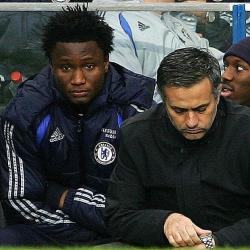
From day one, Mourinho had never liked him. John Obi turned up a little late for training five times in his first few weeks and the next thing he knew, Jose had questioned his commitment.

John Obi Mikel, Cesar Delgado

‘Most of the time you don’t even tackle enough to get booked!’ José complained but John Obi would never be Lee Catermole. He liked to wait and pick his fights carefully: Kolo Touré, Phil Neville, Mark Clattenburg. ‘We have different values’ was all John Obi said to his best friend Salomon Kalou. He couldn’t abide his manager’s very strict preference for work-rate and passion from his defensive midfielders. Even the sideways pass was being outlawed. He found it hard to fit into such futuristic plans.

But while others moved on, John Obi stayed put. Some critics called him a parasite but he had a long way to go to reach Winston Bogarde levels. Drive just didn’t come naturally to him. When Benoit Assou-Ekotto took his title as the Premier League’s least interested player in 2010, he was annoyed but not enough to do anything about it.

John Obi 4

At the 2013 African Cup of Nations, Nigerian fans called for ‘the other Mikel’. John Obi was confused.

‘Do they mean Arteta?’ he asked teammate Efe Ambrose. ‘I think he’s Spanish.’

‘No, I think they want you to pass forward and sometimes run into the penalty area to shoot,’ Efe replied.

John Obi tried but he wasn’t Victor Moses.

In 10 seasons, he had scored just one Premier League goal. Against Fulham, John Obi found himself in the penalty area for an attacking corner. The defenders had never seen him before and left him to his own devices. Terry knocked a header down and he tucked it away like a striker. It was a very happy day.

There had been many of those. In the Champions League final against Bayern Munich, he played the full 120 minutes. Jamie Redknapp told the world that John Obi was ‘literally putting our fires everywhere’. He had never felt so tired in all his life.

But when Mourinho returned to Chelsea, he bought Matić straight away. John Obi could imagine the conversation:

José – I need a midfield enforcer.

Roman – What about Mikel?

José – I said a midfield enforcer.

John Obi was playing fewer and fewer games and there was talk about a move to Russia. He went to speak to Mourinho.

‘John Obi, you’re like four-fifths of a plug. You can fill a gap for a little while but ultimately, things will get through.’

It was a nice analogy. He nodded and waited for The Special One’s downfall. Now Guus was returning and John Obi would lace up his big boy boots once more to play the leading role.

John Obi 3

Richard Foster Interview

Paul Dickov, Dean Windass, Clive Mendonca – you’ve gotta love the Football League play-offs. Richard Foster loves them so much that he’s written a very good book about them – The Agony & the Ecstasy (Ockley Books, 2015). The origins, the stats, the winners and the losers – they’re all there and more. I caught up with the Guardian journalist to talk all things play-offs.
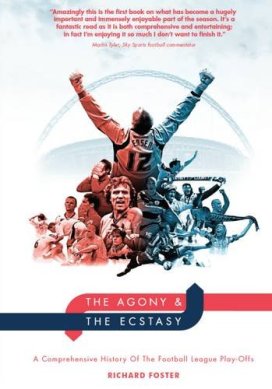
Agony

1. At what stage did you decide to write the book and how did you approach Ockley about it?

I actually had the original idea about ten years ago. I had always been intrigued by the Play-Offs and following initial research was amazed that there was no book dedicated to telling the story behind them and so the journey started.

Having just finished my first book, The A-Z of Football Hates I had an offer from that publisher for the Play-Offs history but was introduced to Ockley by another author. I was impressed by Dave Hartrick’s enthusiasm, knowledge and most importantly, his emphasis on the quality of the writing.

2. What was the hardest part of the writing process?

Firstly, having written a fair chunk, around 20,000 words, I had my Mac stolen and stupidly hadn’t backed it up so that was a major setback. I could not go back to writing it for a year or two, as it was too painful. So that was a tough lesson learned – always back up your work.

Secondly, writing a history is a tough challenge as every year things change and I toyed with the structure for ages. The biggest decision was whether to go down the strictly chronological route or a thematic approach, in the end it turned into a mixture of the two.

Finally, the bane of every writer’s life is proofreading.  We all recognise it has to be done and it has to be done thoroughly but this book actually was proofread by three different people so by the end, I wanted to scream.

3. There are lots of great tables, stats and infographics throughout the book. Was that the plan from the outset?

I must admit that I am a sucker for stats and I had always thought that a dedicated Play-Offs table would be a good idea. But it did take a lot of toing and froing between Dave Hartrick and myself to come up with the final formula and, as a Brighton fan, he was not especially enamoured by the idea of Palace being the top Play-Offs team.

The infographics are the work of design genius, Mick Kinlan, who did an amazing job transforming all the facts that I dug out about each and every club that have competed in the Play-Offs into such a visual feast. My personal favourite is the Bristol clubs being linked by the Clifton Suspension Bridge. Class.
Agony 2.jpg

4. There are lots of insightful contributions from player, managers and fans. Was it hard work collecting these or were people very eager to discuss the play-offs?

Almost universally everyone I approached was more than willing to be interviewed about the Play-Offs and could recall the minute details of their experiences, which convinced me that this was a worthy topic for a book. There was one manager, who shall remain nameless, who asked for money to be interviewed, suffice to say, he is not included in the book.

5. Putting aside your beloved Palace, what is your favourite play-off memory?

There are so many to choose from but as a neutral I would have to say that the Huddersfield Town Sheffield United penalty shoot-out in 2012 League One Final takes some beating. Uniquely, all twenty-two players took a penalty and the last one by Steve Simonsen was perhaps the most inglorious failure and dramatic and heart-breaking ending of them all.

Agony 3

6. What are your predictions for 1-6 in the Championship this season and who do you think will win the play-offs?

Middlesbrough, Hull, Burnley, Brighton, Sheffield Wednesday and Ipswich. Fate decrees that Brighton will win the Play-Offs this year as consolation to my publisher for having to stomach Palace topping that Play-Offs table.

7. Would you be in favour of a Premier League play-off for the fourth Champions League spot?

I am with Sir Alex Ferguson on this one, which is not a phrase I use that often. I think it would be a little too artificial and considering the bleating that goes on about too many fixtures for the top clubs this would add fuel to the fire.

 I like the fact that the Play-Offs give the Football League clubs the stage upon which to showcase the excitement and drama of their season finale. All eyes are focused on the lower divisions for those Finals and that is a good thing that should be maintained.

You can buy The Agony and the Ecstasy here

Of Pitch & Page review of The Agony and the Ecstasy coming soon in TERRACE magazine