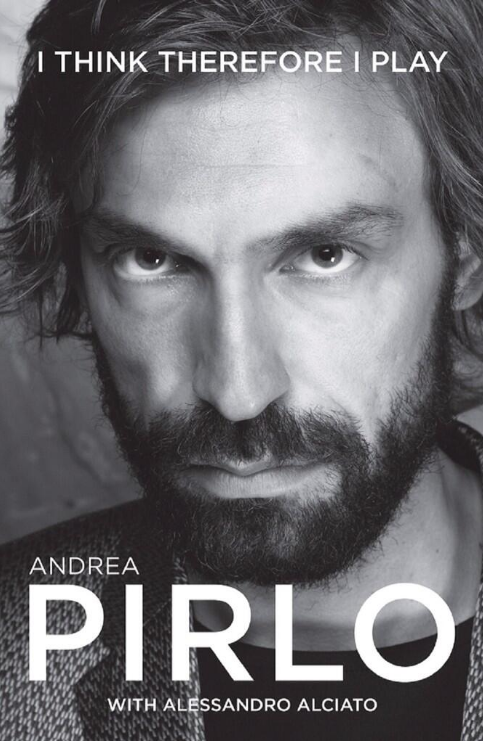
Andrea Pirlo: I Think Therefore I Play

I Think Therefore I Play

By Andrea Pirlo with Alessandro Alciato

BackPage Press, 2014
A love of Woody Allen and cinema in general; an appreciation of ‘philosopher’ as ‘a nice compliment’; the secrets of great free-kick taking; ‘I’ll sometimes come home after training, light the fire and pour myself a glass of wine.’ These are the kind of insights you’d expect to glean from the world’s classiest footballer. You won’t be disappointed but Andrea Pirlo is not a man to rush things, or to sell himself short. So instead of the comfort of the lounge, I Think Therefore I Play begins at the negotiation table of a Milan office. It turns out l’architetto is everything you knew and loved, and much more.

Don’t be fooled by his graceful, unruffled appearance on the pitch; Pirlo is made of tougher stuff. A ruthless ambition reveals itself early on in the discussions surrounding failed transfers to Real Madrid, Barcelona and Chelsea respectively. He may have spent a decade at AC Milan, through great times and later more mediocre ones, but Pirlo is no Steven Gerrard. On each occasion these top European clubs came calling, the midfielder had very little hesitation in putting his own success over any sense of loyalty. This is true even in 2006, with Milan facing the threat of relegation during the Calciopoli scandal – ‘one thing I was sure of, though: I would never drop down to Serie B.’ You could almost be forgiven for thinking it was Zlatan talking, the man Pirlo brilliantly describes as ‘a ticking timebomb of a madman’. Andrea’s eventual departure in 2011, to rivals Juventus, seems to have been as seamless off the pitch as on it. I Think shows a fully-fledged convert, a die-hard Juventino, although consecutive Serie A titles certainly helped the transition. Where Rossoneri leaders Silvio Berlusconi and Carlo Ancelotti are shown affection in passing, Antonio Conte and Andrea Agnelli get their own laudatory chapters.

The ‘Olympic torch deep within’ Andrea Pirlo also comes as something of a surprise. An intense patriotism shines throughout I Think, from the Cesare Prandelli introduction right through to thoughts on his imminent retirement. In his own words, he’s ‘an Italy ultra’ with a ‘pathological devotion’ to the Azzurri. Not that at club level he’s any less passionate or determined. Defeats weigh heavily, not least Milan’s disastrous collapse in the 2005 Champions League final versus Liverpool. Pirlo reflects at length on suffering from ‘insomnia, rage, depression, a sense of nothingness’ for weeks. Winning the same fixture two years later isn’t enough; ‘we celebrated but didn’t forget’.

Don’t let the grave face on the book jacket fool you, though, because Andrea knows ‘how to laugh, loud and long’. He’s a self-confessed pirla (dickhead), and his pranks on teammates, especially Rino Gattuso, make for brilliant reading. Humour might not be something you really expected from Pirlo but what a pleasant surprise it is to find it on every page. I Think is as quotable as Anchorman: ‘When you win, burping takes priority’, ‘after the wheel, the Playstation is the best invention of all time’, ‘It’s called an assist and it’s my way of spreading happiness’, ‘much better to be a soldier on the pitch than in the bedroom’…

But then just when you think you’ve got l’architetto nailed as just one of the lads, he reveals ‘an opinion about everything’. I Think contains Pirlo’s concise but considered thoughts on a wide range of footballing issues, including racism, technology, doping and betting. Some remarks suggest genuine oratory skill; on the subject of fan violence, Pirlo argues that Serie A is ‘way behind, and we don’t seem to realise that the further we fall, the deeper and narrower the well has become’. And even Paddy Agnew would be proud of Pirlo’s metaphor for Italy – ‘I saw the inner workings of a motor car that was imperfect, full of defects, badly driven, old and worn, and yet still utterly unique.’

Co-author Alessandro Alciato and translator Mark Palmer deserve great credit for making I Think what it is – a highly entertaining footballing autobiography that foregrounds the character of the player in question. The narrative reflects the engaging, informal style used by David Lagercrantz for I Am Zlatan, but goes one step further in avoiding all attempts at chronology. Instead, with its short, sparky chapters, I Think resembles a series of loosely connected fireside chats, the natural environment for a cultured raconteur like Pirlo. And with at least two more Serie A titles won and one last World Cup this summer, here’s hoping for a second instalment. After all, as Alciato says in his Thanks, ‘when he starts talking, there’s no stopping him’.
Buy it here

Sol Campbell: The Authorised Biography

Sol Campbell: The Authorised Biography

By Simon Astaire

Spellbinding Media, 2014

‘Sulzeer Jeremiah ‘Sol’ Campbell. Is there a finer English footballer over the last fifty years who has been eyed so suspiciously?’ Simon Astaire’s astute biography of Sol Campbell ends with this most pertinent of semi-rhetorical questions. The former Tottenham and Arsenal centre back is hardly the first footballer to shy away from the limelight; in fact, another famous example was born in that same year of 1974. But whereas Paul Scholes is readily accepted as a quiet, unassuming family man, Sol has always been seen – by friends, teammates and managers – as a man of depth. He is also, through largely no fault of his own, a man of controversy. A claim of assault, a North London betrayal, an episode of depression and an ill-fated stint in League Two all made the headlines, alongside recurring slurs against his race and sexuality. For a private man, Sol Campbell has had a very public career.

Like subject, like book, Sol Campbell: The Authorised Biographyhas had an eventful life so far. Press attention has sadly centred on one sensationalist claim; that racism within the FA prevented Sol from being ‘England captain for more than 10 years’. Appearing to undermine the strong leadership qualities of teammates such as Tony Adams, David Beckham and John Terry, the remark suggested a bitter ex-player voicing long-held grievances now that retirement hadn’t resulted in the kind of opportunities he felt his accolades merited. But thankfully, as Matt Dickinson wrote in his excellent review in The Times, ‘The book deserves far better than to be known for one reckless outburst.’

That ‘outburst’ aside, Sol Campbell offers a considered look at a highly distinguished career. Very few direct criticisms are levelled and even these are mild and reasoned. Wayne Rooney, for example, is condemned for diving but praised for having ‘the imagination to change things’. When it comes to discussing the worst of the Tottenham years, Sol takes no prisoners but names no names: ‘I had muppets as team-mates who were on treble the money.’ Respect is given to both performers and professionals, from half-time smoker David Ginola through to veteran captain Gary Mabbutt. England managers, Arsenal and Portsmouth teammates – all are acknowledged with polite appreciation, if not always overt affection. Present tense narration lends a nice sense of drama to scenes like the historic unveiling at Arsenal but the many high-profile decisions of Campbell’s career are also explained openly and judiciously, from Tottenham’s insufficient ambition (‘I wanted Spurs to show me that they were going to challenge’) to the allure of the Notts County project (‘I liked the idea of being part of the renaissance’).

Penetrating Campbell’s tough football shell, however, is no easy task; he’s not a man who naturally confides his feelings to others, least of all teammates. Lee Dixon sums it up well – ‘I didn’t get to know him and I don’t think anyone really did.’ Life-changing decisions are shared – if at all – with his mother Wilhelmina and his agent and friend Sky Andrew. Until now, that is. ‘Sometimes he would stare at me with a seriously blank expression when I asked something difficult’, biographer Astaire admits in the prologue, ‘but he would eventually open up’. Sol Campbell reveals a man with a deep-rooted emotional fragility. Pressure and hurt build and build inside him until they eventually overflow, as on the night he famously disappeared during half-time of a nightmare performance against West Ham in 2006. ‘The accumulation of storms in his life had finally combined and on that evening hit him so hard and unexpectedly that he had only one choice left. Escape.’

What Astaire does brilliantly is to trace this sensitivity all the way from its roots. Five years younger than the next of his eleven siblings, Campbell was largely left to his own devices as a child, ‘adrift’ as he puts it. Two significant and competing elements of Sol’s character emerge from this upbringing: a fierce independence and a recurring need for appreciation. Whether kicking a tennis ball against the wall in his street or sitting quietly in his front room, Sol’s childhood is dominated by solitude; ‘The calm made me happy. Since then, I’ve always been in search of it’, he confesses. The impact of his father’s very distant parenting style is also felt throughout the story. The care and attention he failed to find at home from Sewell, he held out hope for at Tottenham but while George Graham ‘knew I was a top-notch player…I never felt he rooted for me’. Expressed a different way, ‘The fans may have believed in me but I felt the club didn’t, otherwise they would have done more.’ At Arsenal, Campbell joined a winning mentality but also a family environment with protection and praise from David Dein and Arsene Wenger. Later on, Portsmouth proved another good fit, in part because Harry Redknapp is ‘someone who he felt would manage him in a fatherly way’.

Confidence, determination and focus – in the 21stcentury, the myth of the steadfast sporting mindset is finally being questioned. With this book, Campbell deservedly joins the likes of Robert Enke, Andre Agassi and Marcus Trescothick in a very significant subgenre of sports writing. Yes, key matches are analysed and records are set straight, but the real triumph of Sol Campbell is that ‘The Rock’ is revealed as human after all.

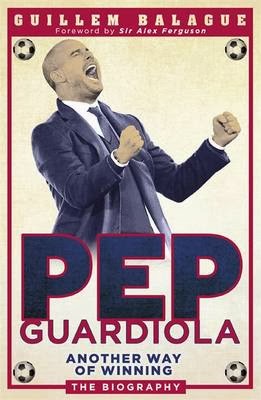
Pep Guardiola: Another Way of Winning

Pep Guardiola: Another Way of Winning: The Biography

By Guillem Balague

Orion, 2013

255 games, 194 wins; 14 trophies out of a possible 19, including 3 La Liga and 2 Champions League titles. The statistics speak for themselves but do they speak for the manager? There remains a real mystique surrounding Pep Guardiola. This is a man who followed up a glittering playing career at Barcelona by becoming their most successful manager ever, all by the age of 40. Much has been written about his tactics (the false nine, tiki taka) and his players, but precious little about the calm, classy ‘Philosopher’ himself. This is largely his own doing; during his four managerial seasons at the Nou Camp, Pep refused all one-to-one media and all but one interview for publication.

Luckily, La Liga expert Guillem Balagué is a very well-connected man. Not only does Another Way of Winning have a foreword from Sir Alex Ferguson and countless quotes from the likes of Johan Cruyff, Lionel Messi and José Mourinho, but it also contains the all-important musings of MisterGuardiola. ‘Talking to Pep for this book’, Balagué explains, ‘was the only way I could open up a hitherto closed window on his private world; to reveal what motivates him, what took him to where he is now, what fed his intuition to make the right footballing decisions.’

Another Way of Winning takes an end as its beginning, using Pep’s surprise resignation as the point at which to stop and reflect on his phenomenal career to date. This is Pep’s Greatest Hits; there’s no filler in sight as Balagué takes us from the early successes of his playing days (6 La Liga titles, 1 European Cup, 1 Olympic Gold), through the glory years of No. 1 after No.1 as Barcelona manager (the coverage of the two Champions League finals in particular is incredibly detailed), before the inevitable tensions, rivals and disappointments, and finally the tearful goodbye and the new direction. What he may lack in eloquence and style, Balagué certainly makes up for in zip and punch.

And insight. Although little of the character sketch is groundbreaking, the many details and anecdotes do add up to a clearer vision of both the manager and the man. Any football fan could tell you that Pep is obsessed with tactics, but Balagué offers up the bigger picture. A player who began preparing for management under Cruyff, then Rexach, Robson and van Gaal, growing increasingly confident in his ideas and communication; a player who left the comfort of the Nou Camp at 30 to study the different footballing cultures of Italy, the UAE, Mexico and Argentina; an ex-player who rejected the chance to run the world-famous academy that raised him, choosing instead to gain hands-on experience with Barcelona B, a team in turmoil, newly relegated to Spain’s fourth division; and finally a record-breaking manager with an incredible 24 assistants who still spent hours alone in his office watching video footage, honing the perfect strategy to defeat the next opponent. About Guardiola’s team-talk prior to the 2011 Champions League final, an awestruck Javier Mascherano says, ‘Everything that he said would happen, happened as he said it would.’

As with Arsene Wenger, Guardiola is presented as less a football manager than a football teacher, a genius with a singular vision for his pupils: ‘Total Football’ with a Spanish twist. Brave but ordered attack in the form of flowing, possession football, built upon a base of hard work and togetherness. But it’s one thing to have a philosophy and quite another to implement it successfully. Luckily, Pep had a largely receptive audience (most notably, of course, La Masía graduates new and old, from Xavi, Iniesta and Puyol through to Messi, Busquets and Pedro), and as Balagué demonstrates through a series of invaluable team-talk insights, ‘his ability to communicate is perhaps his greatest talent’.  ‘The coach makes us understand football’, Gerard Pique corroborates.

Many did, however, fall victim to Pep’s strict ‘my way or the highway’ policy. The considerable talents of Ronaldinho, Deco, Eto’o, Bojan, Yaya Touré and of course Ibrahimović were all shown the door; ‘the affection lasted as long as the player’s desire to be a part of the vision’. The Brazilian duo were rightly seen as a disruptive influence (particularly on a young Messi) but in discussing these last two players, Another Way of Winning for the first time questions Guardiola’s perfect judgement, and specifically his unyielding favouritism towards his home-grown talents. Talking of Barca’s ever-increasing reliance on La Pulga as the supreme focal point, Balagué asks, ‘Had Guardiola created a monster in Messi? The Argentinian had absolute power in the coach’s final season, and his behaviour was sometimes out of place.’ As they would soon find out against Chelsea, no matter how good Plan A is, you need a Plan B.

The pressure to succeed took its toll on Guardiola, ‘that need to continue to fuel a competitive group under any circumstances’. What Another Way of Winning brilliantly captures is the sensitivity of the man. In the difficult transition from player to manager, Pep was keen to distance himself from the dressing room itself, but that didn’t prevent a deep ‘emotional investment’ in the lives of his players. As he himself articulates so astutely, ‘The closer I get to players, the more I get burned, I need to distance myself.’ But nowhere was Pep’s emotional fragility more evident than in his intense battle with Real Madrid manager and former friend Jose Mourinho. Balagué sums up their rivalry nicely; ‘Pep took it all personally. For José it was all part of the job’. With his mind games and barbed comments, the Special One wore away at Pep’s principles until he retaliated and soon afterwards surrendered. Mourinho may have outlasted his foe but a vulnerable genius makes for much more compelling reading.

Buy it here

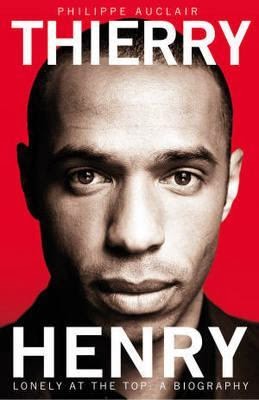
Thierry Henry: Lonely at the Top

Thierry Henry: Lonely at the Top: A Biography

By Philippe Auclair

Pan Macmillan, 2013

A sports biography that strays beyond the sporting facts is something to celebrate. A sports biography that prefers to call itself ‘a biographical essay’ and sets out ‘to try to understand how and why such a magnificent footballer…has inspired such extremes of feeling’ deserves a piñata and party bags. For Auclair, this is no empty threat; what he did for Eric Cantona (The Rebel Who Would Be King), he’s now done for Thierry Henry, the classy King of Highbury but also ‘the selfless egotist, the insufferable charmer, a walking oxymoron in shorts’. It’s another fascinating subject matter for a brilliantly incisive biographer, especially one who happens to be an Arsenal-supporting Frenchman living in London.

Yes, Philippe and Titi are a match made in heaven, even if, despite years of interviews and conversations, the journalist is ‘not a friend of his, and could never have become one’. Does distance make the heart grow fonder? In Auclair’s case, it makes the heart grow fairer, and more intrigued. Rightly or wrongly, Henry’s every word, gesture and decision is scrutinised here, from Les Ulis prospect all the way through to New York celebrity. Lonely at the Top addresses the need for an objective judgement of France’s highest ever goalscorer, an examination of the myths side by side: Henry the player and Henry the person.

1 French, 2 English and 2 Spanish league titles, 1 Champions League, 1 World Cup and 1 European Championship. Surely the trophy cabinet of a true footballing legend? And yet, Henry remains a ‘nearly man’ in many eyes; no ‘single moment’ to define him, no Ballon D’Or win and famously only 1 goal in the 9 major senior finals he played in, that one being the 2003 Confederations Cup. ‘He still owned them [the trophies] but he didn’t seem to ‘own’ them, somehow’. As Auclair’s chronology demonstrates, either side of the dizzy heights of his Arsenal career, Titi never quite lived up to expectations at Monaco, Juventus and even Barcelona (a ‘parenthesis’ according to his biographer). For France, Henry’s goal record hid the disappointing fact that he and Zidane failed to gel during their peak period, at the 2002 World Cup in particular. In terms of the ‘genius’ tag, an adopted nonchalance disguised a footballer working hard to get the most out of a raw blend of pace and power.

And yet, between 2001 and 2004, Henry was unstoppable. As the focal (and significantly central) point of Wenger’s ‘Invincibles’, Titi led the Gunners to 2 Premier League and 2 FA Cup trophies, winning back-to-back PFA Player of the Year awards. In these 3 seasons, he scored a phenomenal 103 goals in 155 matches, including many that were crucial and/or breath-taking. He won the French Player of the Year award four years in a row (2003-6), and was runner-up in the FIFA World Footballer of the Year in both 2003 and 2004. Paradox Number One: Henry the footballer.

Paradox Number Two: Henry the man. The infamous ‘Hand of Gaul’ against Ireland in 2010 only served to reinforce his reputation as an arrogant and unlovable individual. Auclair and others speak of ‘a many-sided man’ with a ‘calculating streak’, ‘increasingly aloof’ and renowned for his ‘essential remoteness’. No-one argues with Monaco and Arsenal teammate Gilles Grimandi’s assertion that Henry has no real friends in football. Patrice Evra, Robert Pires and David Trezeguet come close but don’t quite make his very exclusive inner circle. Lonely at the Topastutely traces Henry’s near-universal distrust back to a difficult relationship with his demanding father and a botched transfer to Real Madrid in 1996. This early betrayal, Auclair argues, ‘hardened him’.

And yet, Henry has never shied away from the cameras. He gave regular interviews throughout his time in England and, like most footballers, what he said was always polite, usually humble and occasionally insightful. In 2008, Premier League fans voted him their most popular player ever. So how does this all add up? What we have, Auclair argues, is a highly insecure figure who ‘craved assent and praise as no other footballer I have come across did’. In his dogged pursuit of greatness, Henry adopted a public mask, surrounding himself with propagandists and ‘starfuckers’ in an attempt to control his image. A very convincing argument indeed.

While Henry is, of course, the focus of Lonely at the Top, the bigger picture is always intricately filled in. The Clarefontaine, Monaco and Barcelona set-ups are discussed in detail, while the ebb and flow of Henry’s time at Arsenal is given the attention it deserves, as he graduates from struggling misfit, to leader of champions, and finally to one-man team. Arguably the book’s most fascinating sections, though, cover Titi’s rollercoaster ride with Les Bleus, from World Cup winners to shamed, first-round knockouts in the space of 12 years. Auclair lays out the national context boldly and succinctly; ‘a fractured society ridden with post-colonial guilt and neuroses, which had desperately wanted to believe in the 1998 black-blanc-beur utopia and was now forced to smell its own shit.’ Biography this may be, but like Henry at his pinnacle, it’s a few cuts above the rest.

Buy it here

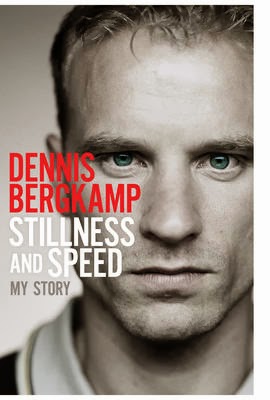
Stillness and Speed: My Story

Stillness and Speed: My Story

By Dennis Bergkamp

Simon & Schuster, 2013

In his introduction to this excellent study of the Dutch master, David Winner suggests that ‘A footballer like no other ought to have a book no less distinctive’. And distinctive this book is, although you feel its winning format could very soon become the norm. Footballing autobiographies have long been a cause for mockery and/or scepticism. Much hinges on the unspecified role of the ghost writer; is this shadowy figure sticking faithfully to the player’s words, or taking all manner of artistic license? Stillness and Speed negates that question and the question of ghost writers altogether. ‘My Story’ may be the subtitle and ‘Dennis Bergkamp’ may grace the spine, but this is very much a collaborative project. Instead of ‘assisting’ with a standard autobiography, Winner builds a brilliant biography around in-depth interviews with The Non-flying Dutchman. Would he have come to life in the way he does in conversation, if he’d written his own story? It’s unlikely.

The levels of interaction are the greatest strength of the format. Winner is a terrific interrogator, fun, fierce and provocative, always ready to ask the difficult question and persist with it, chipping away at the cool reserve. When discussing penalties, for example, Bergkamp finds himself firmly on the back foot, fending off criticisms of his national team’s shoot-out performances.

DB: ‘You’re telling me he [Frank de Boer, Euro 2000] took the penalty wrong?’

DW: He did take the penalty wrong. It was terrible.

DB: ‘No, it was a miss.’

DW: It was a terrible penalty.

DB: ‘He missed the penalty, therefore it’s not good. You can’t have a good penalty that is saved. I’ve tried to explain that…’

The professional that he is, Bergkamp fully commits to Winner’s innovative style, even responding to what others have said about him earlier in the chapter. In ‘Intermezzo’, covering his unhappy spell at Inter Milan, he advises Winner on who to speak to, saying ‘We need an opinion, don’t we? … I don’t mind, as long as I get a chance to react.’ And after ‘Their Truth’ (three cautiously critical interviews with the manager and two teammates), we get ‘My Truth’, the carefully considered retort. It’s the football writing equivalent of Lars Von Trier directing an episode of Eastenders.

So what do we learn? Bergkamp’s dogged pursuit of footballing perfection extends to a keen interest in both physiology and geometry (‘you have to get all angles and the maths correct…It’s like solving the puzzle’). The Dutch legend is as eloquent as you’d expect on the subjects of touch, time, passing and space. Have YouTube at the ready, as we’re treated to in-depth studies of key assists and goals, including that one against Newcastle. And it turns out there’s warmth beneath the ice; while he was never too bothered about making friends in football, once he’d settled at Arsenal he became the team prankster, putting Martin Keown’s clothes up step-ladders and pulling Ray Parlour’s shorts down at training.

All very entertaining but then there’s the other, more intriguing side of Dennis that conforms to that age-old Dutch stereotype. Quiet and polite he may often be, but he’s also confident, driven and obstinate. He’s an ‘adventurer’ who has always made his own decisions, whether that be choosing Inter over the Dutch-haven of AC Milan, or refusing to travel by plane. He had no idols growing up and he’s never been a follower – for Bergkamp, football is all about being unique. Early on, he tells us, ‘My best trainers were the ones who let me do my own thing: Cruyff, Wenger and Guus Hiddink’. Those who tried to dictate his play, on the other hand (namely Louis Van Gaal and Ottavio Bianchi), quickly found themselves with an unhappy player on their hands.

As you’d expect from the writer of the classic Brilliant Orange, many of Winner’s most detailed and illuminating sections here concern matters Dutch. Stillness and Speed begins and ends at Ajax under the watchful eye of the footballing revolutionary Johan Cruyff, with Bergkamp first as a Cup Winners’ Cup-winning school kid and later as the coach of De Toekomst (‘The Future’). In between these bookends, twin chapters ‘Player Power’ and ‘Power Player’ deftly unravel the national team disappointments at Euro 96, World Cup 98 and Euro 2000. As Thierry Henry puts it, ‘That Dutch team with Dennis didn’t win anything – crazy! Too crazy for me.’

Where the book feels surprisingly hollow is in the 130-plus pages on Bergkamp’s 11 years at Arsenal. Abandoning strict chronology, Winner opts for a thematic approach, with chapters on fitness, cheating, leadership and penalties. Detail is substituted for overview. We’re told of ‘The Plan’ that Dennis signed up for but we’re not really told aboutits development, its ebb and flow. Instead of season-by-season analysis, these chapters are dominated by laudatory quote after laudatory quote from the likes of Ian Wright, Tony Adams and Thierry Henry. The surface is more stroked than scratched; Nicolas Anelka, Bergkamp’s strike partner for 2 key seasons (1997-9), is only mentioned once in passing, while Arsenal and Holland teammate Giovanni van Bronckhorst is never mentioned. Instead, a chapter is given over to Bergkamp’s interest in golf. Perplexing, frustrating, but Winner did warn us; a distinctive book for a truly distinctive footballer.

Buy it here