Football writers on the Best Books of 2016

Nige Tassell, Writer for FourFourTwo and The Guardian, and author of The Bottom Corner: A Season With The Dreamers Of Non-League Football

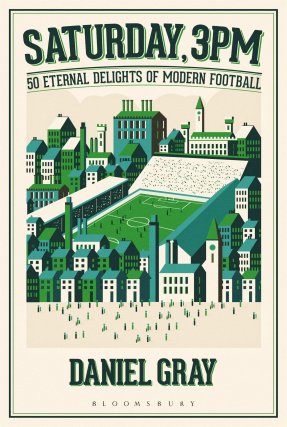
In a year when writing and promoting a book has removed most of the time otherwise given over to reading, the short essays that make up Daniel Gray’s joyful Saturday, 3pm were a godsend. Stripping away the bullshit and bluster that suffocates much of modern football, Gray offers up 50 reasons why the game we’re still so obsessed with remains resilient to whatever nonsense the authorities and marketing men throw at it. Gray beautifully articulates the pleasure offered by such pursuits as jeering passes that go out of play, listening to the results in the car, and spying a ground from the train window (the floodlights “like four beckoning fingers … painting bright a vanilla hour”). Gray’s prose is exquisite – as is the Neil Stevens illustration on the jacket. A physically slim but spiritually hefty treat.
Saturday 3pm.jpg

David Sumpter, Applied mathematician and author of Soccermatics: Mathematical Adventures in the Beautiful Game

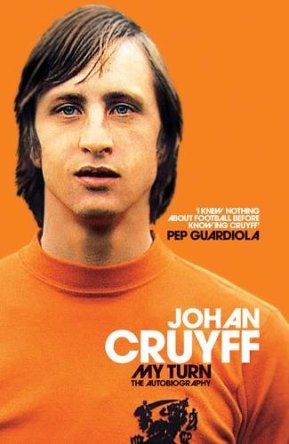
It has to be My Turn for me. I love the way Johann Cruyff sees all the details of his career – the goals and the trophies – as pretty much irrelevant. He is always trying to identify the patterns and plan for the next stage. This is how I think as a researcher: individual moments aren’t important, it is about how we make sense of information. It was also nice to find out he was good at maths. That makes a lot of sense: you have to be a mathematician to create Barcelona.
Cruyff

Adam Hurrey, Freelance football writer for The Telegraph and ESPN, and author of Football Clichés

The Bottom Corner by Nige Tassell. Accounts of the less glamorous end of the football pyramid are nothing new, but growing disillusionment with the elite game has generated new enthusiasm for a more “authentic” experience, in which fans feel a closer connection to the club to which they give their time, money and patience. That, in turn, can lead to unhelpfully rose-tinted, self-indulgent views of non-league football. Thankfully, neither of those are the case with Nige Tassell’s pleasantly honest voyage through the more humble outposts of the English league system. Rather than dwelling on the infrastuctural challenges of being a provincial part-time operation, which often drag down books like this, Tassell focuses on the individuals who represent the clubs’ lifeblood.

There are obvious destinations – Hackney Marshes, Dulwich Hamlet – but also some curious and unlikely figures. There’s the 44-year-old Barry Hayles, once of Fulham and the Premier League, and now with lowly Chesham United. Julio Arca, who played 300 times for Sunderland and Middlesbrough, is unearthed playing in the second tier of the Northern League – nine floors down from the goldfish bowl of the top flight. You don’t have to abandon billion-pound football to appreciate the amateur game, and this book is no manifesto for doing so – more a pleasant peer down the rabbit hole. Plus, any book with a recommendation from Barry Davies on the back has to be worth a go.

the-bottom-corner

Ben Lyttleton, Football writer and author of Twelve Yards and Football School

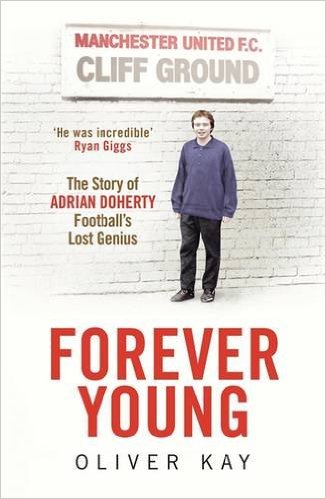
Forever Young by Oliver Kay. The story of Adrien Doherty is brought to life brilliantly in this excellent book, which is as much about memories, dreams and loss as it is about football. Our football heroes today are one-dimensional, either hero or zero, but Oliver Kay paints Doherty as nuanced and conflicted, and someone for whom football was not the be-all and end-all. If, like me, you hadn’t heard of Doherty, you should; his life was extraordinary, as is this telling of it.
Forever Young

Ian Ridley, Football writer and publisher at Floodlit Dreams

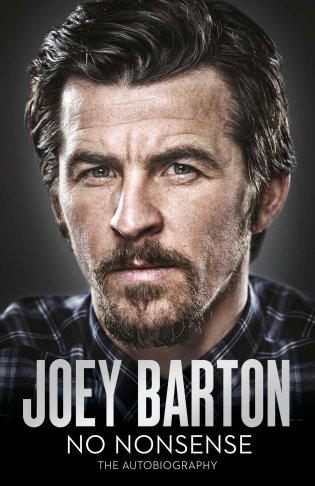
Ghost-writing for a footballer is easy, right? You just point a tape recorder – even a phone these days – at the bloke, ask a few standard questions about the ups and downs and then get someone to transcribe it… Wrong. It actually takes craft. You are delving deep, structuring, looking for nuances that will bring your character to rounded life. You are looking to tell a readership much more than they can discover from the sports pages or clipped media interviews. The versatile Mike Calvin, writer of some of the most perceptive football books of recent years, has done just that with Joey Barton: No Nonsense. The result is the collaboration Barton was seeking after rejecting previous more self-oriented writers and one that has resulted in a worthy addition to proper sporting literature.
Barton.jpg

Alex Stewart, Freelance journalist and presenter of BBC One’s Thief Trackers

It’s been a great year for football books as far as I’m concerned: Beyond the Turnstiles by Leon Gladwell is a sumptuous photo collection, and Karl Ove Knausgaard and Fredrik Ekelund’s Home and Away is literary and lyrical. The winner, though, has to be Duncan Alexander’s OptaJoe’s Football Yearbook. It’s a superbly accessible look at how data and metrics, both event-based and historical trends, can explain aspects of the game and challenge preconceptions. He also leaves little specks of statistical gold littered through the season-long tale, which are engaging and thought provoking in equal measure. Football statistics needed something like this, structured around one year as well as answering longer-term questions, to aid accessibility and enjoyment. Alexander has managed just that, and it’s a treat for geeks like me and (hopefully) everyone else.
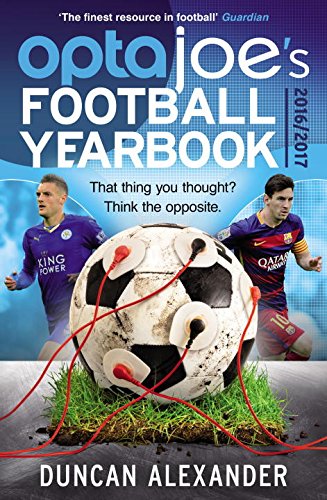
optajoe

Oliver Kay, Chief Football Correspondent for The Times and author of Forever Young: The Story of Adrian Doherty, Football’s Lost Genius

Mister by Rory Smith. When Rory told me he was writing a book about the English football coaches who taught the rest of the world how to play, I had two thoughts: 1) it sounded like an extraordinary amount of work and b) it sounded rather dry as a subject matter. Well, I was half-right. The depth of Rory’s research is indeed enormous, as he uncovers the stories of men such as Steve Bloomer and Jimmy Hogan, but the story-telling is absolutely wonderful too — and, crucially, I think, it all links together to tell the broader story of English football’s abject failure, over many decades, to practise what its most enlightened minds were preaching to the rest of the world. In all my many hours lamenting the stupidity behind English football’s fall from (imagined or genuine) grace, this was something I had never considered. It’s a hugely informative book and, as with everything Rory does, it is superbly written.
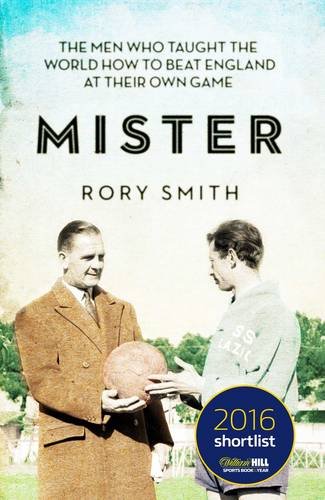
mister

Martin Cloake, Football writer and author of A People’s History of Tottenham Hotspur Football Club

The outstanding football book of the last year was, without doubt, Adrian Tempany’s And The Sun Shines Now. Tempany, a survivor of the central Pen 3 at Hillsborough, has produced a moving and powerful work. The opening description of that fateful day is harrowing, the subsequent examination of what has happened to the game insightful. Those expecting a polemic will be disappointed. Tempany does not hold back with criticism, but he eschews easy conclusions. There’s anger here, for sure, and regret for what has been lost, but above all it is the humanity that infuses this fine read that elevates it. Unrivalled.
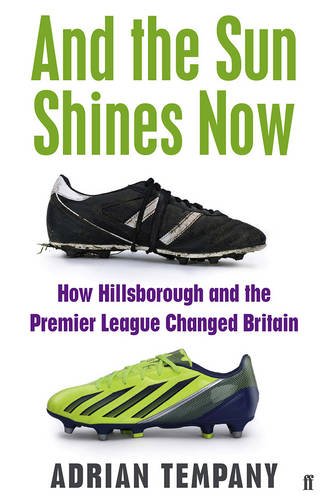
tempany

Sachin Nakrani, Football writer and editor for The Guardian

Ring of Fire: Liverpool into the 21st century: The Players’ Stories by Simon Hughes. The third instalment of Simon Hughes’s chronicle of Liverpool’s recent history through the stories of those who were at the heart of the action is the best of the lot. As was the case with Red Machine and Men In White Suits, Hughes chose an eclectic group of people to interview and once again through a combination of the author’s crisp writing and the subjects’ captivating stories, the reader is given a wonderful insight of how Liverpool developed, thrived and ultimately fragmented during the first decade of the new century. Each chapter is a treat, with a personal favourite being the one with Fernando Torres. The Spaniard sets the record straight on his controversial departure from Anfield in 2011 in a manner, thanks to Hughes wonderfully honed ability to tell the stories of others, that grips the senses from first page to last. It is movie-like in its sense of intrigue and overall this is a book which all football fans will be moved by, intellectually and emotionally.
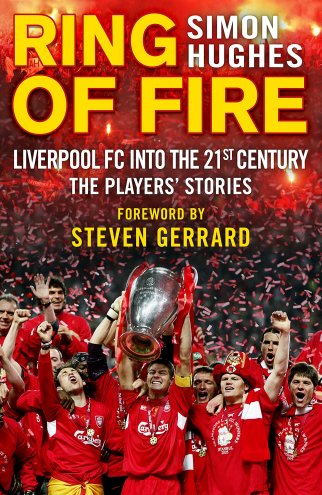
Hughes

Adrian Tempany, Author of And the Sun Shines Now: How Hillsborough and the Premier League Changed Britain

The best football book I’ve read this year was Anthony Clavane’s Promised Land: A Northern Love Story (2010). Clavane is Jewish, and a Leeds fan self-exiled to the south, and explores through his love of Revie, Bremner, McKenzie et al his sense of identity, belonging, and wider issues of tribalism. The skull cap is worn lightly here, for the themes are universal. Clavane is an elegant writer, and sheds a fascinating light on that unique blend of pride and paranoia that shaped the great Leeds side of the early 70s, and why – in its rise and fall – that club could only have been born of that city.
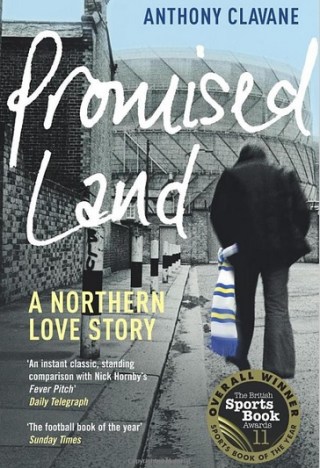
Promised Land

The Bottom Corner

The Bottom Corner: A Season with the Dreamers of Non-League Football

By Nige Tassell

Yellow Jersey Press, 2016

the-bottom-cornerRarely have I opened a football book with such high expectations. After all, this is not just a Yellow Jersey Press title, but also one that comes recommended by Stuart Maconie, Danny Baker and Barry Davies. The Davies quote on the back cover even compares it to Arthur Hopcraft’s legendary book The Football Man. So is The Bottom Corner really that good?
The answer is yes, although Nige Tassell’s ‘Season with the Dreamers of Non-League Football’ is perhaps more reminiscent of Michael Calvin’s The Nowhere Men and Living on the Volcano. Like Calvin, Tassell takes a case study approach to his subject matter, seeking out the great, lesser-known stories and offering a depth and variety of insight. You may have heard about Salford City and Forest Green, but have you heard of Hackney & Leyton Football League chairman Johnnie Walker, or Philippines captain Rob Gier? Instead of a strong, invasive narrative voice, the characters speak for themselves. ‘Here you’re part of the team,’ an interviewee neatly summarises. ‘In the Premier League, you’re just a number.’

The structure is simple but very effective – a chapter for each month of the season, and three or four stories within each chapter/month. Real thought has gone into it, with September (the international break), for example, dedicated to ‘International men of mystery’, a trilogy of absorbing and exotic tales of far-flung travel. Two particular stories – Bishop Sutton and Tranmere Rovers – recur throughout the book, offering a clever narrative thread. The writing is engaging, descriptive but not too descriptive.

And the tone is perfect. ‘Heartland’ is a word written large in the book’s blurb and it really encapsulates the spirit of the book and the individuals, organisations and communities that it follows. These are heart-warming tales of hopes, dreams and dedication in the face of serious adversity. Instead of the doom and gloom that sometimes dominates the discussion of non-league football, The Bottom Corner offers up optimism and positivity. The harsh reality is not ignored but it is approached with the realism and the wry humour of the amazing stalwarts that keep on carrying on.


The Football Book Calendar – August to November 2016

WilsonClavaneCruyffPerarnau


August

Angels With Dirty Faces: The Footballing History of Argentina – Jonathan Wilson

The Roar of the Lionesses: Women’s Football in England – Carrie Dunn

Ring of Fire: Liverpool into the 21st century: The Players’ Stories – Simon Hughes

Hope – Hope Powell


September

A Yorkshire Tragedy: The Rise and Fall of a Sporting Powerhouse – Anthony Clavane

The Bottom Corner: A Season with the Dreamers of Non-League Football – Nige Tassell

No Nonsense: The Autobiography – Joey Barton

Fearless: The Amazing Underdog Story of Leicester City, the Greatest Miracle in Sports History – Jonathan Northcroft

Bayern: Creating a Global Superclub – Uli Hesse

The Wenger Revolution: Twenty Years of Arsenal – Amy Lawrence

The Manager – Ron Atkinson

Martial: The Making of Manchester United’s New Teenage Superstar – Luca Caioli


October

My Turn: The Autobiography – Johan Cruyff

Jamie Vardy: From Nowhere, My Story – Jamie Vardy

Saturday, 3pm: 50 Eternal Delights of Modern Football – Daniel Gray

Tunnel of Love – Martin Hardy

The Man in the Middle: The Autobiography of the World Cup Final Referee – Howard Webb

The Football Ramble – Marcus Speller, Luke Aaron Moore, Pete Donaldson and Jim Campbell


November

Pep Guardiola: The Evolution – Martí Perarnau

The Illustrated History of Football – David Squires

Hail, Claudio!: The Man, the Manager, the Miracle – Gabriele Marcotti

Home and Away: Writing the Beautiful Game –  Karl Ove Knausgaard and Fredrik Ekelund

Books Round-up: Early 2016

As I hinted back in April, May was a great month for football book releases. Here are my thoughts on two of those titles, plus an earlier gem:

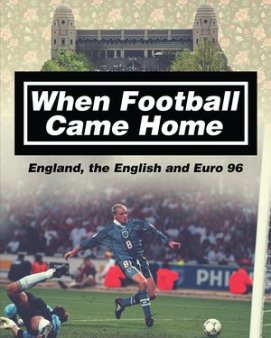
When Football Came Home by Michael Gibbons (Pitch Publishing)

Reading this book ahead of Euro 2016 was like watching Christmas music videos in early December. The tales of Terry Venables, Gazza and co filled me with naïve hope once again that football might indeed come home. It’s a story that many of us are very familiar with but Gibbons gets the content just right. Old favourites like the dentist chair are wheeled out once again, alongside less famous details. England’s matches are explored in detail but not too much detail and the myths surrounding the team’s performances are neatly dispelled. ‘Euro 96 became a sugar-coated memory…The 4-1 win over the Netherlands was the high point, but they could easily have gone into that game under the pressure of having two points or less.’

When Football Came Home

The cultural backdrop of Tony Blair, Oasis, Blur and Northern Ireland is neatly tied in without taking the focus away from the boozy brilliance of the football itself. In terms of tone, the book reaches for Pete Davies’ witty reportage in All Played Out and gets close. It’s a very enjoyable whizz down memory lane. Now that England’s tournament is over and in such spectacularly underwhelming fashion, When Football Came Home reads like beautiful chaos, which beats limp resignation any day.

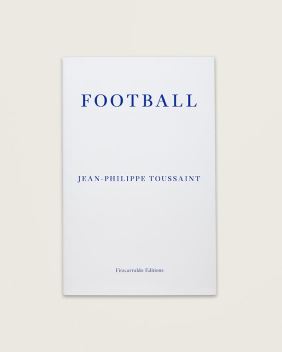
Football by Jean-Philippe Toussaint (Fitzcarraldo Editions)

First of all, Fitzcarraldo Editions make truly gorgeous books and this is no exception. Now for the ‘but’. To start a book with ‘This is a book that no one will like, not intellectuals, who aren’t interested in football, or football-lovers, who will find it too intellectual’ is a very bold move. It takes a perceived divide and attempts to widen it. Having finished the book, I can agree with the author but not for the reason offered. Football-lovers won’t like this book because Toussaint isn’t much of a football fan and this book isn’t really about football.

Football Toussaint

Instead, Football is a book about ‘melancholy, time and childhood’ that happens to touch on the beautiful game from time to time. And when it does, it is dismissive and offensive. There is some eloquent, philosophical writing in the book, especially ‘Zidane’s Melancholy’, but take the following statements: ‘the football of adults leaves me cold’, ‘in Europe, most football supporters are male, violent, racist, full of beer or wine’, and ‘I’m starting to get a bit fed up with football. I prefer poetry’. For Toussaint, it is ‘vulgar, coarse and perishable matter’. In my experience, football fans welcome intellectual writing that takes a deep and critical look at the sport. Too much of this, on the other hand, is shallow and offensive.

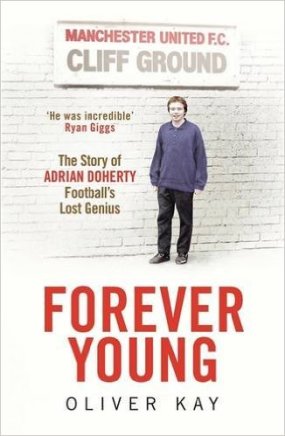
Forever Young by Oliver Kay (Quercus)

I know it’s early to talk about the Best of 2016 but I’ll be surprised if many books this year can compete with this exceptional story of ‘football’s lost genius’, Adrian Doherty. Doherty was an Irish wing wizard some thought was better than Ryan Giggs, who loved poetry and music as much as, if not more than, football. But just as he was on the verge of the Manchester United first team, Doherty’s career was tragically ended by injury.

Forever Young

Kay narrates this extraordinary tale with warmth and care, offering fascinating detail about Manchester United’s youth team during the late 1980s-early 1990s revival, as well as the treatment of injuries during this time. Kay deserves real credit for his brave, investigative style; no stone is left unturned and he refuses to cower in the long shadows cast by Manchester United’s modern empire.

If there must be a criticism, mine would be that at over 400 pages, the book is a little long. In trying to include so many different player testimonies, Forever Young becomes repetitive in its conclusions: Doherty was an incredible and unique talent, an outsider that everyone liked but few really knew. But ultimately, like the player himself, Forever Young is an extremely welcome breath of fresh, eccentric air.

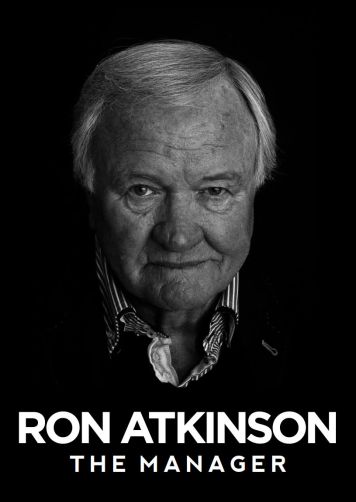
Exclusive: deCoubertin Books to publish Ron Atkinson memoir

Ron

I might have my finger firmly pressured on the football book pulse but I don’t get many exclusives, let alone really juicy ones. However, today I can reveal that deCoubertin Books will publish Ron ‘Big Ron’ Atkinson’s autobiography on 15th September and yes, a certain controversial commentating incident may just get a mention or two. As might Dion Dublin, fingers crossed. The Independent’s Tim Rich will be Ron’s sidekick and if the book jacket and title are anything to go by, this book is destined to be a timeless classic. 

Read the full press release below:

deCoubertin Books will publish the memoirs of legendary football manager, Ron Atkinson, this autumn.

Atkinson is one of English football’s most recognisable and popular characters, having been involved in management for a quarter of a century.

He remains the only Englishman to have won major trophies with three different clubs: Manchester United, Sheffield Wednesday and Aston Villa. At West Bromwich Albion, he was one of the first managers to promote black footballers, including Laurie Cunningham, who went to Real Madrid, Cyrille Regis, who became an England international, and Brendon Batson MBE.

After retiring from management, Ron evolved into one of the most familiar and popular commentators on football. Yet that career came to an end in April 2004 with a single, unguarded comment about the Chelsea defender, Marcel Desailly. Atkinson was labelled a racist and driven from the game he loves.

In The Manager Ron Atkinson delves into the highs and lows of an extraordinary career that took him from non-league football to Old Trafford’s theatre of dreams in the space of seven years. He almost managed two Midlands clubs – Aston Villa and West Brom – to the league title. But behind the familiar image of the bling and one-line quips Ron Atkinson was – and remains – a deep observer of football and footballers.

Ron Atkinson said: ‘I thought this was the right time to be telling the story of my life in football. It began in 1954 when I was a ground staff boy watching in awe as Ferenc Puskas trained in the rain at Molineux when foreign footballers were looked on as alien beings. Football has changed completely and in a sense my career in the story of that change.

‘I wanted to give a proper portrait of the people I have worked with; men like Laurie Cunningham, Bryan Robson, Paul McGrath and Paolo di Canio and those I’ve commentated on, the likes of Wayne Rooney and Cristiano Ronaldo. I also want to go into not just the fabulous stories from my time managing the likes of Manchester United, Aston Villa and Atletico Madrid but to analyse where they are now.

‘This is also an opportunity to discuss the Marcel Desailly affair and my fight to prove that I am not a racist.

‘I have collaborated with books before but this is my full autobiography, the story of my life.’

deCoubertin Books founder and principal James Corbett said: ‘We’re thrilled to have Ron on board and we hope that his book re-asserts his reputation as one of the finest and most innovative managers of his generation. The book transcends the clichéd version of Ron and shows him as a serious, thoughtful individual with trenchant views on a game he has given so much to.’

Atkinson has collaborated with the Independent’s Tim Rich on the book, which will be published on 15 September. Four signed special limited edition versions of 250 copies commemorating his time at West Brom, Manchester United, Sheffield Wednesday and Aston Villa will also be available in October.